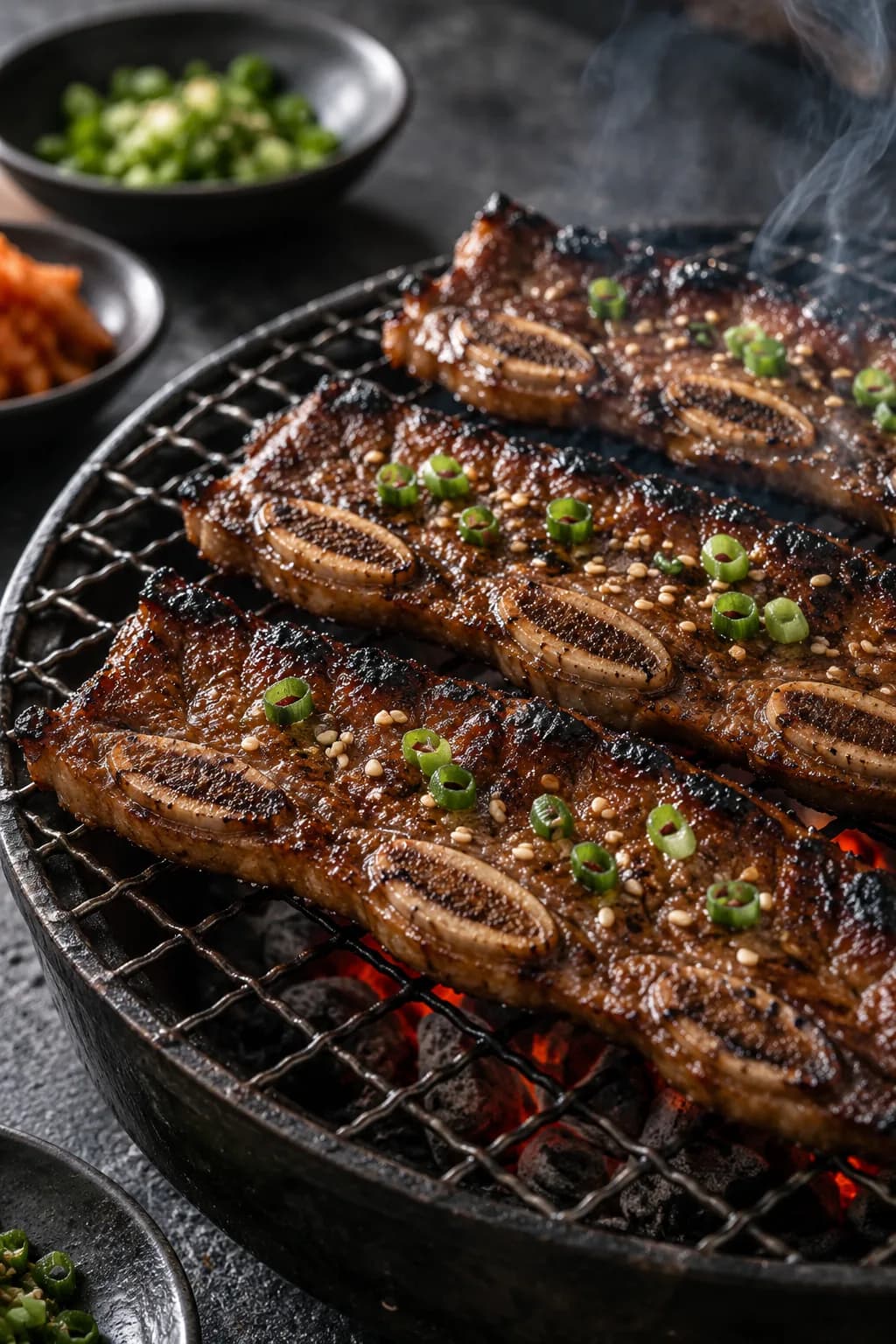
Korean BBQ at home is one of the most immediately satisfying cooking projects you can take on. The active format — cooking at the table, eating as you go, cycling through proteins and vegetables — produces a meal that is more social than almost anything else you can cook.
You do not need a restaurant-style built-in grill table to do it well. A good grill pan on a standard stovetop produces results that are functionally identical to what you get at a mid-range Korean BBQ restaurant. The key is picking the right pan, understanding what the ridges actually do (and when they matter), and dealing honestly with the smoke.
Here is the complete breakdown.
The Three Options
Tabletop Korean BBQ grill (propane): A portable grill that sits in the center of your table and uses a small propane canister. This is the closest to restaurant-style Korean BBQ. The downsides: cost ($80–200+), setup time, propane management, and the fact that you are essentially grilling indoors. The smoke is real and significant.
Grill pan (stovetop): A pan with raised ridges that sits on your burner. This is the practical choice for most home cooks. You get good sear marks, fat drips into the grooves, and the heat is managed by your existing stovetop. The smoke is manageable with a ventilation fan on high.
Flat cast iron skillet: The simplest option. No ridges, which means no grill marks, but for thin proteins like bulgogi, a flat skillet can produce better results than a ridged pan — more surface contact means more Maillard browning across the entire piece rather than just on the ridges.
Why Cast Iron Wins for Most Home Cooks
For stovetop Korean BBQ, cast iron is the correct material — and specifically, a well-seasoned cast iron grill pan or skillet.
Why cast iron:
- Heat retention: Cast iron holds and distributes heat better than stainless, non-stick, or aluminum. When you add cold protein, the pan temperature does not crash. Maintaining high, even heat is what produces the sear that makes Korean BBQ taste right.
- No coating to damage: Non-stick pans, including ceramic-coated pans, degrade under the high heat Korean BBQ requires. At 400°F–500°F, you are pushing most non-stick coatings to their limits. Cast iron has no coating to damage.
- Lasts indefinitely: A Lodge cast iron pan from 1990 is better than it was new. It does not need replacing.
- Better seasoning = better food: With use, cast iron builds a polymerized seasoning that is more effective than most non-stick surfaces and does not contain PTFE.
The downside of cast iron: it is heavy, requires different cleaning (no soaking, dry immediately), and takes longer to heat up initially. None of these are significant problems for anyone who cooks regularly.
The 4 Pans Worth Buying
Lodge Cast Iron Grill Pan (12-inch)
→ Lodge 12-Inch Cast Iron Grill Pan on Amazon
This is the practical answer for home Korean BBQ. The Lodge 12-inch grill pan costs around $35–45, comes pre-seasoned, produces excellent sear marks, and is virtually indestructible. The ridges are appropriately spaced for galbi (short ribs) and thicker cuts. The handles are well-designed for lifting and maneuvering.
Lodge is made in the US, widely available, and the most universally recommended cast iron brand at this price point. It is the first pan you should buy for home Korean BBQ.
Cleaning: wipe with a paper towel while still warm, rinse with hot water (no soap unless necessary), dry immediately on the burner, apply a very thin coat of oil before storing.
Who this is for: anyone who wants to cook Korean BBQ at home regularly and wants a pan that will last for decades.
Le Creuset Enameled Cast Iron Grill Pan
→ Le Creuset Enameled Cast Iron Square Grill Pan on Amazon
Le Creuset's enameled cast iron grill pan produces the same cooking performance as Lodge with a significant advantage: the enamel coating means you do not need to season it and cleaning is much easier. You can use soap, soak it (briefly), and the surface does not rust.
The trade-offs: the price ($150–180) is significantly higher than Lodge, and the enamel can chip if you drop the pan or use metal utensils aggressively.
For people who want the performance of cast iron without the maintenance, Le Creuset makes sense. For everyone else, Lodge at a third of the price is the better purchase.
Who this is for: home cooks who want lower-maintenance cast iron or already own Le Creuset and want to match their cookware.
Cuckoo Tabletop Korean BBQ Grill
→ Cuckoo Portable Korean BBQ Grill with Propane on Amazon
If you are cooking Korean BBQ for a group and want the full experience — everyone cooking together at the table, cycling through cuts, the social ritual — a tabletop grill is worth the investment.
The Cuckoo model is a well-made option in the $80–100 range. It connects to a standard propane canister, heats quickly, and has a round grill surface appropriate for the Korean BBQ format. The domed design helps channel fat drippings away from the flame.
The ventilation reality: cooking at the table with a propane grill produces significant smoke. You either need a range hood directly above the table (unusual in most homes), an open window, or acceptance that your clothes and hair will smell like Korean BBQ for the remainder of the evening. This is not a complaint about the grill — it is just the nature of indoor propane grilling. Plan accordingly.
Who this is for: people cooking Korean BBQ as a social event for 4+ people who want the full at-the-table experience.
Korean-Style Round Grill Grate for Gas Burner
→ Korean BBQ Stovetop Round Grill Grate on Amazon
This is the simplest and most affordable option — a round grill grate that sits directly over your gas burner, positioned in the center of your pot range. No additional equipment, no propane, minimal footprint.
These typically run $20–35 and work well for authentic Korean galbi preparation. The grate sits over the open flame, which gets the temperature high enough to produce good char without the fat pooling.
This only works on gas burners. On electric or induction, you need a proper grill pan.
The cleaning is minimal — rinse under hot water, brush with a grill brush, dry.
Who this is for: gas burner home cooks who want the most straightforward Korean BBQ setup possible.
Ridges: When They Matter and When They Don't
The raised ridges on a grill pan do three things: they create grill marks (visual), they lift the protein above rendered fat so it sears rather than braises in its own juices, and they allow some air circulation under the meat.
For galbi (short ribs), samgyeopsal (pork belly), and thicker cuts: ridges are beneficial. The fat renders significantly, and you want the meat lifted above it rather than sitting in pooled fat. The ridges also create char at contact points that mimics actual grill flavor.
For bulgogi (thin-sliced marinated beef): a flat skillet may actually produce better results. Bulgogi is sliced thin enough that the individual pieces slip between ridges on a grill pan, and the marinade (which contains sugar from the Asian pear and ginger) benefits from full-surface contact that produces Maillard browning across the entire piece. Use the Lodge flat skillet or a carbon steel pan instead.
The practical rule: use a grill pan for thicker cuts; use a flat cast iron or carbon steel pan for bulgogi and thin-sliced meats.
Lodge vs Ceramic-Coated Non-Stick: The Final Answer
Ceramic-coated grill pans look appealing: they are easier to clean, lighter to handle, and the colorful options are aesthetically nice. For Korean BBQ specifically, they are the wrong choice.
The problem: Korean BBQ requires very high heat, and ceramic coatings degrade at sustained high temperatures. Most ceramic coatings have an upper limit of 400–450°F. Proper searing for galbi or samgyeopsal requires 450–500°F or higher. After a few sessions, the ceramic coating begins to lose its non-stick properties and eventually flakes.
Cast iron at $35–45 will outlast five ceramic-coated pans at $40–60 each. The maintenance is slightly more involved but not burdensome. Lodge is the right answer.
The Short Answer
For most home cooks cooking Korean BBQ on a regular basis:
- Buy the Lodge 12-inch cast iron grill pan for galbi, samgyeopsal, and thicker cuts
- Use a flat cast iron skillet or carbon steel pan for bulgogi
- Use the Cuckoo tabletop grill for group events where the social format matters
- Open a window regardless of which option you choose
Korean BBQ at home does not require restaurant equipment. It requires high heat, correct cuts of meat, good marinades, and a pan that can handle both. The Lodge does all of that for under $45.
Borderless Kitchen is a participant in the Amazon Services LLC Associates Program. As an Amazon Associate we earn from qualifying purchases. Product links on this page are affiliate links — they cost you nothing extra, and we only recommend equipment and ingredients we would tell a friend to buy.
Free recipes from this world
Related reading
The full recipes live in the book.
Get Tokyo Meets Tuscany on AmazonAs an Amazon Associate we earn from qualifying purchases. This is an affiliate link — it costs you nothing extra.
Paperback $19.99 · Kindle $9.99