Japanese restaurant cooking — kaiseki, omakase sushi, specialist tempura — represents extraordinary technical refinement. It's worth experiencing and worth aspiring toward. But it's not how Japanese people eat at home.
Japanese home cooking (katei ryori, 家庭料理) operates on completely different principles: speed, simplicity, ingredient quality over technique, and the ichiju sansai (一汁三菜, one soup three dishes) structure that organizes the daily meal. Understanding these principles makes Japanese home cooking accessible and genuinely illuminating.
The Ichiju Sansai Structure
The organizing principle of the Japanese home meal:
Ichiju (一汁, one soup): Miso soup or a clear broth soup. Made fresh for most meals; can be simplified with instant dashi packets and good miso.
Sansai (三菜, three dishes):
- A main protein (shusai): fish, chicken, pork, tofu — typically grilled, simmered, or pan-fried using simple techniques
- A simmered vegetable (ni-mono): vegetables braised in dashi and soy sauce
- A salad or pickled vegetable (namul or tsukemono): raw or lightly dressed vegetables, or quick pickles
Gohan (ご飯): Steamed rice. The center of every meal.
This structure means a complete Japanese home meal has 5 components — rice, soup, and three dishes. Once you've internalized this framework, Japanese home cooking becomes systematic rather than intimidating.
Simplifying the structure: On weeknights, many Japanese households simplify to ichiju issai (一汁一菜, one soup one dish) — rice + miso soup + one main dish. The three-dish structure is the ideal; the one-dish version is the practical weeknight reality.
The Japanese Pantry Foundation
Japanese home cooking's efficiency comes from a pantry that handles most flavoring requirements. Once this pantry is established, recipes become variations on a limited set of combinations.
The five core seasonings:
Soy sauce (shoyu, 醤油): Use koikuchi shoyu (regular soy sauce) as the default. Kikkoman is the most widely available; it's excellent. A good soy sauce makes everything taste more complex.
Mirin (みりん): Hon-mirin (true mirin), not mirin-fu condiment. The Takara brand or equivalent. Sweet, round, adds gloss to sauces and glazes.
Sake (酒): Cooking sake (ryorishu) is fine; drinking sake that you don't mind opening is also excellent. Sake adds flavor depth and removes gamey notes from protein.
Rice vinegar (komezu, 米酢): Milder and slightly sweeter than Western vinegar. Mizkan or Marukan are reliable. Used in dressings, pickles, and sushi rice.
Toasted sesame oil (goma abura, 胡麻油): Finishing oil only — never heated to high temperature. Kadoya is the standard brand. Drizzled at the end of cooking; used in dressings.
The dashi foundation:
Dashi (だし) underlies miso soup, simmered dishes, sauces, and many Japanese preparations. For weeknight home cooking, these options work:
- Dashi packets: Teabag-style packets of katsuobushi and kombu — drop in water, simmer 5 minutes, remove. Very convenient; very good results.
- Cold-brew kombu dashi: Kombu soaked in cold water overnight in the refrigerator. Always ready; zero active cooking time.
- Instant dashi powder: Ajinomoto Hondashi or equivalent. Not as nuanced as fresh, but functional for quick weeknight miso soup.
Key Home Cooking Techniques
Japanese home cooking relies on a small set of techniques applied to different ingredients:
Yaki (焼き) — Grilled or Pan-Fried
The simplest technique. A piece of fish or chicken or tofu, seasoned with salt, placed in a pan or under a broiler. No sauce needed during cooking; soy sauce + lemon (or yuzu, or ponzu) added at the table.
This requires ingredient quality. A well-seasoned piece of fresh mackerel, pan-fried in minimal oil, served with grated daikon and soy sauce, is a complete satisfying protein that takes 8 minutes.
Shioyaki (塩焼き): Salt-grilled fish — the most fundamental Japanese protein preparation. Rub salt generously on fish; let sit 15-30 minutes; grill or broil. No technique, no sauce. Requires fresh fish.
Ni-Mono (煮物) — Simmered Dishes
Vegetables, tofu, or protein simmered in dashi-based liquid. The fundamental formula:
Nitsuke (煮付け) ratio:
- Dashi: 200ml
- Soy sauce: 2 tbsp
- Mirin: 2 tbsp
- Sugar: 1 tsp
This ratio works for simmering most vegetables (daikon, lotus root, carrots, burdock), fish, and tofu. Adjust sweetness up for winter squash; reduce soy sauce for delicate vegetables.
Nimono doesn't require elaborate technique — combine everything in a pot, simmer until vegetables are completely soft and liquid has reduced by half. Done.
Miso Shiru (味噌汁) — Miso Soup
Made daily in most Japanese homes. The formula:
- Heat dashi (300ml per person) to just under boiling
- Dissolve 1 tbsp miso per person by stirring a small amount of dashi into it in a ladle until smooth, then adding to the pot
- Add other ingredients (tofu, wakame, vegetables) that have been pre-softened or cook quickly
- Do not boil after adding miso — boiling destroys flavor compounds
Standard combination: tofu + wakame. Saturday combination: nameko mushrooms + silken tofu. Winter combination: daikon + aburaage (fried tofu). There's no wrong answer; use what's in the refrigerator.
The miso: Use a quality single-origin miso rather than a generic blend. Shinshu-style (light yellow, mildly sweet, versatile) is an excellent daily miso. Keep miso refrigerated after opening.
Aemono (和え物) — Dressed Vegetables
Japanese side salads — vegetables blanched or raw, then dressed with a sauce. The simplest form of a sansai dish.
Common dressings:
- Goma-ae (胡麻和え): Sesame dressing — ground sesame seeds + soy sauce + mirin + sugar. For spinach, green beans, broccoli.
- Karashi-ae (辛子和え): Mustard dressing — Japanese mustard + soy sauce + mirin. For spinach, greens.
- Shira-ae (白和え): Tofu dressing — blended silken tofu + white miso + soy sauce + sesame. For various vegetables.
These take 5 minutes and produce elegant Japanese side dishes.
The Mise en Place Difference
Western cooking culture emphasizes mise en place — preparing all components before cooking begins. Japanese home cooking often doesn't work this way because:
- Many Japanese dishes cook quickly and in sequence — the timing is inherently ordered
- The rice cooker runs unattended; miso soup can be made while the main protein cooks
- Simmered vegetables can sit and improve on low heat while other components are prepared
A better Japanese home cooking approach: start the rice first, always. Rice takes 35-45 minutes (with a 10-minute rest). Everything else is done within that window.
A 35-minute Japanese home dinner:
- 0:00 — Start rice
- 0:05 — Put cold-brew dashi on low heat; add miso soup components
- 0:10 — Season fish for shioyaki; let rest with salt
- 0:20 — Start fish under broiler (10-15 minutes)
- 0:25 — Dissolve miso into soup; simmer briefly; turn off heat
- 0:30 — Plate salted daikon; fish is done; soup stays warm
- 0:35 — Rice is done; rest 10 minutes; serve
This produces: steamed rice + miso soup + grilled fish + daikon salad. Complete ichiju sansai.
Ingredient Quality Over Technique
The most important principle of Japanese home cooking: ingredient quality matters more than technique. A technically perfect cooking method applied to poor-quality fish produces mediocre food. The same simple technique applied to excellent ingredients produces excellent food.
This is the inverse of many Western cuisines, where technique compensates for ingredient limitations. In Japanese cooking — especially shioyaki, sashimi, tofu preparations, and clear soups — there's nowhere to hide. Good ingredients are the foundation.
Practical implications:
- Buy the freshest fish available; shop on the day of cooking if possible
- Use good quality dashi (avoid MSG-heavy instant dashi for miso soup specifically)
- Use hon-mirin rather than mirin condiment
- Buy seasonal vegetables; avoid out-of-season produce that has traveled
Common Mistakes in Japanese Home Cooking
Over-seasoning: Japanese flavors are restrained. A properly seasoned miso soup should be savory but not salty; a nitsuke should taste of dashi and soy, not just soy. More is not better.
Overheating miso: Adding miso to boiling soup destroys its flavor compounds. Add miso off the heat or when the soup is just below simmering.
Skipping dashi: Replacing dashi with water produces flat, one-dimensional results. Dashi is not optional in Japanese cooking — it's the base.
Using cheap soy sauce: The specific character of Japanese soy sauce matters. Use Japanese soy sauce (Kikkoman, Yamasa, or better); Chinese soy sauce has a different flavor profile.
Not resting rice: Opening the rice cooker immediately after cooking and skipping the 10-minute steam rest produces uneven texture. Always rest before serving.
Related reading: Japanese Pantry Essentials Guide | All Types of Dashi | Mirin Guide
Free recipes from this world
Related reading
The full recipes live in the book.
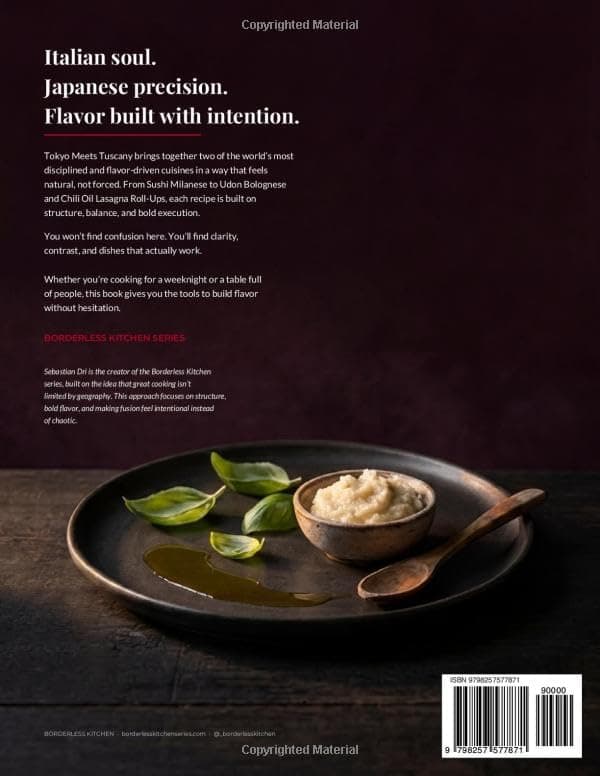
Get Tokyo Meets Tuscany on AmazonAs an Amazon Associate we earn from qualifying purchases. This is an affiliate link — it costs you nothing extra.
Paperback $19.99 · Kindle $9.99