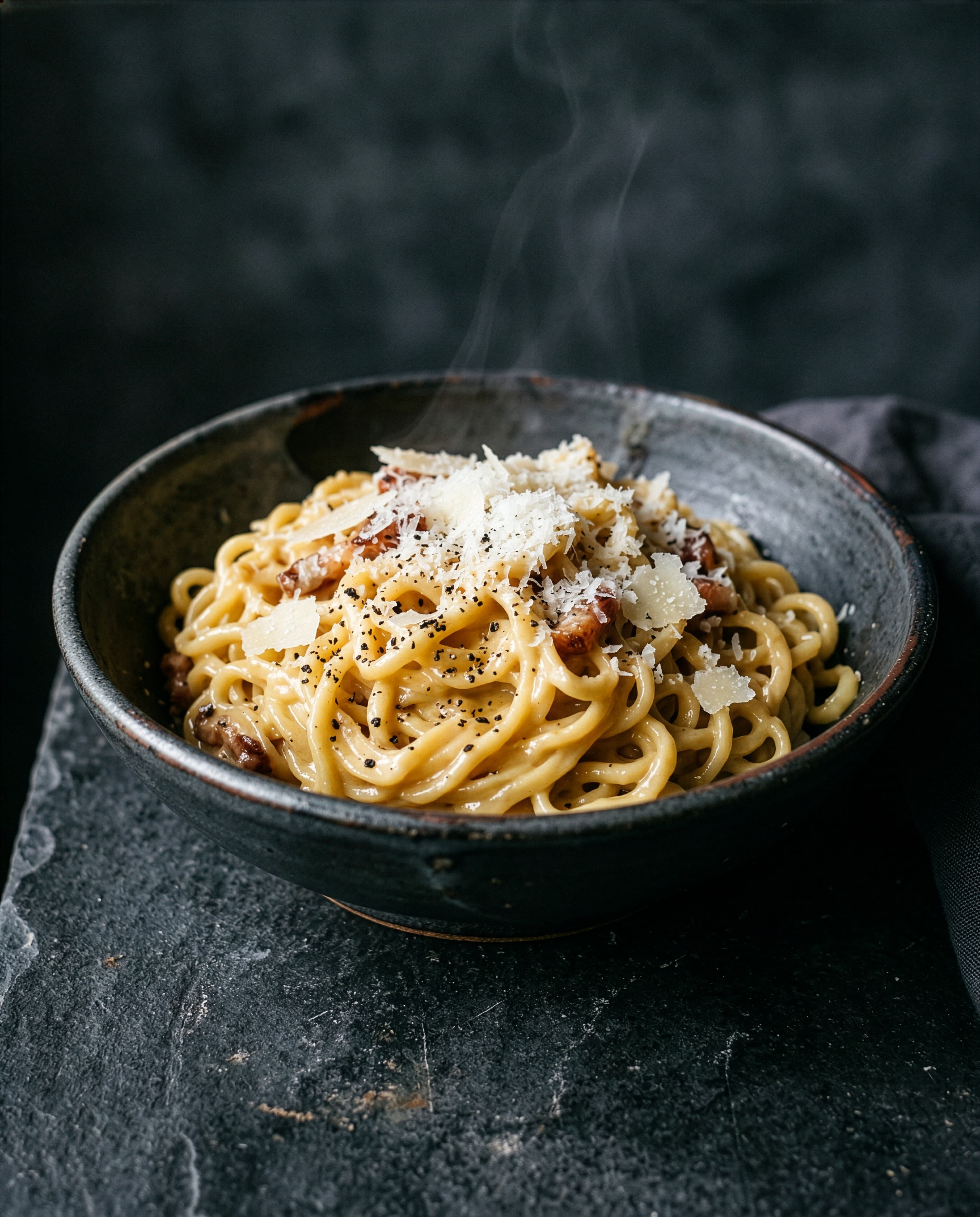
In Swabia — the southwestern German region that runs from the Black Forest to the Allgäu Alps — Spätzle is not a side dish. It is the dish. And Käsespätzle, the cheese version, is the pinnacle: the thing Swabians make when they want to show you who they are. The Swabian pride in Spätzle-making is genuine and specific: the batter consistency, the size of the noodles, the speed of the scraping. A Swabian grandmother watching someone make Spätzle incorrectly will intervene.
The caramelized onions on top are not optional garnish — they are the third ingredient of the dish, as important as the noodles and the cheese. They must be cooked slowly, deeply, until they are nearly dark brown and sweet: this sweetness against the richness of the cheese and the savoriness of the egg noodles is what makes Käsespätzle a complete dish rather than a side.
The Spätzle: The Batter
Spätzle are not made from pasta dough. They are made from a wet batter — thick enough to hold shape but thin enough to scrape through holes:
The ratio: Approximately 2 eggs per 100g flour, plus enough water to make a thick, viscous batter that falls from a spoon in a slow, heavy ribbon. Salt is essential.
The resting: The batter is mixed until smooth and slightly elastic (the gluten develops), then left to rest 15–30 minutes. The resting makes the batter more cohesive and the finished noodles more tender.
Consistency check: The batter should fall from a spoon slowly — not pour like water, not sit like bread dough. It should stretch slightly as it falls.
Making the Spätzle: The Equipment
Three methods exist for pushing the batter into boiling water:
Spätzle press (Spätzlepresse): A cylinder with holes through which batter is extruded directly into the water. Creates uniform, rounded noodles. Most consistent; slowest.
Spätzle board and scraper (Spätzlebrett): A wooden board on which the batter is spread thinly, then scraped off in thin strands with a wet spatula or bench scraper. Creates longer, thinner noodles with irregular edges. The traditional Swabian method; fastest once mastered.
Cheese grater or colander method: Batter is pushed through the large holes of a box grater or colander held over the water using the back of a spoon. Good home approximation.
All methods work; the board-and-scraper is the method that produces the most traditional texture.
Cooking the Spätzle
Boiling water: Large pot, generously salted (pasta-salt level). The noodles cook in 2–3 minutes after they float to the surface.
Working in batches: The batter goes in in several batches; scoop the cooked noodles out with a slotted spoon, rinse briefly under cold water to stop cooking, and set aside.
The Cheese: Mountain Cheese
Traditional Käsespätzle uses mountain cheeses:
Allgäuer Emmental: The large-hole Swiss-style Emmental from the Allgäu region — mild, nutty, excellent melt.
Bergkäse (mountain cheese): The generic term for any aged Alpine cow's milk cheese; stronger than Emmental, with more depth.
Gruyère: Swiss version; richer and slightly more pungent; commonly used in the Swiss Käsknöpfle version.
The blend: Many recipes combine young Emmental for melt with a small amount of aged Bergkäse for flavor — the combination gives both creaminess and depth.
The Caramelized Onions
The cut: Thin half-moons or rings — not diced.
The time: 20–30 minutes in butter over medium-low heat, stirring occasionally. The onions must reach deep golden-brown, nearly mahogany. Underdone onions have residual sharpness; properly caramelized onions are sweet and complex.
Butter, not oil: Butter is the correct fat; it contributes flavor and the milk solids help the onions develop deeper color.
Assembly
Layered method (oven): Alternating layers of Spätzle and cheese in a buttered baking dish, topped with cheese, baked at 180°C until bubbly and slightly golden (15–20 minutes).
Pan method: Spätzle and cheese stirred together in a hot pan over medium heat until cheese melts and coats the noodles. Faster; less golden-topped.
The onions: Always added on top immediately before serving, not baked in (baking softens them further; they should have some texture contrast).
The Complete Recipe
Serves: 4 | Time: 1 hour
Spätzle Batter
- 300g all-purpose flour
- 3 large eggs
- 150ml water (approximately)
- 1 teaspoon salt
For the Käsespätzle
- 300g Allgäuer Emmental or Bergkäse, grated (or a mix)
- 2 large onions, thinly sliced
- 3 tablespoons butter (for onions)
- Salt, white pepper
- Fresh chives for serving (optional)
Method
1. Make the batter: Combine flour, eggs, salt, and water; whisk vigorously until smooth and slightly elastic. The batter should fall in a slow ribbon from a spoon. Rest 20 minutes.
2. Caramelize the onions: Melt butter in a wide pan over medium-low heat; add sliced onions; cook 25–30 minutes, stirring every few minutes, until deeply golden-brown. Set aside.
3. Cook the Spätzle: Bring a large pot of salted water to a boil. Working in batches, press, scrape, or push batter through holes into the water. When noodles float and have cooked 2 minutes, scoop out with a slotted spoon; rinse briefly; set aside.
4. Assemble: Preheat oven to 180°C. Layer Spätzle and cheese alternately in a buttered baking dish, finishing with a cheese layer. Bake 15–20 minutes until bubbling and slightly golden.
5. Serve: Top generously with caramelized onions; finish with chives if desired.
Serve: Immediately, very hot. A simple green salad is the traditional accompaniment.
Related reading: Flammkuchen Alsatian Thin Tart Guide | Fondue Swiss Alpine Cheese Dip Guide | Pierogi Polish Dumpling Guide
Free recipes from this world
Related reading
- recipeZwiebelkuchen: Germany's Savory Onion Tart, Why the Onions Must Be Cooked Down for an Hour, the Sour Cream Custard, the New Wine Pairing, and the Autumn Festival Tradition
- germanSoft Pretzel (Brezel): The Lye Bath That Creates the Crust, the Bavarian Breakfast, and Why Baking Soda Is a Compromise
- germanCurrywurst: Berlin's Curry-Ketchup Street Sausage, the 1949 Invention, and Why It's More Than It Sounds
The full recipes live in the book.
Get Tokyo Meets Tuscany on AmazonAs an Amazon Associate we earn from qualifying purchases. This is an affiliate link — it costs you nothing extra.
Paperback $19.99 · Kindle $9.99