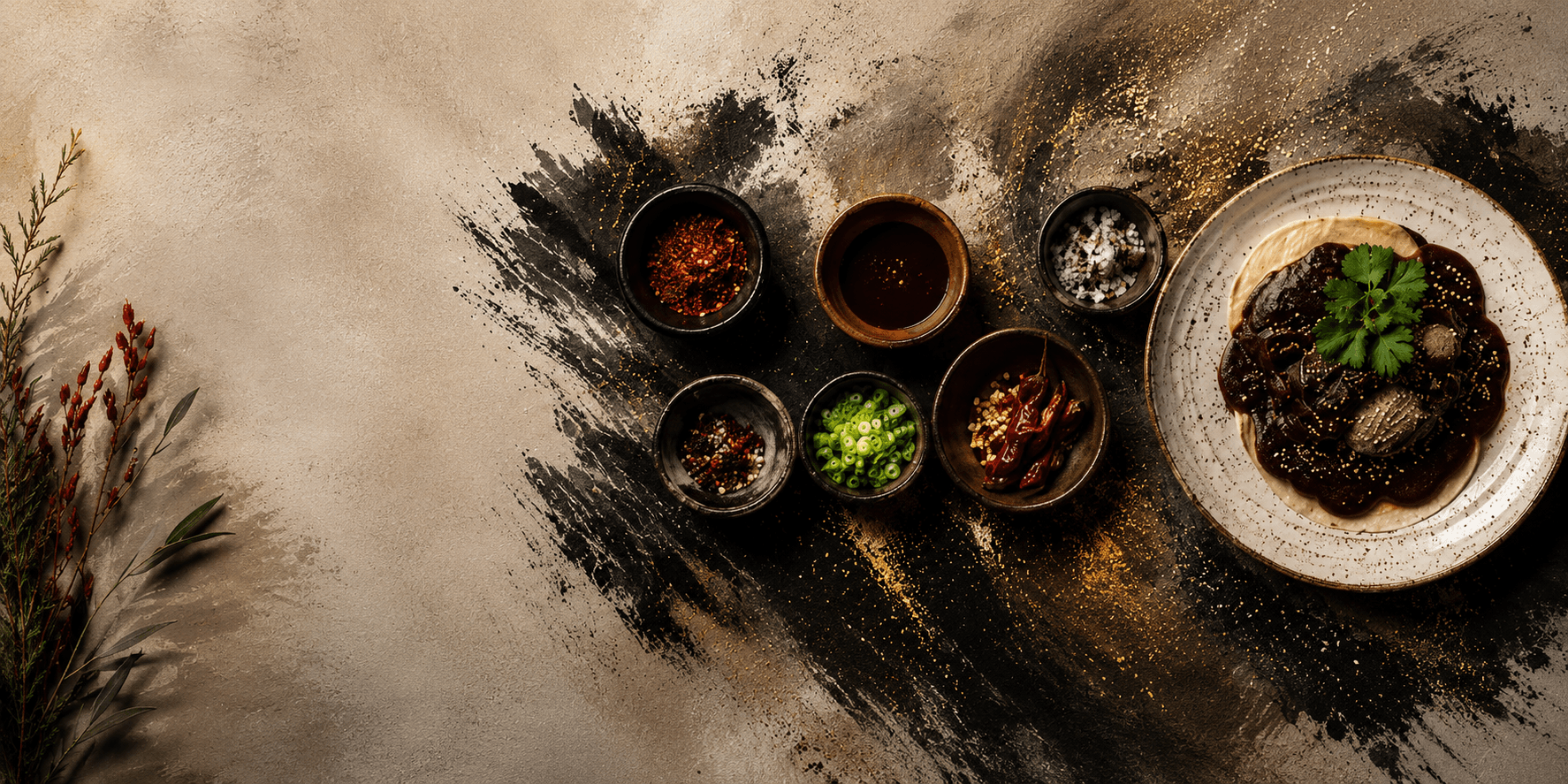
Jungshik (중식, 中食 — "Chinese food" in Korean) is how Koreans refer to the Chinese-influenced cuisine that has developed in Korea over 130+ years — but the name obscures what jungshik actually is: not Chinese food adapted for Korean tastes, but an entirely separate culinary tradition that emerged from Korean Chinatowns and now functions as one of Korea's most beloved comfort food categories.
The three dishes that define jungshik — jjajangmyeon, jjamppong, and tangsuyuk — exist in China in different forms, but the Korean versions are distinct enough to be unrecognizable to Chinese diners as versions of Chinese food. They are Korean food with Chinese DNA.
The History: Incheon Chinatown
The origin point of Korean-Chinese cuisine is Incheon (인천), Korea's port city adjacent to Seoul, where Chinese laborers and merchants from Shandong Province settled from the 1880s onward following the establishment of trade relations between the late Joseon Kingdom and Qing-era China.
The Incheon Chinatown (인천 차이나타운) established in 1884 remains the center of Korean-Chinese culinary history — many of the specific adaptations that define jungshik happened here:
- Jjajangmyeon evolved from zha jiang mian (炸醬麵, "fried sauce noodles") — a northern Chinese preparation using tianmian jiang (sweet bean sauce). Korean cooks adapted this with Korean chunjang (black bean paste), adding a distinct caramelized bitterness the Chinese original doesn't have.
- Jjamppong evolved from Chinese chámpōn, itself originally a Japanese dish (champon from Nagasaki) that spread into Chinese-Korean cooking via Japanese colonial period influences. The Korean version is significantly spicier.
- Tangsuyuk evolved from Chinese sweet-and-sour pork (糖醋肉, tángcù ròu) but uses a specific batter style and dipping sauce that differs from Chinese versions.
By the 1960s–1970s, Korean-Chinese restaurants (jungshik dang, 중식당) were established throughout Korea — not just in Incheon — and these dishes had become Korean comfort food rather than foreign cuisine.
Jjajangmyeon (짜장면) — Black Bean Noodles
Jjajangmyeon is the defining Korean-Chinese dish and one of Korea's most-ordered delivery items:
Components:
- Thick, handmade wheat noodles (jjajang myeon, 짜장면) — chewier and thicker than most Chinese noodles
- Chunjang (춘장, black bean paste) — Korean fermented black bean paste, less sweet and more bitter than Chinese tianmian jiang
- Diced pork and vegetables (onion, zucchini, potato) stir-fried with the chunjang sauce
- The sauce arrives on top of the noodles; the diner mixes it at the table (the mixing produces the characteristic dark black color throughout)
- Garnish: raw cucumber sliced into julienne strips placed on top
The chunjang distinction: Standard Chinese tianmian jiang is sweeter and lighter. Korean chunjang is darker, more bitter, and has a deeper fermented quality. Korean manufacturers fry the chunjang in oil (boleum) before use to reduce raw bitterness — this fried version is labeled boleum chunjang. This cooking step is essential to proper jjajangmyeon flavor.
Delivery format: The noodles arrive separate from the sauce to prevent waterlogging during transit; the diner mixes them at the table. This delivery-optimized format became standard nationwide.
Cultural significance: Jjajangmyeon is eaten on April 14th — Black Day — by single Koreans as a self-deprecating holiday (following Valentine's Day on February 14th and White Day on March 14th). The black color of the sauce gives the day its name. Jjajangmyeon delivery spikes significantly on this date.
Jjamppong (짬뽕) — Spicy Seafood Noodle Soup
Jjamppong is the counterpart to jjajangmyeon — a bright red, intensely spicy seafood soup with wheat noodles:
Components:
- The same thick wheat noodles as jjajangmyeon
- Bright red, spicy broth made from gochugaru and dried chili in a seafood-based stock
- Generous seafood: clams, mussels, shrimp, squid, oysters — varying by restaurant and price point
- Cabbage, onion, green onion, mushrooms
- Garnish: sesame oil drizzle; sometimes a fried egg
Origin: The name jjamppong comes from Japanese champon — a Nagasaki specialty of noodles in pork-seafood broth that Chinese cooks in Nagasaki developed. This migrated to Korea during the Japanese colonial period (1910–1945) and was transformed into the spicy, gochugaru-heavy version. The Japanese original is mild and creamy; the Korean version is distinctly spicy and based on a clear shellfish broth rather than a milky pork bone broth.
The great debate: Koreans divide into two camps: jjajang faction (jjajang-pa, 짜장파) and jjamppong faction (jjamppong-pa, 짬뽕파). When ordering at a Korean-Chinese restaurant, being asked "jjajang or jjamppong?" produces significant deliberation. The half-and-half version (jjabampong or ban-ban, 반반) — half jjajangmyeon, half jjamppong in the same bowl — exists as a compromise option.
Tangsuyuk (탕수육) — Sweet and Sour Pork
The third essential jungshik dish: battered, deep-fried pork in a sweet-and-sour sauce:
Components:
- Pork loin, cut into pieces, dipped in batter (potato starch–heavy for maximum crispiness), deep-fried twice
- Sweet-and-sour sauce: sugar, vinegar, soy sauce, ketchup, thickened with starch, with vegetables (onion, carrot, cucumber, bell pepper, pineapple) — served separately from the pork
The sauce dilemma (소스 논쟁): One of Korean food culture's most divisive debates: Boo-euh (부어, "pour over") — pour the sauce over the pork — versus Jjik-uh (찍어, "dip") — dip each piece individually. The pouring camp argues for convenience and full flavor integration; the dipping camp argues that sauce poured on crispy tangsuyuk immediately softens the crust. Both positions are held with surprising intensity.
The correct answer according to chefs: Dip. The batter is engineered for crispiness; the sauce softens it on contact. Pour only if you prefer softer tangsuyuk or eat slowly.
Other Jungshik Standards
Ul-myeon (울면): A mild egg-flower soup with noodles — less common than jjajang/jjamppong but available at most jungshik restaurants. A comfort option for those who find jjajangmyeon too heavy and jjamppong too spicy.
Gan-jjajang (간짜장, "dry black bean"): A drier version of jjajangmyeon with less sauce — the meat is cooked separately and added as a topping. More restaurant-style; less delivery-friendly.
Mandu (만두): Korean-Chinese restaurants serve their own style of pan-fried or steamed dumplings — typically larger than Korean mandu, with more pork and cabbage.
Chow mein / Bokkeum-bap (볶음밥): Fried rice; the Korean-Chinese version uses day-old rice stir-fried with egg, vegetables, and soy sauce — simpler and slightly different from Chinese fried rice.
How to Order at a Jungshik Restaurant
Korean-Chinese restaurants have a specific ordering culture:
- The mandatory choice: Jjajangmyeon or jjamppong as the main noodle dish
- The shared addition: Tangsuyuk — almost always ordered for the table regardless of who else orders what
- Extras: Mandu and fried rice as secondary additions
- Delivery setup: Most jungshik restaurants have efficient delivery (many use their own delivery staff rather than apps for freshness); delivery is how most jungshik is eaten
Etiquette on sauce pouring: If ordering tangsuyuk for a table, ask table consensus before pouring the sauce over all pieces.
Korean-Chinese cuisine is a clear illustration of how immigrant food traditions create new cuisines rather than merely transplanting old ones. The Chinese cooks who settled in Incheon brought techniques and ingredient concepts; the Korean context changed the flavors, the heat level, the noodle types, and the cultural associations until the result was something that could only have happened in Korea. Jjajangmyeon has no real Chinese equivalent. Jjamppong's Korean version has little to do with its Nagasaki origin. Tangsuyuk's debate over sauce application is purely Korean in character. These dishes belong to Korea now.
Related reading: Korean Noodle Types Guide | Busan Food Guide | Korean Food Delivery Culture Guide
Free recipes from this world
Related reading
The full recipes live in the book.
Get Tokyo Meets Tuscany on AmazonAs an Amazon Associate we earn from qualifying purchases. This is an affiliate link — it costs you nothing extra.
Paperback $19.99 · Kindle $9.99