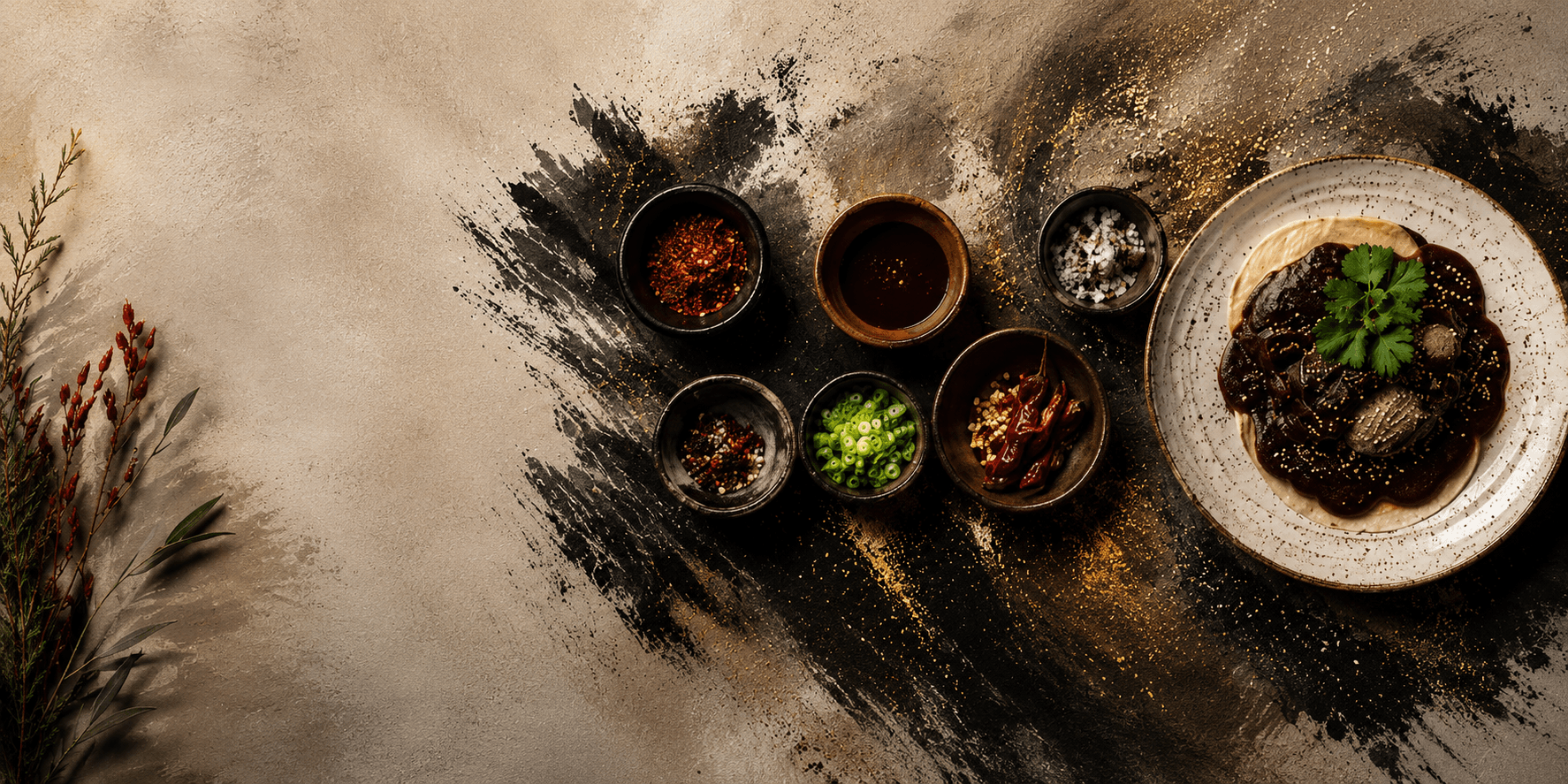
Hanjeongsik (한정식) means "Korean set meal" — han (Korean) + jeong (set/fixed) + sik (meal). It is the formal expression of Korean culinary tradition: a table covered with small dishes representing the full range of Korean cooking techniques, seasonings, and ingredients, served simultaneously.
At a hanjeongsik restaurant, you sit down and the table is covered. Not one dish at a time — everything at once.
What Arrives
A standard hanjeongsik table includes:
Bap (밥): White rice, often in a stone pot (dolsot). The center of everything.
Guk/Tang (국/탕): One soup — typically doenjang jjigae, galbitang, or miyeok guk. Sometimes two soups at a formal table.
Kimchi (김치): Multiple kimchi varieties — baechu kimchi (napa cabbage), kkakdugi (radish), oi sobagi (cucumber), and at least one regional specialty. Upscale hanjeongsik restaurants serve 5-7 kimchi types.
Namul (나물): 4-6 seasoned vegetable dishes — spinach, bean sprout, bracken fern, fernbrake, watercress, various seasonal greens.
Jorim (조림): Braised and glazed dishes — braised fish (saengseon jorim), braised lotus root (yeon-geun jorim), braised potatoes (gamja jorim). Sweet, sticky, and concentrated.
Gui (구이): Grilled items — grilled fish (often mackerel or yellow croaker), sometimes pork or beef.
Jeon (전): Korean savory pancakes — hobakjeon (zucchini), eomuk jeon (fish cake), pajeon (scallion), bindaetteok (mung bean).
Jjim (찜): Steamed dishes — steamed egg (gyeranjjim), sometimes braised pork ribs.
Miscellaneous small dishes: Various pickled items, seasoned dried foods, toasted seaweed, and regional specialties.
Dessert: Seasonal fruit, sikhye (sweet rice punch), or sujeonggwa (cinnamon and persimmon punch).
The Count
The number of banchan dishes is often used to describe the formality level:
- 3 banchan: basic home meal
- 5-7 banchan: standard restaurant meal
- 9-12 banchan: special occasion
- 15-30 banchan: hanjeongsik restaurant
The Joseon Dynasty royal court reportedly served meals with 12 types of side dishes for high nobles and up to 25 for the king. Contemporary upscale hanjeongsik restaurants in Seoul and Jeonju approximate this tradition.
Jeonju Hanjeongsik
Jeonju (전주), the capital of North Jeolla Province, is Korea's acknowledged culinary capital and the center of hanjeongsik culture. Jeonju hanjeongsik is known for:
- Larger portion sizes than Seoul
- Greater emphasis on fermented and preserved foods
- More elaborate jeon (pancake) varieties
- Generous use of rich, intensely flavored braised dishes
Jeonju hanjeongsik restaurants typically serve 20+ side dishes. Sitting down at a Jeonju restaurant and watching the table fill completely is one of the most astonishing food experiences in Korea.
The Philosophy of Simultaneous Serving
Hanjeongsik challenges the Western model of sequential courses. Everything arrives at once. You choose what to eat and in what combination, how much rice to take with each item, which soup to drink when.
This simultaneous presentation reflects the Korean food philosophy that each component is not a standalone dish but part of a complete balance. The jjigae is not Course 2 — it accompanies and contrasts the namul and the rice throughout the meal. The kimchi is not an appetizer — it is present from first bite to last.
Understanding hanjeongsik means understanding that the Korean meal is a composition, not a sequence.
Hanjeongsik is the fullest possible expression of Korean food culture in a single sitting. Not every Korean meal is this — most daily Korean eating is much simpler. But hanjeongsik represents what Korean cuisine aspires to when all its techniques, seasons, and traditions are expressed simultaneously. It is Korean cooking as complete statement.
Free recipes from this world
Related reading
The full recipes live in the book.
Get Seoul Meets Mexico City on AmazonAs an Amazon Associate we earn from qualifying purchases. This is an affiliate link — it costs you nothing extra.
Paperback $19.99 · Kindle $9.99