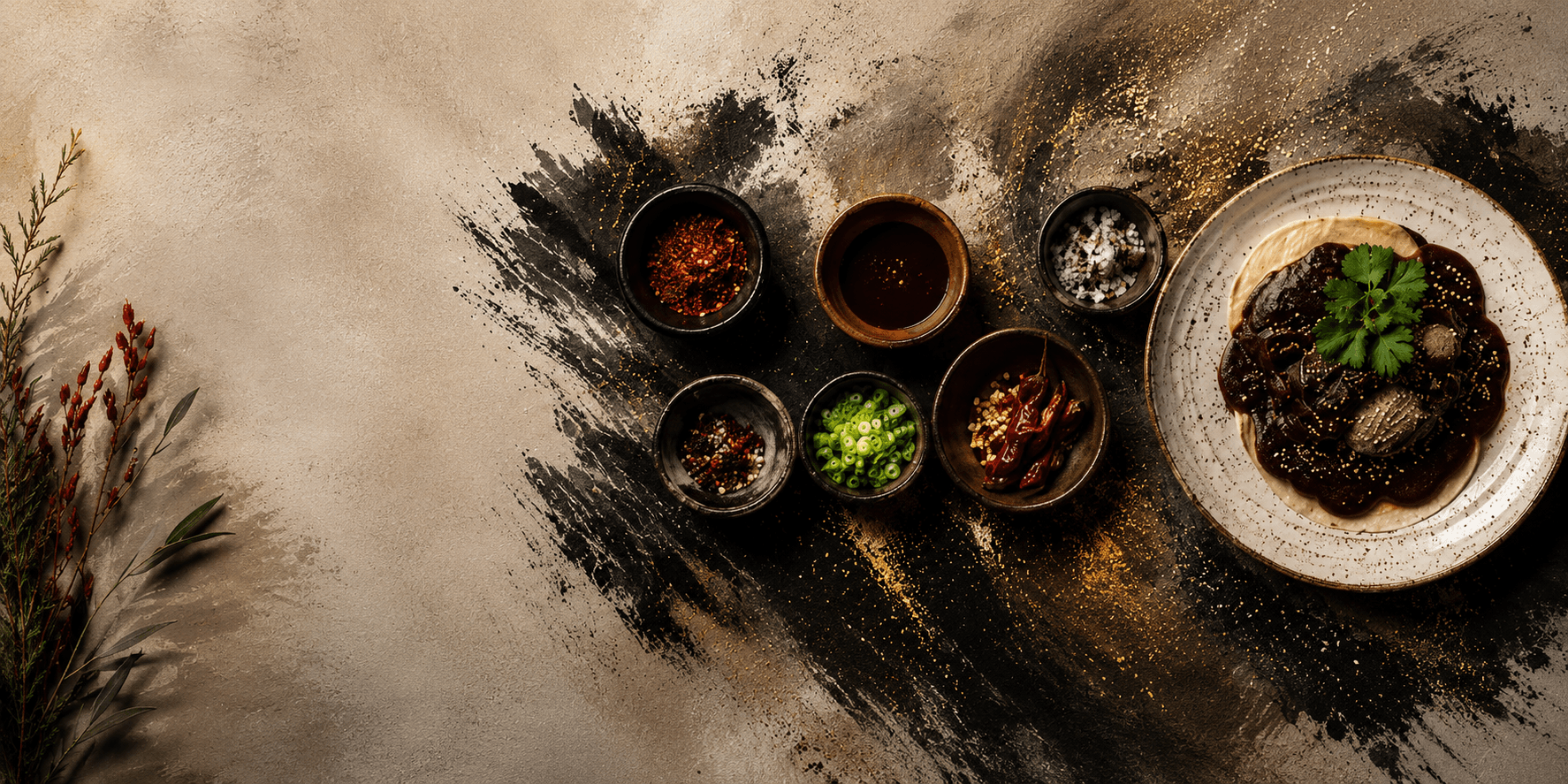
Jorim (조림) means "braised and reduced" — a Korean cooking technique where the primary ingredient is cooked in a sauce that reduces until it coats and glazes rather than remaining as liquid broth.
This technique is used across a wide range of Korean dishes: braised potatoes, braised fish, braised short ribs, braised lotus root, braised dried radish. The flavors vary significantly (some are spicy, some sweet, some both), but the technique is consistent: cook with more liquid, reduce until the sauce clings to the ingredient.
The Jorim Principle
The sauce cooks down. This is the essential principle of jorim.
At the start: the sauce is loose and the ingredient sits in it. At the end: the sauce has reduced by 50-70%, becoming thick, sticky, and intensely flavored — fully coating each piece.
This requires a specific ratio of sauce to ingredient and a specific level of patience. Rushing jorim with high heat burns the sugars and makes the sauce bitter. Low-medium heat, patience, and occasional turning produce the right result.
The Base Sauce Formula
Most jorim sauces follow a variation of this base:
- 3 tbsp soy sauce (ganjang)
- 2 tbsp water or broth
- 1 tbsp mirin or Korean corn syrup (물엿)
- 1 tbsp sugar (or honey)
- 1-2 cloves garlic, minced
- 1 tsp sesame oil (added at the end)
- 1 tsp sesame seeds (garnish)
Variations:
- Spicy jorim: Add 1-2 tsp gochugaru or 1 tsp gochujang
- Ginger jorim: Add 1 tsp grated ginger
- Deeper: Add 1 tsp doenjang (adds fermented depth)
Essential Jorim Recipes
Gamja Jorim (감자조림) — Braised Potatoes
One of Korea's most popular banchan. Small potatoes (or large potatoes cut into 2-3cm cubes) in sweet-spicy soy glaze.
Method:
- Cut potatoes into bite-sized pieces. Soak in cold water 5 minutes (removes excess starch, prevents sticking)
- Dry completely
- Sauté in oil over medium-high heat until golden on the outside (3-4 min)
- Add the jorim sauce plus 2-3 tbsp water
- Bring to a simmer. Cook over medium-low heat, turning occasionally, 10-15 min until sauce reduces to a thick glaze and the potatoes are cooked through
- Finish with sesame oil and sesame seeds
Dubu Jorim (두부조림) — Braised Tofu
Firm tofu, pan-fried first, then glazed in a spicy sauce.
Method:
- Slice firm tofu into rectangular slabs (1cm thick). Dry thoroughly on paper towels.
- Pan-fry in oil over medium-high heat until golden on both sides (3-4 min per side)
- Add jorim sauce (include gochugaru for the spicy version)
- Reduce until sauce coats the tofu, 3-5 minutes
- Add scallions in the last minute
The critical step: Drying the tofu thoroughly before frying. Wet tofu doesn't develop a proper crust and absorbs too much oil. Press firm tofu under a weighted board for 10-15 minutes, or dry well with paper towels.
Galchi Jorim (갈치조림) — Braised Hairtail Fish
Hairtail fish (갈치, galchi) cut into sections and braised in a spicy gochugaru-ganjang sauce with daikon and scallion. A traditional Korean fish banchan.
Method:
- Season fish sections with salt, let rest 5 minutes
- Layer daikon slices in the bottom of a pan (prevents fish from sticking)
- Place fish sections on top of daikon
- Add jorim sauce (add 1.5 tbsp gochugaru for the traditional spicy version) + enough water to half-submerge the fish
- Bring to a simmer. Cover, cook 10 minutes.
- Remove lid, increase heat slightly. Reduce sauce 5-7 minutes, basting the fish. The sauce should be reduced to a glaze on the fish surface.
The Glaze Test
Jorim is done when a wooden spoon dragged across the bottom of the pan leaves a clear trail that fills in slowly. If the trail fills instantly, reduce more. If the sauce has dried onto the pan and is beginning to burn, add a tablespoon of water immediately.
Jorim is one of the most frequently made Korean side dishes because it's fast, requires minimal special ingredients, and produces deeply flavored, visually appealing banchan from any protein or vegetable. Once you understand the sauce-reduce principle, you can apply it to almost any ingredient in your kitchen with Korean results.
Free recipes from this world
Related reading
The full recipes live in the book.
Get Seoul Meets Mexico City on AmazonAs an Amazon Associate we earn from qualifying purchases. This is an affiliate link — it costs you nothing extra.
Paperback $19.99 · Kindle $9.99