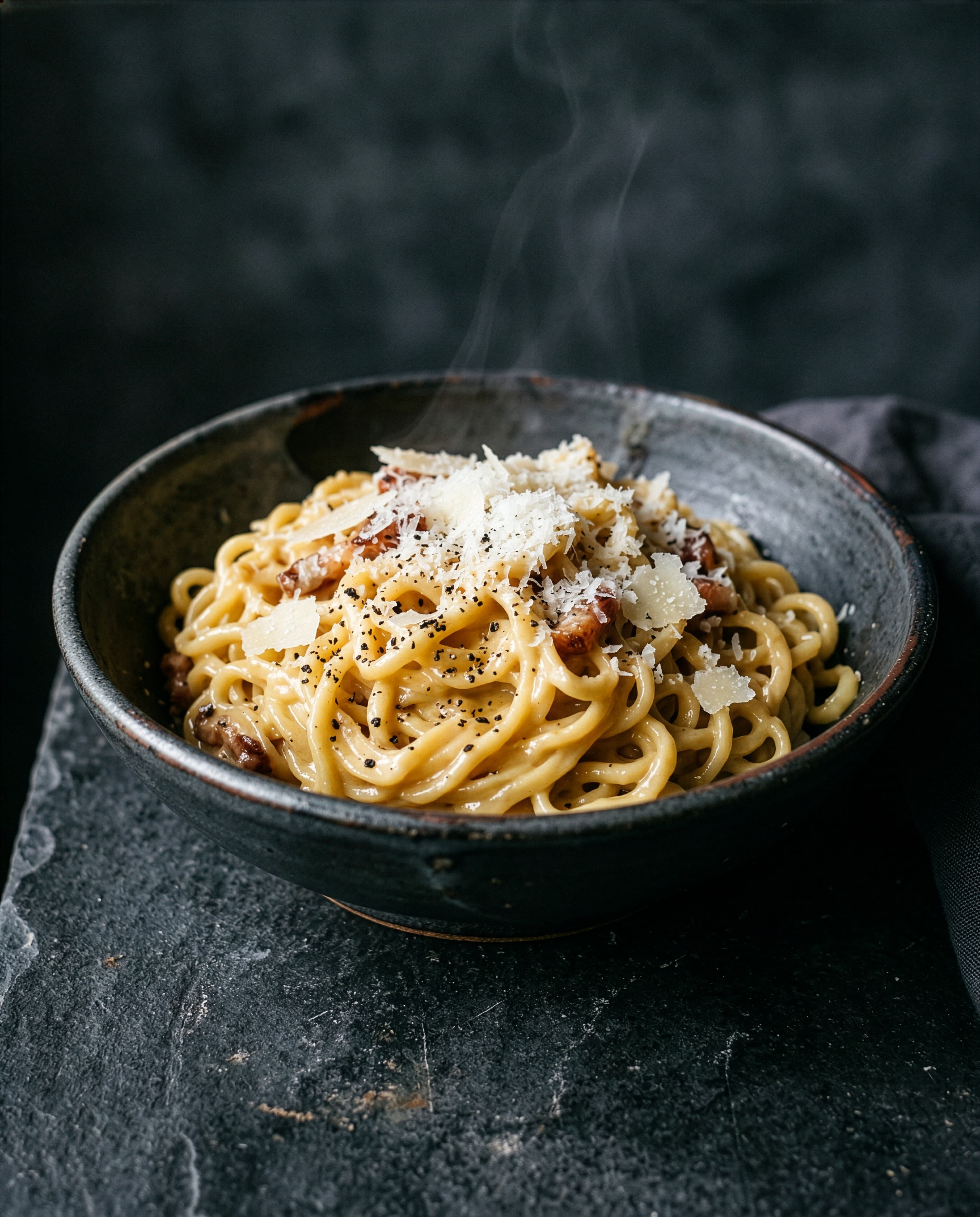
Naengmyeon (냉면) — cold noodles — is Korea's summer noodle dish, though it appears year-round at traditional Korean restaurants. The noodles themselves are distinctive: made from buckwheat flour (sometimes mixed with sweet potato starch), they have an unusually firm, chewy, almost elastic texture that is unlike wheat noodles, rice noodles, or glass noodles.
They are eaten cold. In many restaurants, the broth includes literal ice cubes.
The Two Main Styles
Mul Naengmyeon (물냉면) — Cold Broth Noodles
Mul = water. The noodles are served in a large bowl of cold, clear beef broth, often with ice floating in it.
The broth: Traditionally made from beef bone broth (sagol, the long-simmered bone stock) clarified and chilled — usually overnight, so the fat solidifies and can be removed, leaving a perfectly clear broth. Modern versions may use dongchimi (white radish kimchi water) or a combination of beef broth and dongchimi water, which adds a fermented tartness.
The toppings:
- Thin-sliced naengmyeon-cut boiled beef (different cut than galbi)
- Half a hard-boiled egg
- Julienned cucumber
- Thin-sliced Asian pear (sweetness and acidity)
- A small mound of hot mustard (gyeoja) and vinegar on the side
- Optional: thinly sliced daikon
How to eat: Add the mustard and vinegar to the broth to taste (the amount is a personal choice — some Koreans use neither; some use a lot). Mix. Eat the noodles and toppings from the broth.
The scissors: The naengmyeon noodles are extremely long and elastic — eating them whole is difficult. Servers at traditional naengmyeon restaurants arrive with scissors and ask if you'd like the noodles cut. Traditional purists say no (the long noodle represents long life); most practical diners say yes.
Bibim Naengmyeon (비빔냉면) — Spicy Mixed Noodles
Bibim = mixed. No broth — the cold noodles are topped with a spicy gochugaru-based sauce and various garnishes, then mixed before eating.
The sauce: Gochugaru + gochujang + soy sauce + sesame oil + vinegar + sugar + garlic. Bright red, spicy, sweet-sour. Significantly more assertive than mul naengmyeon's clean broth.
Toppings: Similar to mul but without the broth — usually beef, cucumber, egg, Korean pear.
Character: Spicy, sweet, sour, cold. A completely different experience from the clean, subtle mul version.
The Regional Origins
Pyongyang-style (평양냉면): From North Korea's capital Pyongyang, now associated with restaurants in Seoul that specialize in the Northern style. Uses pure buckwheat noodles (higher buckwheat content = grayer, denser noodle) in clarified beef broth. Subtle, restrained, clean — considered the "original" by traditionalists.
Hamheung-style (함흥냉면): From Hamheung in North Korea. Uses sweet potato starch noodles (more elastic, chewier, almost translucent) with a spicier bibim sauce. The two styles are made from different starch sources and have distinctly different textures.
The Heat-Fighting-Heat Logic
Eating cold noodles in ice-cold broth during summer follows the Korean counterintuitive belief (이열치열, iyeolchiyeol = "fight heat with heat") that restorative heat is useful in summer — but the cold naengmyeon tradition contradicts this, prioritizing physical cooling instead. Both philosophies coexist in Korean summer food culture: samgyetang (hot chicken ginseng soup) for iyeolchiyeol, naengmyeon for direct cooling.
Naengmyeon's distinctive noodle texture — that elasticity, that chew, the way they resist and then give — is unlike any other noodle in East Asian cooking. Once experienced, it's unmistakable. The combination of that specific noodle with ice-cold clear broth in summer is one of Korea's most satisfying sensory experiences.
Free recipes from this world
Related reading
The full recipes live in the book.
Get Tokyo Meets Tuscany on AmazonAs an Amazon Associate we earn from qualifying purchases. This is an affiliate link — it costs you nothing extra.
Paperback $19.99 · Kindle $9.99