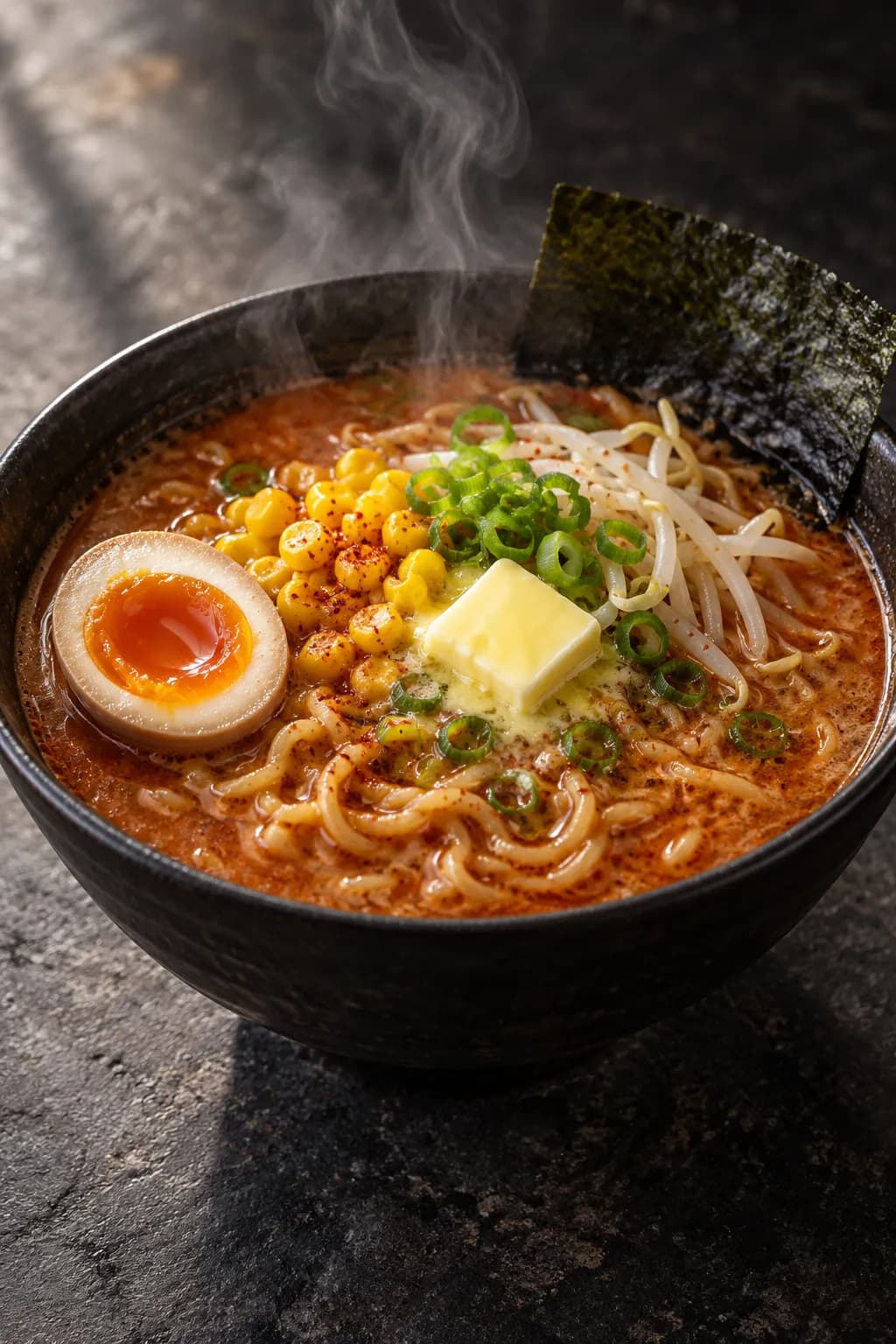
Ramen is a system, not a recipe.
The mistake home cooks make is treating a ramen bowl as a single dish to be cooked all at once. It isn't. Ramen is three separate components — tare, broth, and toppings — assembled at the moment of serving. Understanding this structure is the difference between ramen that tastes like instant noodles with extra steps and ramen that tastes like a restaurant made it.
Miso ramen is the most forgiving style for home cooking. The miso tare is complex enough on its own that it elevates a simple store-bought chicken stock into something that tastes intentional. It forgives imperfect broth. It forgives slight imbalances in seasoning. It is the style that gives you the most reward for your effort-to-skill ratio.
The Three-Component System
Component 1: The Tare — the flavor concentrate. Tare is the seasoning agent of ramen. In shio ramen, the tare is salt-based. In shoyu ramen, it's soy sauce-based. In miso ramen, it's miso-based. The tare is made separately, stored separately, and added to each individual bowl at serving time. It is not cooked into the broth.
Component 2: The Broth — the liquid base. This is the water and body of the bowl. It can be chicken stock, dashi, pork bone broth, or a combination. For miso ramen, chicken stock is the most practical and the most common.
Component 3: The Toppings — everything that sits on top of the noodles. Chashu pork, soft-boiled eggs, corn, butter, bean sprouts, nori, green onion.
These three components are prepared independently and combined at the moment of serving. That is the system. That is why ramen bowls at great restaurants can be made to order in under two minutes — the components are ready; they just need assembly.
The Miso Tare
The miso tare is the heart of miso ramen. Make it once and it keeps in the refrigerator for two weeks. Use it across the week.
Ingredients:
- 4 tablespoons awase miso (blended red and white)
- 2 tablespoons white miso (shiro miso)
- 3 cloves garlic, minced
- 1 tablespoon fresh ginger, grated
- 2 tablespoons sesame paste (nerigoma) or tahini
- 1 tablespoon toasted sesame oil
- 2 tablespoons sake
- 1 teaspoon soy sauce
Combine everything in a small bowl and mix until completely smooth. Taste. It should be intensely savory, slightly sweet from the white miso, with a background heat and depth from the awase. The sesame paste adds richness and body. The sake lightens it.
No cooking required. This is a cold blend. Store in a jar in the refrigerator.
The awase miso and white miso combination is intentional. White miso alone is too sweet. Red miso alone is too aggressive. Awase miso is balanced — this is why most Japanese home kitchens keep it as the default. Adding a portion of white miso on top gives the tare more sweetness and a lighter color that reads as "miso ramen" rather than "dark and muddy."
The Broth
For weeknight miso ramen, the broth is simple: good store-bought chicken stock warmed with dashi powder.
Bring 4 cups of chicken stock to a gentle simmer. Add 1 teaspoon of dashi powder (hondashi or any katsuobushi-based powder). Taste. It should be lightly savory, clean, and hot. The tare will do the heavy lifting of flavor; the broth just needs to be a good liquid base.
The from-scratch version is better and worth making on weekends: make a dashi by steeping kombu in cold water for 1 hour, then bringing to just below a boil, removing the kombu, adding katsuobushi, steeping 5 minutes, and straining. Combine this dashi with a good chicken stock (homemade or high-quality store-bought). The combination of the clean seafood and kelp notes of dashi with the fat and richness of chicken stock produces a broth with layered complexity that the powder version approximates but doesn't match.
See the full homemade ramen guide for the from-scratch dashi-chicken stock method. See also the miso soup guide for the foundational dashi technique.
How to Build the Bowl: The Critical Technique
The tare goes in the bowl first. Not the pot.
This is the rule that separates competent ramen from great ramen and it is frequently violated in home kitchens.
If you add the miso tare to the hot broth in the pot and boil it together, two things go wrong. First, the miso boils — heat destroys the live cultures and changes the flavor, making it sharper, less complex, more one-dimensional. Second, you've committed yourself to a single level of seasoning for the entire pot. Every bowl will taste the same, and if you misjudged the ratio, there's no fixing it.
The correct method: add 2–3 tablespoons of tare to each empty bowl. Ladle hot broth over the tare (350ml per bowl). The heat of the broth dissolves the tare. Stir briefly. Taste and adjust — more tare if it needs more seasoning, more broth if it's too intense. Every bowl is seasoned individually. Every bowl is balanced independently.
This is not a minor detail. This is the architecture of ramen.
The Noodles
Buy fresh ramen noodles from the refrigerator section of an Asian grocery store. Dried ramen noodles work but fresh noodles have better texture and spring.
Cook the noodles separately in a large pot of unsalted boiling water. Follow the package time — typically 2–3 minutes for fresh. Drain, shake off excess water, and add directly to the seasoned broth bowl.
Do not add salt to the noodle water. Ramen noodles are already alkaline (made with kansui — a lye-water solution) and have their own flavor. Salted water competes.
The Toppings: Miso Ramen Specifics
Corn and Butter
This combination is the signature of Sapporo-style miso ramen — the style that originated in Hokkaido in the 1960s and became the template for miso ramen nationwide.
The butter is not a Western influence or a fusion element. It is a Hokkaido element. Hokkaido is Japan's northernmost main island and its dairy farming region — the source of most Japanese butter and milk. Adding a knob of butter to miso ramen was a natural expression of local ingredients in the local style. The fat richness of butter plays against the fermented depth of miso the same way cream plays against parmesan in a pasta sauce: each makes the other taste more like itself.
Corn is also a Hokkaido crop. It is not decorative. It is regional.
Add a small knob of unsalted butter (about a teaspoon) and a heaping tablespoon of corn to the finished bowl. The butter will melt as you eat, creating a slick of fat on the broth surface that adds richness to every sip.
Chashu Pork
Braised pork belly, sliced thin, placed on top. Two slices per bowl is standard. See the homemade ramen recipe for the full chashu method.
Soft-Boiled Marinated Egg (Ajitsuke Tamago)
Boil eggs for 6 minutes 30 seconds, transfer to ice water, peel, and marinate in a mixture of soy sauce, mirin, and a little sake for at least 4 hours (overnight is better). Halve lengthwise before placing in the bowl. The yolk should be jammy — set but dark orange, not fully hard.
Bean Sprouts, Nori, Green Onion
Bean sprouts go in raw — they soften in the hot broth while you eat. A sheet of nori stands vertically against the bowl edge. Green onion, sliced thin, scattered over everything.
The Fusion Angle: Miso Tare and French Onion Soup Base
The miso tare, structurally, is a flavor concentrate dissolved into a liquid base to make a soup. This is also the exact mechanism of French onion soup.
French onion soup builds its base from caramelized onions — a Maillard reaction that generates an enormous amount of glutamate as the onion sugars break down and react with amino acids. The caramelized onion is cooked in butter, deglazed with wine, then dissolved into beef stock. The onion is the concentrate; the beef stock is the base.
Miso is fermented soybeans. Fermentation generates glutamate — the same umami compound, arrived at differently. Miso dissolved in dashi-chicken stock performs the same function as caramelized onion dissolved in beef stock.
Both soups are umami concentrates made soluble in liquid. One achieves glutamate through Maillard browning of sugar; the other achieves it through microbial fermentation of soybean protein. The tasting notes are different. The mechanism is the same.
Schedule and Storage
The miso tare keeps refrigerated for 2 weeks. The broth keeps refrigerated for 4 days, or frozen for 3 months. The marinated eggs keep refrigerated for 5 days. The chashu keeps refrigerated for 5 days or frozen for 1 month.
A bowl of miso ramen on a Tuesday night takes 15 minutes if the components are ready. The investment is in the components; the return is all week.
Quick Reference
- Tare: awase miso + white miso + garlic + ginger + tahini + sesame oil + sake
- Broth: good chicken stock + dashi powder (or from-scratch dashi-chicken blend)
- Tare goes in the bowl first — never boil the miso in the pot
- 2–3 tablespoons tare per 350ml broth per bowl
- Corn + butter is traditional Hokkaido, not fusion
- Tare keeps 2 weeks refrigerated
Free recipes from this world
Related reading
The full recipes live in the book.
Get Tokyo Meets Tuscany on AmazonAs an Amazon Associate we earn from qualifying purchases. This is an affiliate link — it costs you nothing extra.
Paperback $19.99 · Kindle $9.99