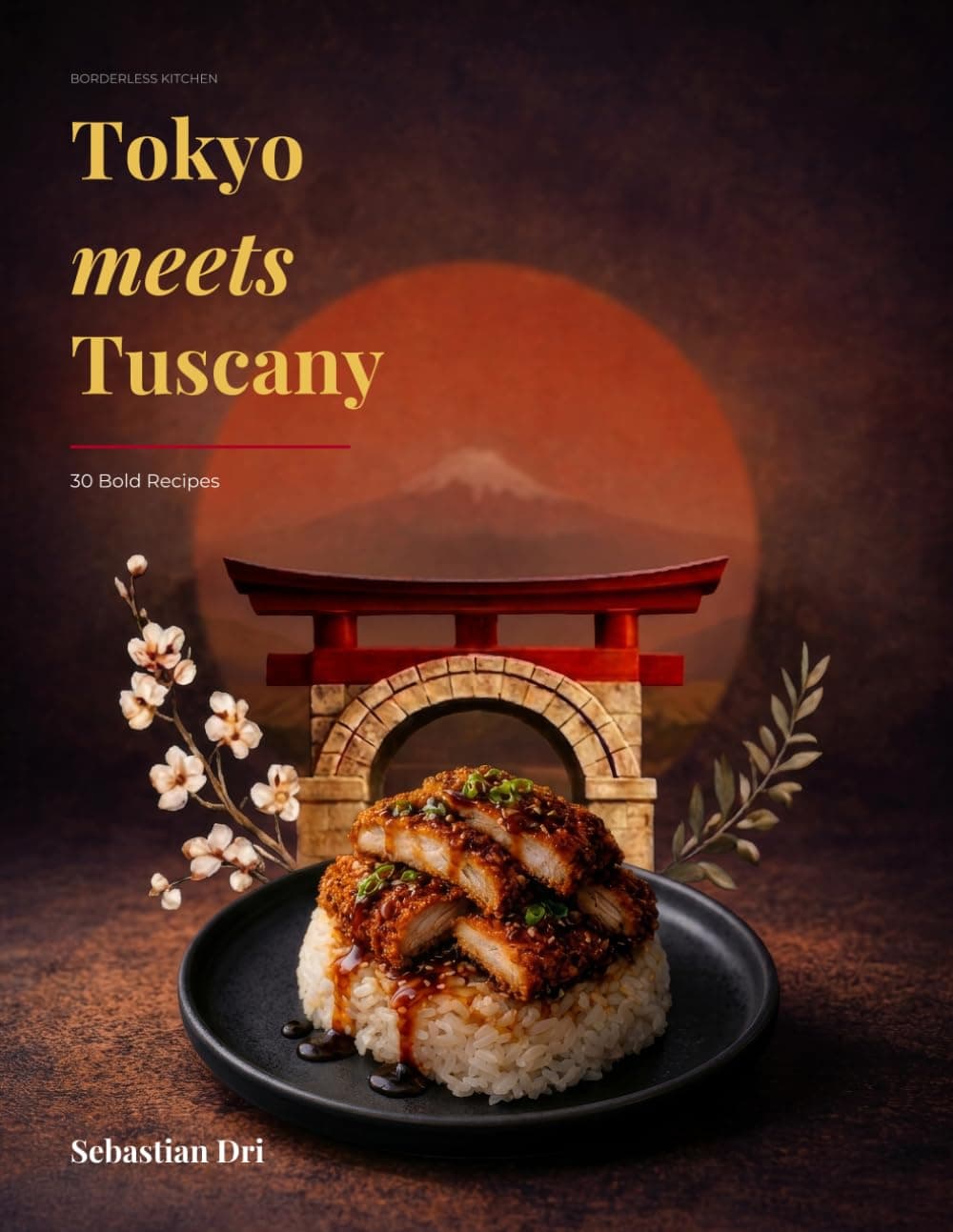
The border was always a fiction, and most cooks have known it for a long time.
Tomatoes arrived in Europe from the Americas. Chilis crossed every ocean twice. Noodles migrated east and then west and then east again, and nobody can agree which way is the right way round. Every cuisine that claims purity is, on closer inspection, a palimpsest — a text written on top of another text, which was written on top of another text.
This series is not about erasing those layers. It is about reading them.
When I say Italian soul, Japanese precision, I mean a specific thing. Italian cooking lives in the hand — in the grandmother's pinch, the uneven tear of basil, the wine poured with no measurement. Japanese cooking lives in the knife — in the careful cut, the single temperature, the silent room. Both are correct. Both are, in their own ways, reverent. And both are, when you hold them next to each other, describing the same thing from two sides.
What the two pantries actually share is a word neither language coined: umami. Italian cooks knew it under aged cheese and slow tomatoes. Japanese cooks knew it under dried fish and seaweed. The molecule was the same. Only the vocabulary differed.
Free recipes from this world
Related reading
The full recipes live in the book.
Get Tokyo Meets Tuscany on AmazonAs an Amazon Associate we earn from qualifying purchases. This is an affiliate link — it costs you nothing extra.
Paperback $19.99 · Kindle $9.99