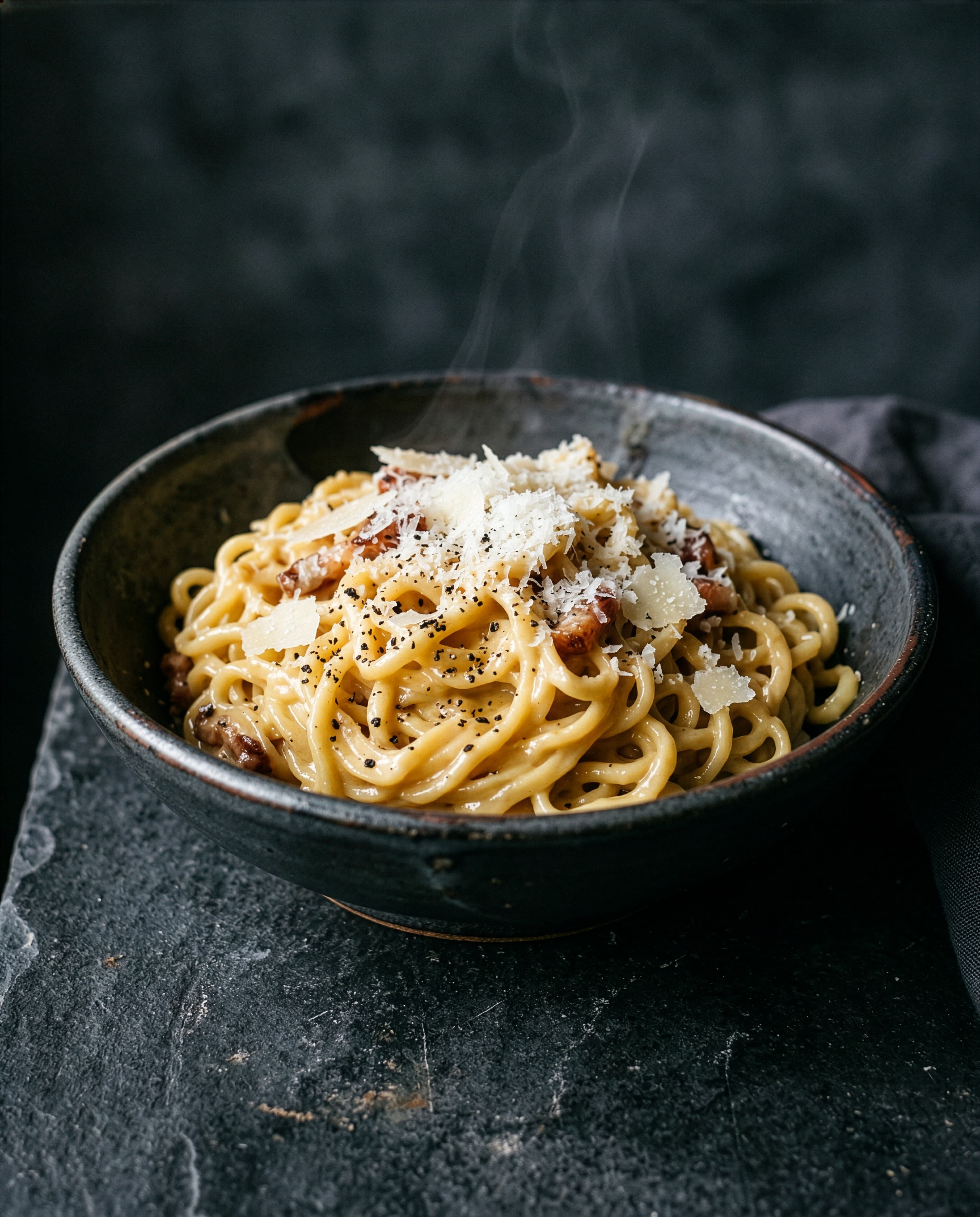
Most pasta mistakes happen before the sauce. Undersalted water, overcooked noodles, drained and rinsed pasta, and sauce that never touches pasta in the pan — these four errors turn a potentially great dish into something merely acceptable. The sauce is almost never the problem.
Dried vs. Fresh Pasta: Not a Quality Hierarchy
The assumption that fresh pasta is superior to dried is wrong. They are different products suited to different preparations.
Dried pasta is made from semolina (durum wheat) and water, extruded under pressure, and slowly dried. The gluten structure is dense and elastic; it holds up to long cooking and long sauces. Its neutral flavor makes it ideal for bold, oil-based, or tomato-based sauces where the pasta is a vehicle. Bronze-die extrusion (rough, porous surface) holds sauce better than Teflon-extruded pasta (smooth, shiny).
Fresh pasta is made from soft flour and eggs. It cooks in 1–3 minutes, has a tender, silky texture, and a rich eggy flavor. This flavor competes with strong sauces — fresh pasta shines with butter, sage, cream, or delicate cheese sauces that complement rather than overwhelm it. Fresh pasta is not better than dried pasta — it's the right tool for specific preparations.
Which to use:
- Carbonara, cacio e pepe, amatriciana: dried spaghetti or rigatoni
- Bolognese: either (tagliatelle fresh is traditional; spaghetti dried is more common)
- Butter and sage: fresh pasta, always
- Pesto: either, dried linguine or trofie is traditional
- Canned tuna, anchovy, olive oil preparations: dried, always
The Pasta Water
This is the most important variable in pasta cooking and the most ignored.
Salt aggressively: Pasta water should taste like mild seawater — approximately 10g (2 teaspoons) of salt per liter of water. This is the only opportunity to season the pasta itself. Pasta cooked in unsalted water tastes of flour regardless of what sauce you put on it.
Use the pasta water in the sauce: Starchy pasta water — reserved before draining — is the key to creating sauces that cling to pasta rather than pooling at the bottom of the bowl. The starch acts as an emulsifier; when combined with fat (olive oil, butter, rendered pork fat), it creates a cohesive sauce rather than separated oil and liquid.
Reserve a full cup before draining. Add it a tablespoon at a time when finishing the dish in the pan.
Don't rinse the pasta: Rinsing removes the surface starch that helps sauce cling. The only exception is pasta for a cold salad, where you want to stop the cooking immediately and prevent sticking.
Al Dente: What It Actually Means
Al dente means "to the tooth" in Italian — pasta with a slight resistance when bitten, not hard or chalky in the center, but not soft all the way through. In cross-section, perfectly cooked pasta should show a very thin white core of slightly undercooked starch at the center.
The reason to stop here: the pasta continues cooking in the sauce. If you drain it at the exact moment it reaches the texture you want to eat, it will be overcooked by the time it reaches the plate.
Subtract 2 minutes from the package time as your drain point. Then finish it in the sauce.
Testing: Bite through a strand every minute after the halfway point. The white chalky center should diminish over time. Stop when there's just a thin trace of it — usually 1–2 minutes before the package says it's done.
Finishing Pasta in the Sauce
The single technique that separates pasta cooked in Italian homes from pasta cooked in most home kitchens is finishing — cooking the drained pasta directly in the sauce for the final 1–2 minutes.
Why it works:
- The pasta absorbs the sauce's flavor as it finishes cooking
- The residual starch on the pasta's surface thickens the sauce as it heats
- The pasta water added during this stage loosens the sauce to the right consistency
- The result is pasta that is coated in sauce, not sitting in it
The method:
- Add drained pasta to the pan with the sauce over medium heat
- Add pasta water — 2–4 tablespoons to start
- Toss constantly, adding more pasta water as needed until the sauce coats the pasta and pools slightly at the bottom of the pan
- Remove from heat, add any finishing fat (butter, olive oil, cheese) and toss off-heat
The sauce should flow when the pan is shaken, not sit as a pool of liquid, and not be dry. This consistency is called "all'onda" — wavy.
Making Fresh Pasta
Fresh pasta requires only flour and eggs. A pasta machine is useful but not essential — a rolling pin and patience produce excellent results.
Basic ratio (serves 2):
- 100g 00 flour (or all-purpose)
- 1 large egg
Method:
- Mound flour on a clean surface, make a well in the center.
- Crack egg into the well. Beat with a fork, gradually incorporating flour from the inner wall of the well.
- When too thick to fork, begin kneading with your hands. Knead 8–10 minutes until smooth and elastic. The dough should not stick to the surface and should spring back slowly when pressed.
- Wrap and rest at room temperature 30 minutes (gluten relaxes, making rolling easier).
- Roll thin — for spaghetti and tagliatelle, roll until you can see your hand through it (about 1–2mm). For filled pasta, slightly thicker.
- Cut and use immediately, or dust with semolina, loosely tangle into nests, and dry for up to 2 hours.
What goes wrong: Dough too dry (add water a few drops at a time), too sticky (add flour gradually), won't stretch (hasn't rested enough — give it more time), tears when rolling (too thin too fast, or needs more rest).
The Five Sauces You Should Know
Every classic Italian pasta preparation teaches the same core technique in a slightly different form:
Aglio e olio (garlic and oil): Cooked garlic in olive oil, pasta water to emulsify. The foundational technique for all oil-based sauces.
Carbonara: Egg yolks + pecorino + guanciale fat + pasta water. The emulsification is everything — the eggs must not scramble. Done off heat.
Cacio e pepe: Pecorino + pasta water + black pepper. The cheese must dissolve into the water, not clump. The temperature and ratio of water to cheese is the skill.
Pomodoro: Crushed whole tomatoes, olive oil, garlic. Simplicity that requires good tomatoes.
Bolognese: A meat braise reduced with tomato, milk, and wine, served with pasta. The opposite of quick — it improves with time.
Good pasta is a series of small, unglamorous decisions: salt the water correctly, cook it two minutes short, save the water, finish it in the sauce, and add fat at the end. None of these steps is complicated. Together they separate pasta that's fine from pasta that's genuinely good.
Free recipes from this world
Related reading
The full recipes live in the book.
Get Tokyo Meets Tuscany on AmazonAs an Amazon Associate we earn from qualifying purchases. This is an affiliate link — it costs you nothing extra.
Paperback $19.99 · Kindle $9.99