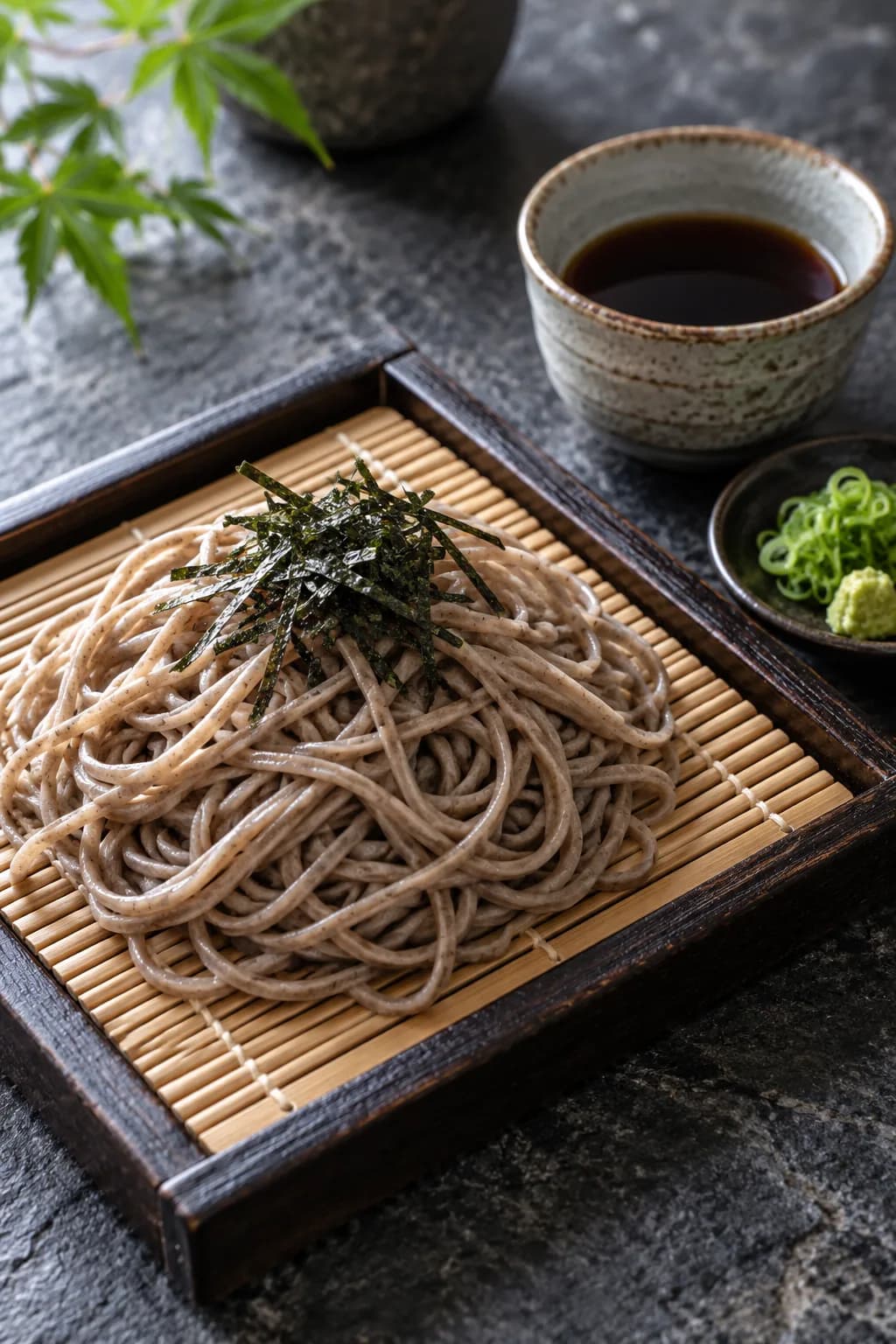
Soba is buckwheat flour noodles — nutty, slightly earthy, with a texture that's more substantial than wheat noodles and distinctly different from ramen or udon. In Japan, soba exists in two primary formats: cold (zaru soba) with a dipping sauce, or hot in a clear dashi broth. The same noodle, two completely different experiences.
Soba is also one of the fastest Japanese meals: the noodles cook in 4-5 minutes, the tsuyu dipping sauce is a 5-minute preparation, and the dish is done.
About Soba Noodles
What's in them: Traditional soba is 100% buckwheat flour (juwari soba), but most commercial soba is a blend of buckwheat and wheat flour (typically 80% buckwheat / 20% wheat, called hachi-wari soba). The wheat helps with binding — 100% buckwheat soba is more delicate and harder to cook without breaking.
The buckwheat flavor: Nutty, slightly earthy, more assertive than wheat noodles. The flavor is the point. Soba served with a mild dipping sauce allows the buckwheat character to come forward.
Fresh vs dried: Fresh soba is superior in texture — more yielding, more complex flavor. Available at Japanese grocery stores, Japanese specialty soba shops. Dried soba (the rectangular wrapped blocks from any Asian grocery) is excellent and what most home cooks use.
Gluten-free note: 100% buckwheat soba (juwari) is gluten-free. Blended soba contains wheat and is not.
The Tsuyu (Dipping Sauce)
For cold soba, the tsuyu is the flavor delivery system. A proper tsuyu is made from dashi, soy sauce, and mirin.
Quick tsuyu (10 minutes):
- 200ml dashi (instant or from scratch)
- 4 tablespoons soy sauce
- 3 tablespoons mirin
- 1 tablespoon sake
Combine in a small saucepan. Bring to a simmer. Cook 2 minutes. Cool. Refrigerate until cold.
The tsuyu should be served cold, in a small cup or bowl. The soba noodles are dipped briefly — not submerged — in the sauce before eating. The dipping sauce is intentionally more concentrated than a broth; a brief dip is all you need.
Standard tsuyu garnishes: grated wasabi (add a small amount to the cup of tsuyu), finely sliced green onion (added directly to the tsuyu cup), grated daikon (optional).
Cold Soba (Zaru Soba)
Zaru soba — soba served on a bamboo mat (zaru) or plate — is the classic summer preparation. Cold soba has more textural presence than hot soba; the chilled noodles are slightly firmer and the buckwheat flavor is more pronounced.
Cooking:
-
Bring a large pot of water to a rolling boil. Do not salt — unlike Italian pasta, soba noodles should be cooked in unsalted water.
-
Add the soba. Stir immediately to prevent sticking. Cook according to package instructions — typically 4-6 minutes until just cooked through with no raw center when a noodle is cut.
-
Drain immediately. Transfer to a colander and rinse thoroughly under cold running water, rubbing the noodles between your hands as you rinse. This is critical: rinsing removes the starch from the surface, which would otherwise make the noodles sticky and gummy. Continue rinsing until the water runs clear and the noodles feel clean (not slippery).
-
Plate on a bamboo mat or plate. Add ice beneath if you want to keep them very cold for longer.
Serve with: the cold tsuyu in a small cup, wasabi, sliced green onion, grated daikon, nori cut into thin strips.
The eating method: Take a small bundle of noodles with chopsticks, dip briefly in the tsuyu (with wasabi and green onion mixed in), eat. Slurping is correct and even encouraged — the sound indicates appreciation and the motion cools the hot noodle in your throat.
Hot Soba (Kake Soba)
Hot soba uses a gentler, diluted dashi broth rather than the concentrated tsuyu.
Hot soba broth (kake jiru):
- 600ml dashi
- 3 tablespoons soy sauce (use usukuchi/light soy for a pale, elegant broth if available)
- 2 tablespoons mirin
- 1/2 teaspoon salt
Combine and bring to a gentle simmer. Taste and adjust.
Cooking:
Cook and rinse the soba exactly as above (cold water rinse is still important even for hot preparations). Place in a serving bowl. Pour the hot broth directly over the noodles.
Standard toppings for hot soba:
- Kitsune soba — topped with abura-age (fried tofu pocket), simmered in sweet soy
- Tempura soba — topped with kakiage (vegetable tempura fritter)
- Tsukimi soba ("moon viewing soba") — raw egg cracked in at the table, poached by the hot broth
- Yamakake soba — grated nagaimo (mountain yam) poured over — unusual texture, traditional
Toshikoshi Soba (New Year's Eve Soba)
On December 31, Japanese families eat toshikoshi soba — literally "year-crossing soba." The long noodles represent longevity; eating them on New Year's Eve is a tradition dating to the Edo period. The noodles are cut (or break) during eating, which is considered acceptable and symbolizes cutting ties with the past year's troubles.
Simple preparation: hot kake soba with minimal toppings (green onion, mirin). The simplicity is the point.
The Soba Water (Sobayu)
At soba restaurants, the starchy water left from boiling the soba is served at the end of the meal as sobayu. Diners pour it into the remaining tsuyu to create a warm, starchy finishing drink. The starchy water softens the concentrated tsuyu into a light, warming broth.
At home: save the cooking water in a small pitcher. Bring out after the meal for the sobayu ritual.
The Fusion Angle
Buckwheat is not uniquely Japanese. In France, galettes bretonnes (buckwheat crepes from Brittany) and in Italy, pizzoccheri (buckwheat pasta from Valtellina, northern Italy) use buckwheat flour with similarly distinct, earthy results. The three traditions — Japanese soba, French galette, Italian pizzoccheri — arrived at buckwheat as a cold-climate grain with specific textural and flavor properties, and developed parallel preparations that emphasize rather than mask the buckwheat character.
The key insight: buckwheat works best when the other components are mild enough to let it speak. Tsuyu's clean soy-dashi flavor, galette's egg-ham-cheese filling, pizzoccheri's butter-sage-Fontina sauce — all are calibrated to complement rather than cover the grain.
Free recipes from this world
Related reading
The full recipes live in the book.
Get Tokyo Meets Tuscany on AmazonAs an Amazon Associate we earn from qualifying purchases. This is an affiliate link — it costs you nothing extra.
Paperback $19.99 · Kindle $9.99