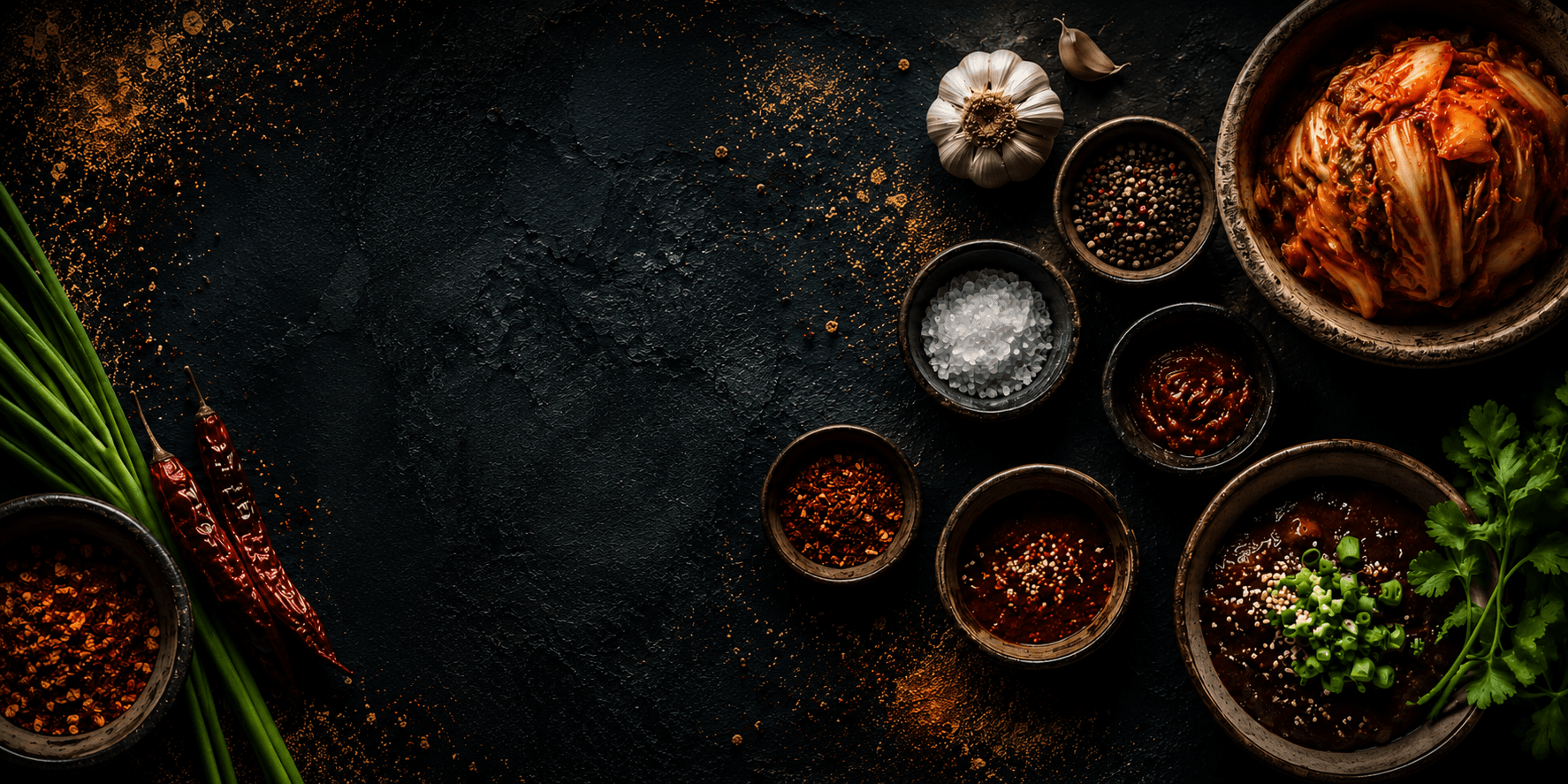
Ssamjang (쌈장) — the compound from ssam (wrap) + jang (sauce/paste) — is the Korean BBQ condiment that makes ssam work. Without it, the leaf wrap, rice, and grilled meat combination is functional but incomplete. With it, the combination has the savory, spiced, fermented depth that transforms three simple components into something greater.
Ssamjang is not complex to make. It's an assembly of existing Korean fermented pastes rather than a from-scratch preparation. The skill is in the balance.
What Ssamjang Is Made From
The two primary components:
Doenjang (된장, fermented soybean paste): The earthy, savory fermented base. Doenjang contributes umami depth, fermented complexity, and body. It's made from meju (dried fermented soybean blocks) pressed into paste and aged — the flavor is deeply savory with slightly pungent fermented character.
Gochujang (고추장, fermented red chili paste): The spice and sweetness component. Gochujang contributes heat, color, and a specific sweetness from the glutinous rice in its fermentation. It rounds the doenjang's earthiness with a brighter, slightly fruity-spicy note.
The standard ratio: 2 parts doenjang : 1 part gochujang. This produces a savory-forward ssamjang with moderate heat. Adjusting the ratio shifts the character:
- More doenjang: earthier, more complex, less spicy
- More gochujang: sweeter, spicier, more vibrant color
Additional components in most ssamjang recipes:
- Sesame oil: Adds richness and fragrance; brings the two pastes together
- Sesame seeds: Texture and additional nuttiness
- Garlic: Raw, very finely minced — assertive and fresh
- Green onion: Freshness and color
- Sugar or honey: Small amount to round and balance
- Sesame or peanut paste (chamggae, optional): Some versions add a small amount for extra richness
Classic Ssamjang Recipe
Makes approximately 1 cup (serves 4-6)
Ingredients:
- 4 tbsp doenjang
- 2 tbsp gochujang
- 1 tbsp sesame oil
- 1 tsp sugar (or honey)
- 2 cloves garlic, very finely minced (not crushed — minced fine so it distributes evenly)
- 2 stalks green onion, finely minced
- 2 tsp sesame seeds (chamkkae), lightly toasted
- Optional: 1 tsp sesame paste or natural peanut butter (for extra richness)
Method:
- Combine doenjang and gochujang in a bowl. Stir together until completely integrated.
- Add sesame oil, sugar, and garlic. Mix thoroughly.
- Fold in green onion and sesame seeds.
- Taste and adjust: more doenjang if too spicy; more gochujang if too mild; more sesame oil if too thick.
Texture: Ssamjang should be thick and spreadable — about the consistency of chunky peanut butter. Not runny, not dry. If too thick, thin with a small amount of sesame oil or water; if too loose, add more doenjang.
Storage: Refrigerate in a sealed container. Keeps 2 weeks. The flavors meld and deepen after 24 hours — make it a day ahead for best results.
Buying vs. Making
Commercial ssamjang is widely available — CJ Haechandle is the most common brand. It's convenient and perfectly acceptable. The reason to make from scratch:
- Control the ratio (more doenjang for complexity; more gochujang for heat)
- Fresh garlic and green onion make a noticeable difference in freshness
- Adjust sweetness level
Commercial ssamjang tends toward a slightly sweeter, more gochujang-forward profile that works well for most applications. Homemade ssamjang is more customizable and often more interesting.
How to Use Ssamjang
Korean BBQ ssam: The primary context. Apply a small amount (1/2 tsp) to a fresh lettuce or perilla leaf. Add rice, add grilled meat, add optional garnishes (garlic slice, chili slice, kimchi). Fold and eat in one bite. The ssamjang should be a supporting flavor element — not so much that it overwhelms the meat, not so little that the wrap is bland.
As a vegetable dip: Ssamjang works as a dipping sauce for raw vegetables — cucumber spears, carrot sticks, celery. The fermented complexity and heat make it significantly more interesting than ranch dressing.
With rice: A small amount of ssamjang alongside plain rice with other banchan is a traditional pairing.
As a marinade component: Thin ssamjang with a small amount of sesame oil and rice wine, and use as a marinade for pork, chicken, or tofu. Grill or pan-fry the marinated protein — the doenjang caramelizes, and the gochujang adds color and heat.
In stews: A tablespoon of ssamjang dissolved in stock adds instant depth to braises and stews. Think of it as a pre-made mirepoix in paste form.
The Doenjang Question
Not all doenjang produces the same ssamjang. The two common types:
Traditional doenjang (jaerae-sik doenjang, 재래식 된장): Fermented with wild meju (naturally inoculated mold). More pungent, more complex, more variable. The better ingredient for ssamjang with depth.
Improved-method doenjang (gaeryang doenjang, 개량식 된장): Made with commercially produced meju and controlled fermentation. Milder, more consistent, less pungent. Widely available; produces reliable ssamjang.
The standard brands (Haechandle, Sempio, CJ) use the improved-method doenjang. Traditional farmstead doenjang from Korean specialty stores produces ssamjang with noticeably more complexity.
Ssamjang vs. Doenjang Jjigae Paste
A common confusion: doenjang used directly in cooking (for doenjang jjigae stew) and ssamjang are different preparations. Ssamjang is a mixed condiment, eaten raw, not cooked. Doenjang for stew is used as a stock seasoning and cooked through. They're the same base ingredient (doenjang) used in completely different contexts.
Related reading: Korean Samgyupsal Pork Belly BBQ Guide | Korean Galbi BBQ Guide | Doenjang Korean Soybean Paste Guide
Free recipes from this world
Related reading
The full recipes live in the book.
Get Tokyo Meets Tuscany on AmazonAs an Amazon Associate we earn from qualifying purchases. This is an affiliate link — it costs you nothing extra.
Paperback $19.99 · Kindle $9.99