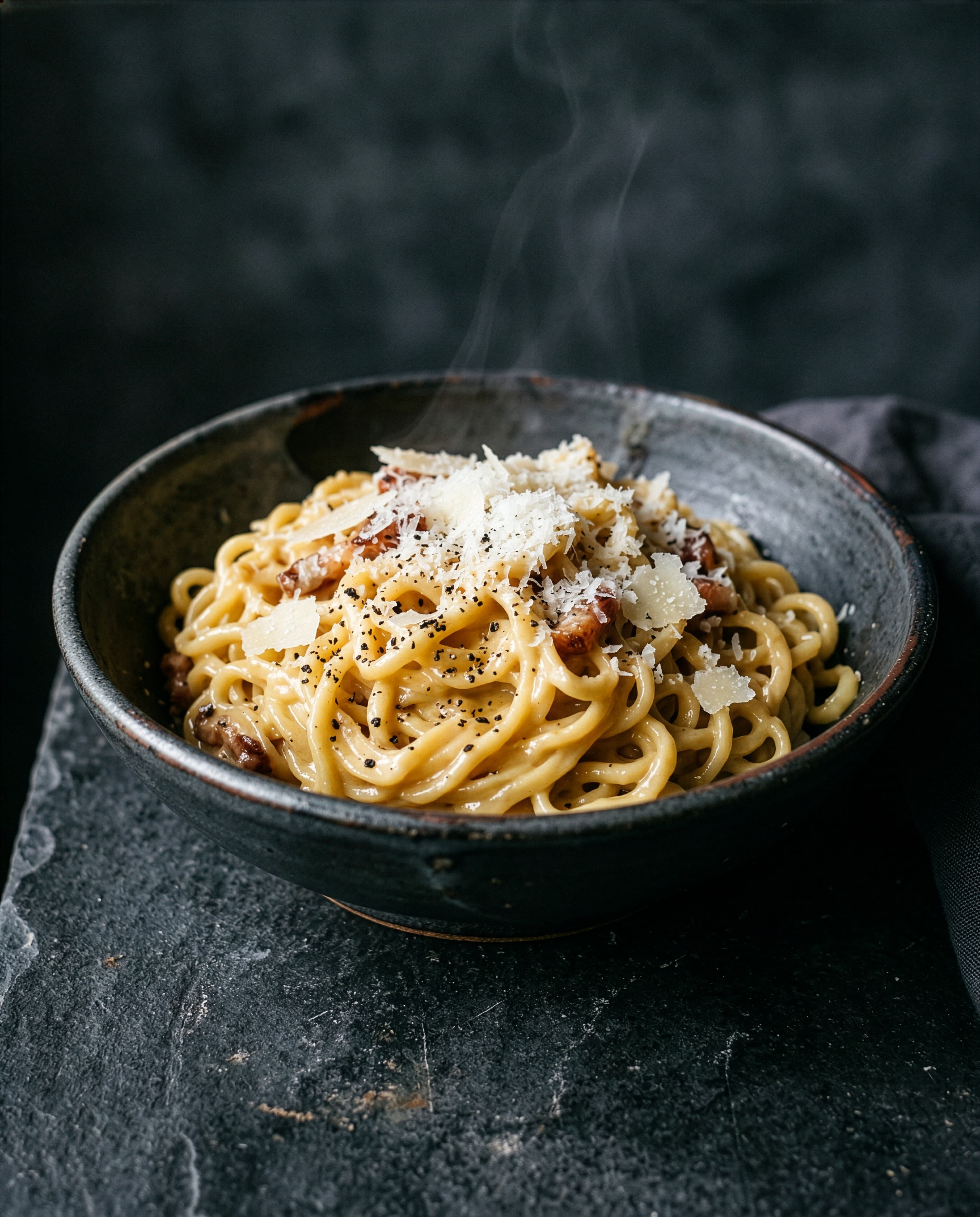
Udon (うどん) is the widest, thickest, and most satisfying Japanese noodle. Made from wheat flour, salt, and water, it has a clean flavor and a distinctive chewiness that comes from the gluten development during kneading. It's the opposite of delicate — udon is hearty, filling, and endlessly variable.
It's also Japan's most accessible noodle. While soba has a premium mystique and ramen has an artisan chef culture, udon exists across every price point and context — from Michelin-starred restaurants that hand-pull fresh udon to order, to convenience stores selling frozen udon that's ready in two minutes.
What Udon Is Made From
Udon is made from three ingredients: wheat flour (typically all-purpose or a soft wheat flour), water, and salt. The dough is kneaded until smooth and elastic, then rested, rolled, and cut into thick strips — typically 4-6mm wide and 4-6mm thick, creating a square or slightly rounded cross-section.
The gluten network developed during kneading gives udon its characteristic chewiness. Udon should have resistance when you bite it — not hard, but with a firm, springy texture that pushes back before yielding. This koshi (腰) — the chewiness — is what udon enthusiasts evaluate and what separates good udon from mediocre.
The Three Regional Udon Traditions
Sanuki Udon (讃岐うどん) — Kagawa Prefecture, Shikoku
The most famous udon style in Japan, from Kagawa Prefecture (formerly called Sanuki). Sanuki udon is firm, chewy, and square in cross-section. It's typically served in a light, clear dashi broth with simple garnishes. The noodle itself is the focus — the broth exists to enhance the noodle.
Kagawa has the highest per-capita udon shop density in Japan. Udon restaurants open as early as 4am, serving udon to workers before the day starts. The style of self-service udon shops unique to the region (serufu udon, where diners pick up a tray, watch their noodles being cooked and served, then add their own toppings) is a specific cultural institution.
Inaniwa Udon (稲庭うどん) — Akita Prefecture
A refined, thin, flat variety made by hand-stretching the dough (similar to somen but made to udon standards). Inaniwa udon is smooth rather than chewy — a more delicate experience than Sanuki. Traditionally served cold and dipped in sauce (like soba or somen) rather than in hot broth. Considered a premium product.
Kishimen (きしめん) — Nagoya
Flat, wide, and thin — more like a broad pasta than the typical udon shape. Served in a lightly flavored broth, kishimen is Nagoya's regional noodle specialty. The flat shape means it absorbs broth differently than round udon and has a different texture — more supple, less chewy.
Major Udon Dishes
Kake Udon (かけうどん)
The foundational preparation: udon in a hot dashi broth (kakejiru), garnished with sliced green onion and perhaps a piece of fish cake. The simplest version, focused on the noodle and the quality of the broth. The Kansai version uses a lighter, more dashi-forward broth; the Kanto (Tokyo) version uses a darker, soy-heavier broth.
Tsukimi Udon (月見うどん)
"Moon-viewing" udon — hot udon in broth with a raw egg cracked directly into the bowl. The uncooked egg yolk sits in the center of the broth like a moon reflected on water. You stir it in as you eat; the heat of the broth partially cooks the egg.
Tanuki Udon (たぬきうどん)
Hot udon topped with tenkasu — the crispy bits of tempura batter left over from frying. The tenkasu absorbs broth and becomes soft at the edges while retaining some crunch at the center. Simple and satisfying.
Tempura Udon (天ぷらうどん)
Hot udon with a piece of shrimp tempura placed on top. The tempura batter softens in the broth but the shrimp inside remains juicy. One of the most popular combinations.
Nabeyaki Udon (鍋焼きうどん)
Udon cooked and served in a small individual iron pot (nabe) — a hotpot-style presentation where the noodles, broth, vegetables, shrimp tempura, and egg all cook together in the pot that comes directly to the table. A winter dish, filling and warming.
Yaki Udon (焼きうどん)
Stir-fried udon — cooked noodles tossed in a hot wok or pan with vegetables, protein (pork, shrimp, beef), and a sauce of soy sauce, mirin, and Worcestershire. A home cooking staple. Less refined than broth-based udon but deeply satisfying and fast to make.
Zaru Udon (ざるうどん)
Cold udon served on a bamboo mat (zaru), dipped into a chilled tsuyu sauce — similar to the zaru soba format. Less common than cold soba (udon doesn't have the same prestige in cold service) but worth ordering in summer. The thicker noodle holds up better cold than soba.
Curry Udon (カレーうどん)
Udon in a curry-thickened broth — a hybrid of Japanese curry and udon. The curry broth is thick and rich, clinging to the fat noodles in a way that thinner noodles can't sustain. A beloved if somewhat unruly dish (the broth tends to splash).
How to Cook Udon
Fresh or refrigerated udon: Cook in a large pot of boiling, unsalted water for 2-3 minutes until just tender. Drain immediately and serve in broth, or rinse in cold water if serving cold.
Frozen udon: Run under warm water until loosened, then place in boiling water for 1-2 minutes. Frozen udon (especially the Japanese brand Sanuki udon sold in Asian grocery stores) can be exceptionally good — properly made and frozen immediately after cooking.
Dried udon: Cook for 8-12 minutes in a large pot of boiling water. Dried udon is the most common commercial format but typically has the least texture — still good for home cooking.
The rule: Udon cooks quickly once it goes in. Overcooked udon loses its koshi (chewiness) and becomes unpleasantly soft. Test 1-2 minutes before the recommended time and adjust.
Udon Broth at Home
The baseline ratio for udon broth (kakejiru):
Kansai style (lighter, more dashi-forward):
- 4 cups dashi
- 3 tablespoons light soy sauce (usukuchi shoyu)
- 2 tablespoons mirin
- Salt to taste
Kanto style (darker, more savory):
- 4 cups dashi
- 4 tablespoons regular soy sauce
- 2 tablespoons mirin
Both: bring to a simmer, do not boil, season and serve immediately over cooked noodles.
Udon is the noodle Japan eats when it wants to be comfortable. It's the food of cold days, late nights, quick lunches, and family kitchens. Less precious than soba, less complicated than ramen, udon's virtue is its directness — a thick noodle and good broth are enough.
Related reading: Udon vs Spaghetti | Homemade Ramen Recipe From Scratch | What Is Soba?
Free recipes from this world
Related reading
The full recipes live in the book.
Get Tokyo Meets Tuscany on AmazonAs an Amazon Associate we earn from qualifying purchases. This is an affiliate link — it costs you nothing extra.
Paperback $19.99 · Kindle $9.99