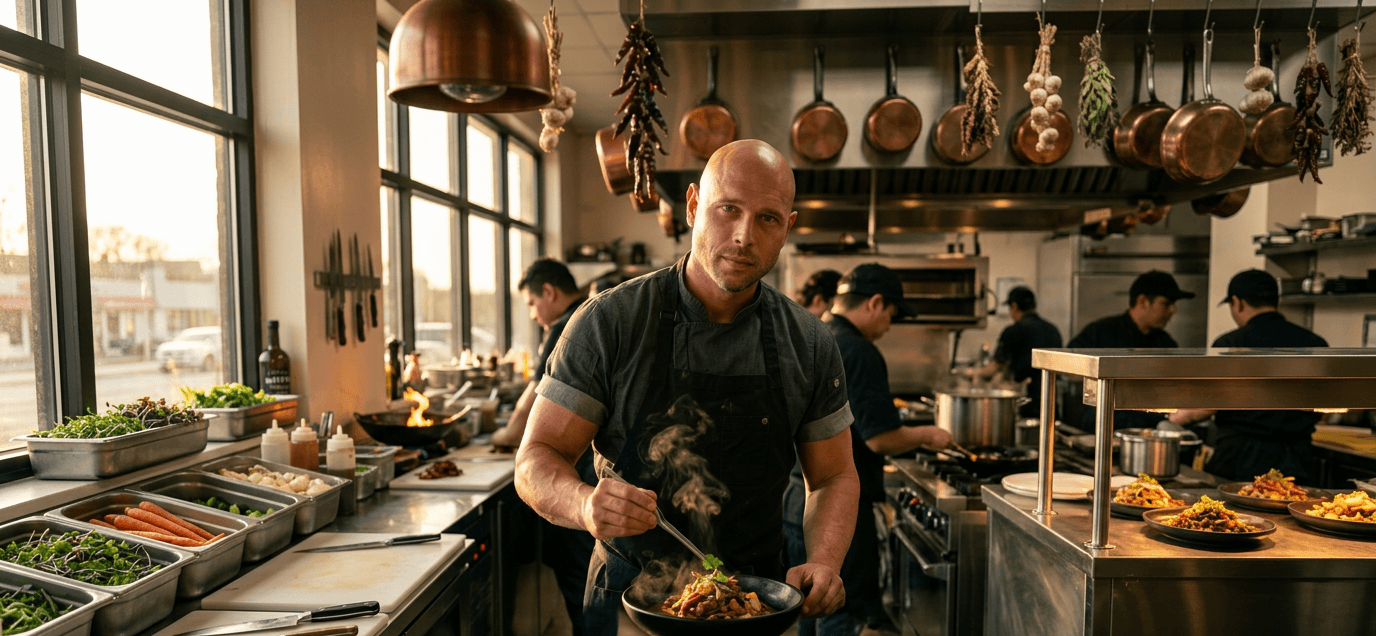
Wok hei is produced when food contacts a surface hot enough to cause simultaneous Maillard reactions, caramelization, and partial combustion of the oil — all within seconds. The flavors produced at 1,200°F (650°C) are chemically different from those produced at 400°F (204°C). No amount of time over low heat replicates them.
The problem for home cooks: most residential burners produce 7,000–12,000 BTUs. Professional wok burners produce 150,000–200,000 BTUs. The gap is not technique — it is physics.
But understanding why wok hei exists, and what each part of the technique is doing, makes it possible to extract the maximum from whatever heat source you have.
The Carbon Steel Wok: Why Material Matters
Cast iron retains heat well but responds slowly to temperature changes. Stainless steel conducts heat unevenly. Carbon steel — the traditional wok material — heats and cools quickly, responds immediately to temperature adjustments, and develops a seasoned surface (similar to cast iron) that provides non-stick properties and contributes flavor over time.
The seasoned surface: Repeated high-heat cooking with oil polymerizes the oil into a hard, non-stick layer — the same process as cast iron seasoning. This layer builds with use and is never scrubbed off. It also contributes subtle flavor to stir-fries cooked in a well-seasoned wok.
Shape: The round bottom of a traditional wok concentrates heat at the center, where the flame contacts the metal directly. The sloping sides allow food to be pushed up and out of the hottest zone while remaining in the pan. This is essential to the technique — constant motion between the hot center and the cooler sides.
Size: A 14-inch (35cm) wok is standard for home use. Too small and the food steams rather than fries; there is no room to spread ingredients in a single layer over the hot metal.
The Science of Wok Hei
Wok hei is not a single flavor compound — it is a suite of compounds produced by several simultaneous reactions:
Maillard reaction: Amino acids in proteins and reducing sugars react at high temperatures to produce melanoidins — the brown color and savory, roasted flavors of seared meat, char marks on vegetables, and the crust of stir-fried noodles.
Caramelization: The natural sugars in vegetables (especially onions, peppers, and carrots) caramelize rapidly at extreme heat, contributing sweetness and complexity.
Partial combustion of oil: At temperatures exceeding 500°F (260°C), oil begins to smoke and partially combust. The compounds produced — aldehydes, ketones, and lactones — are part of the characteristic smoky, slightly charred flavor of wok hei. This is why the technique requires a high smoke point oil (neutral oil with a smoke point above 450°F / 232°C) and why some chefs intentionally let oil flame briefly at the edges of the wok.
Rapid moisture evaporation: Food contains water. At high enough heat, that water flashes to steam instantly rather than pooling in the pan. The food sears rather than steams. The moment food steams, the pan temperature drops below 212°F (100°C) — the boiling point of water — and Maillard reactions stop. Wok cooking is a race against moisture.
The Core Technique
Mise en place before heat: Everything must be cut, measured, and within reach before the wok goes on the flame. Stir-frying moves too fast for any prep during cooking.
Get the wok screaming hot before adding oil: Heat the dry wok over the highest burner you have until it begins to smoke. Then add oil and swirl to coat. This sequence — hot wok, then oil — reduces sticking and ensures the oil hits a surface hot enough to immediately begin its work.
Oil temperature test: A drop of water flicked into the oiled wok should vaporize on contact with a sharp crack. If it sizzles quietly, the wok is not hot enough.
Cook in small batches: The most common mistake in home stir-fry. Adding too much food at once drops the pan temperature dramatically — the food releases moisture, the moisture cannot evaporate fast enough, and the food steams in its own liquid. The maximum amount of food that should be in a 14-inch wok at one time: 2–3 cups.
Constant motion: The spatula (or wok toss) moves food continuously between the hot center and the cooler sides, ensuring everything makes repeated contact with the hottest surface without burning.
The toss: Tossing the wok — lifting and flipping the contents through the air — does two things: exposes all surfaces of the food to air (which can briefly ignite surface oil, contributing wok hei compounds) and moves food more efficiently than a spatula. Not essential, but the technique that creates the most authentic wok hei flavor.
Sequencing in a Stir-Fry
The order of ingredients matters because different ingredients need different amounts of time at high heat:
- Aromatics first (garlic, ginger, scallions) — 15–30 seconds. They will scorch if left too long; they are just blooming in the oil to infuse flavor.
- Protein — pushed to the hot center until seared on the outside (30–90 seconds depending on size). Removed if cooking separately to avoid overcooking while vegetables cook.
- Dense vegetables (broccoli stems, carrots, onions) — added first because they need the most time.
- Tender vegetables (leafy greens, bean sprouts, snap peas) — added last, 30–60 seconds before finishing.
- Sauce — added in the final minute, tossed to coat everything and reduce slightly.
Velveting: The Chinese technique of marinating protein in a mixture of cornstarch, egg white (optional), and oil before cooking. The cornstarch forms a protective coating that prevents the protein from seizing and toughening when it hits the hot wok. The result is silky, tender meat even after high-heat cooking. Commercial restaurants use a water or oil blanch to set the velveting before the final wok toss.
Stir-Fry Sauce Structure
Most stir-fry sauces follow the same architecture:
- Salty: soy sauce (light for color; dark for body and sweetness)
- Savory / umami: oyster sauce, fish sauce, or a small amount of MSG
- Sweet: sugar, hoisin, or honey — balances the salt and acid
- Aromatic: sesame oil (added off heat — it loses its flavor when overcooked), Shaoxing wine (deglazes and adds complexity)
- Thickener: cornstarch slurry (1 part cornstarch : 2 parts water) — added at the end and cooked for 30–60 seconds until the sauce turns glossy and clings to the food
The sauce should be pre-mixed in a bowl and poured into the wok in one motion — there is no time to measure while cooking.
Home Stove Adaptations
Given the BTU gap between home and commercial burners:
Cook outdoors on a propane burner: A high-output propane burner (150,000+ BTU, available for under $50) placed outside replicates commercial wok heat. This is the single most effective intervention for home wok hei.
Use the broiler technique: Heat a carbon steel pan under the broiler until smoking, transfer to the highest burner, and work fast — you have seconds at maximum temperature before the pan starts to cool.
Dry ingredients before cooking: Pat protein completely dry. Blot vegetables after washing. Any surface moisture will steam the food before it can sear.
Let the food sit: Contrary to the constant-motion principle, sometimes placing food against the hottest part of the wok and leaving it for 30–60 seconds without moving produces better char than constant stirring on an underpowered burner.
The wok is the fastest cooking vessel in any kitchen. The technique rewards preparation, decisiveness, and heat. Everything else is variable.
Related: which wok to buy for a home burner.
Free recipes from this world
Related reading
The full recipes live in the book.
Get Tokyo Meets Tuscany on AmazonAs an Amazon Associate we earn from qualifying purchases. This is an affiliate link — it costs you nothing extra.
Paperback $19.99 · Kindle $9.99