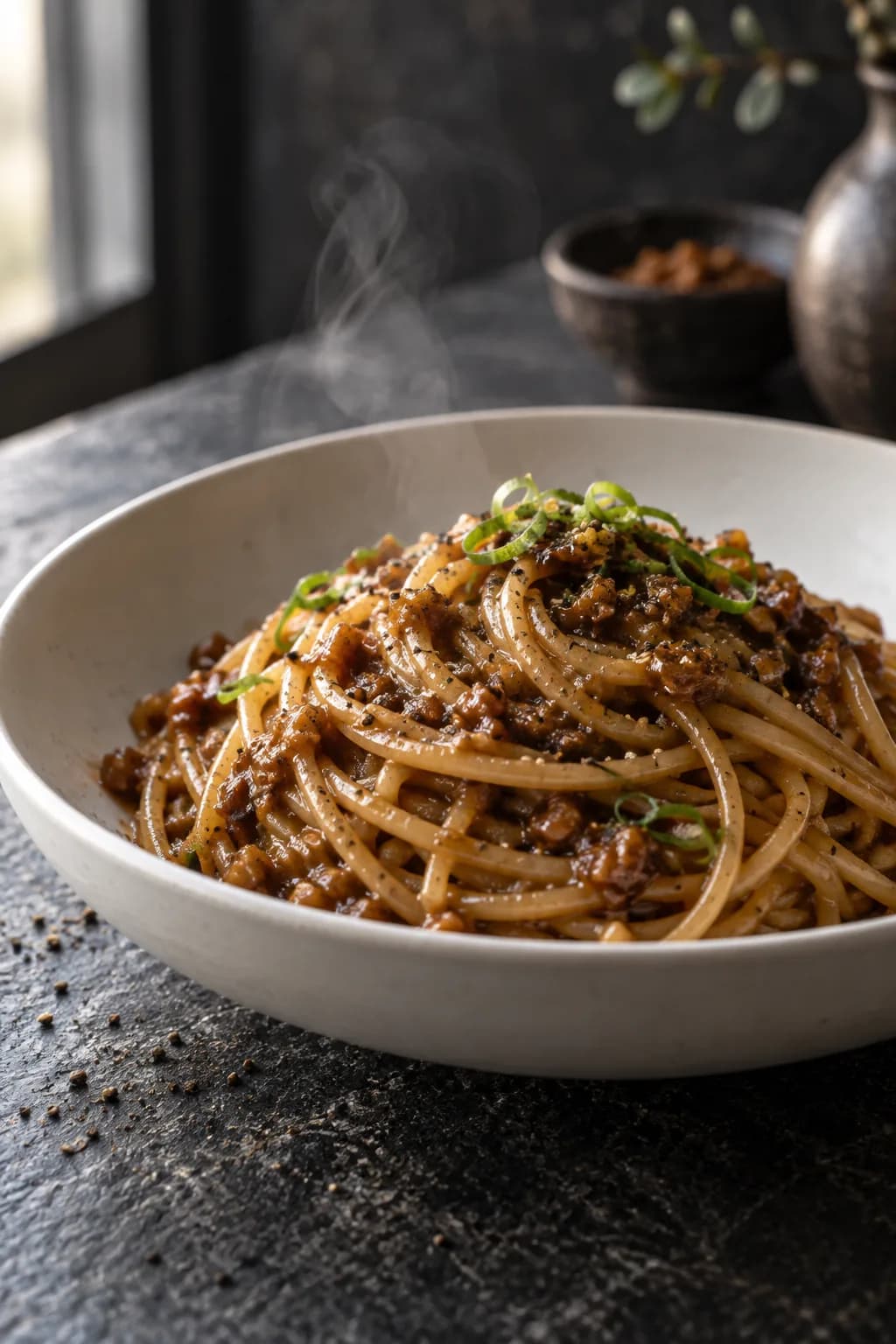
Cacio e pepe is three ingredients: cheese, pepper, pasta water. The cheese — Pecorino Romano — is a fermented, aged, salted sheep's milk product with an aggressive savory punch and a fat content that allows it to emulsify with starchy pasta water into a glossy sauce. Doenjang is a fermented, aged, salted soybean paste with an aggressive savory punch and a fat content that allows it to — do you see where this is going.
The functional analogy is exact. Both Pecorino and doenjang provide: salt, fermented umami, fat, and pungency. Both are used in small quantities to season a dish without being the obvious centerpiece. The difference is that doenjang is looser and more pungent, with an earthy depth that Pecorino doesn't have. This is not a lesser version of cacio e pepe. It is a different version — darker, earthier, and with a flavor that builds as you eat it.
The technique requires one adjustment: doenjang cannot go directly into the hot pan the way Pecorino can. It needs to be dissolved in pasta water first, off the heat, before being added to the pan. Skip this step and you get clumps of soybean paste instead of a silky emulsion. Follow it and the sauce comes together exactly as cacio e pepe does.
The black pepper is not decoration. Use a lot of it. Freshly cracked, not pre-ground. The pepper provides sharpness and heat that cuts through the fermented weight of the doenjang, and it connects the dish to its Roman ancestry.
Ingredients
- 200g spaghetti or tonnarelli (the square-cut Roman pasta preferred for cacio e pepe)
- 2 tablespoons doenjang (white doenjang for a milder result; standard or mixed doenjang for stronger flavor)
- 2 tablespoons unsalted butter
- 1½ teaspoons black pepper, freshly cracked — and then crack a bit more
- 150–200ml reserved pasta cooking water (hot)
- 20g Parmesan, finely grated (optional, to finish — adds richness and bridges the flavors)
Method
1. Cook the pasta. Bring a large pot of well-salted water to a boil. Cook the spaghetti until just under al dente — it will finish cooking in the pan. Before draining, ladle out at least 250ml of pasta water and reserve. Drain the pasta, but don't rinse.
2. Toast the pepper. While the pasta cooks, add the freshly cracked black pepper to a dry, wide skillet over medium heat. Toast for 30–45 seconds, stirring, until fragrant. You should be able to smell it clearly. Add the butter to the pan and let it melt into the pepper, swirling to combine. Remove from heat.
3. Dissolve the doenjang. In a small bowl or cup, combine the doenjang with 100ml of hot reserved pasta water. Stir vigorously with a fork or small whisk until the doenjang is fully dissolved into the water with no lumps remaining. The mixture will look murky and brown. This is correct.
4. Build the sauce. Return the butter-pepper pan to low heat. Add the drained pasta directly to the pan. Toss to coat in the butter.
Add the doenjang-water mixture to the pan a little at a time, tossing continuously as it goes in. The pasta water will begin to emulsify with the butter into a sauce. Keep tossing — this is the same motion as finishing pasta in Italian cooking; you are building an emulsion through agitation.
Add more pasta water as needed, a splash at a time, until the sauce is glossy and coats every strand. The pasta should look silky, not soupy. Total cooking time in the pan: 2–3 minutes.
5. Finish and serve. If using Parmesan, remove the pan from heat, add the Parmesan, and toss quickly — the residual heat will melt it in. Plate immediately. Add a final crack of black pepper over each portion.
Eat while hot. The sauce will thicken as it sits.
The key technique
The doenjang-in-water step is non-negotiable. Unlike Pecorino, which has a firm, granular structure that disperses gradually as it hits the hot pasta and pan, doenjang is a paste that will clump and seize if it hits dry heat. Dissolving it in liquid first gives it the same behavior as melted cheese — it flows into the sauce rather than fighting it.
Use the starchiest pasta water you have. The starch is what makes the emulsion stable. If you've only cooked a small amount of pasta in a large pot, the water will be less starchy — compensate by adding a small pinch of cornstarch to the doenjang-water mixture.
A note on flavor
This pasta tastes strongly of doenjang for the first bite, and then settles into something that is simply deeply savory and peppery — the fermented edge recedes as your palate adjusts. The Parmesan addition rounds it out and makes the result less aggressively Korean-flavored, which is useful if you're serving it to someone unfamiliar with doenjang. Without the Parmesan, the dish is more defined in its Korean character. Both versions are good.
30 recipes and 6 master sauces in the book.
Get Tokyo Meets Tuscany on AmazonAs an Amazon Associate we earn from qualifying purchases. This is an affiliate link — it costs you nothing extra.
Paperback · Kindle