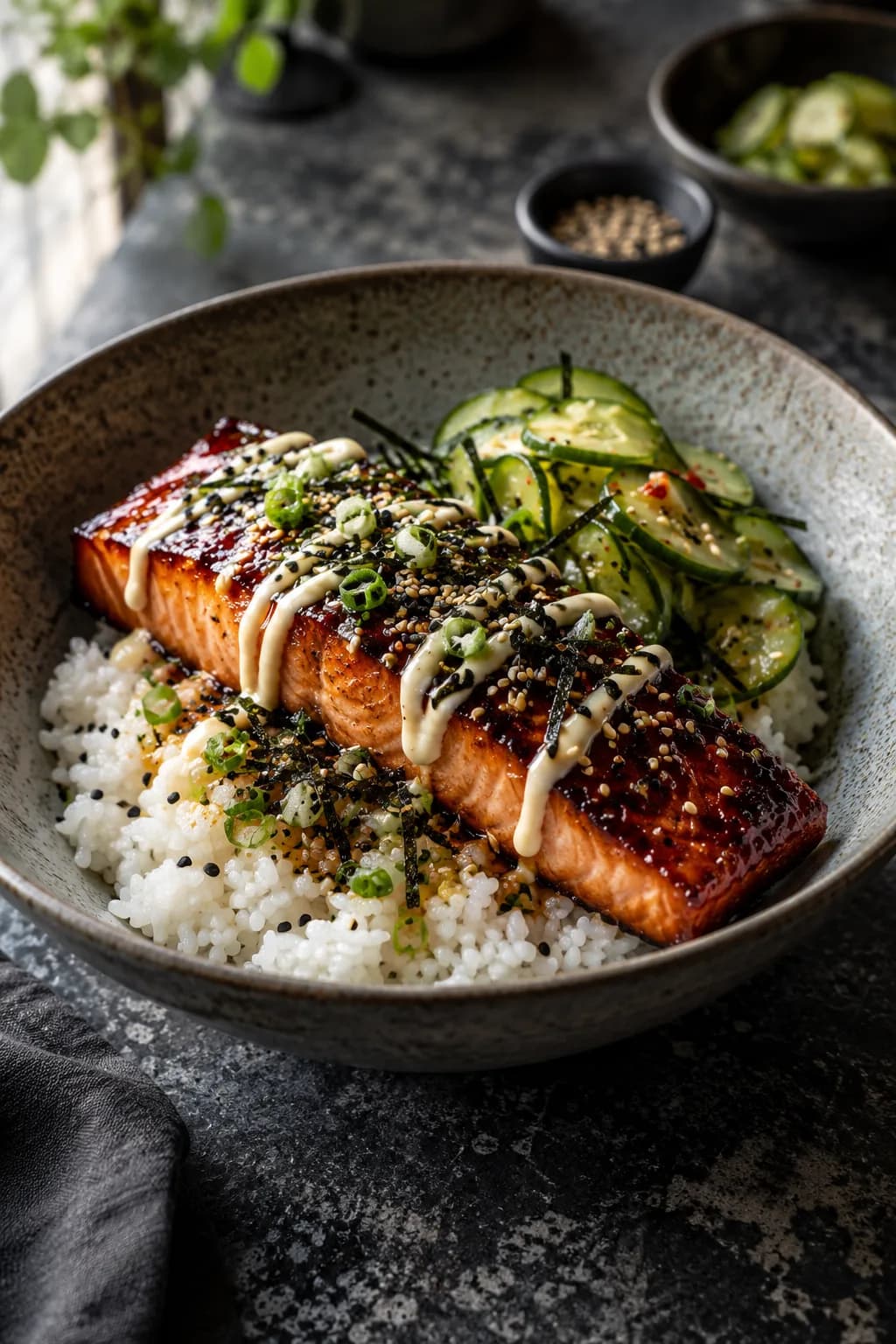
Korean gochujang and Japanese rice culture were always going to end up together in a bowl. The logic is straightforward: gochujang is a fermented chili paste built on glutinous rice — it already has a deep, fermented, slightly sweet backbone that reads naturally alongside the clean starch of Japanese short-grain rice. The donburi format (protein over rice, sauced, garnished) exists precisely for this kind of combination. This is not fusion for its own sake. It is two systems that happen to be compatible, placed in the same bowl.
The gochujang glaze is cooked on the salmon at the end, so it caramelizes without burning. The cucumber pickle is assembled while everything else cooks — ten minutes in salted rice vinegar produces something bright and lightly acidic that cuts through the richness of both the fish and the mayo. Kewpie mayo is the third element: Japanese mayonnaise, richer and more savory than American mayo because it uses only egg yolks and rice vinegar. You can substitute regular mayonnaise but the flavor will be flatter.
This bowl comes together in under 25 minutes, start to finish.
Ingredients
For the rice:
- 300g Japanese short-grain rice (sushi rice)
- Water, per package directions (roughly 1:1.1 ratio by volume)
- Pinch of salt
For the gochujang glaze:
- 2 tablespoons gochujang
- 1 tablespoon honey
- 1 tablespoon soy sauce
- 1 teaspoon sesame oil
- 1 teaspoon rice vinegar
For the salmon:
- 2 skin-on salmon fillets (150-180g each), pin bones removed
- Neutral oil (vegetable or grapeseed), for the pan
- Salt
For the quick-pickled cucumber:
- 1 small cucumber (or half an English cucumber), thinly sliced into rounds
- 2 tablespoons rice vinegar
- 1 teaspoon salt
- 1 teaspoon sugar
- ½ teaspoon sesame oil
- 1 teaspoon sesame seeds
For garnish:
- Kewpie mayo (in a squeeze bottle if possible)
- Sesame seeds, toasted
- 2–3 green onions, thinly sliced
- Nori strips (cut from a full sheet with scissors)
Method
1. Start the rice. Rinse the rice until the water runs almost clear. Cook using your preferred method — rice cooker, pot with lid, or Instant Pot. The rice should be done around the same time as the salmon; if you're cooking on the stovetop, get the rice started first.
2. Make the gochujang glaze. Combine gochujang, honey, soy sauce, sesame oil, and rice vinegar in a small bowl. Stir until smooth. Set aside. The glaze will thicken slightly as it sits.
3. Pickle the cucumber. Toss the cucumber slices with rice vinegar, salt, and sugar. Let sit for at least 10 minutes at room temperature. Before serving, drain excess liquid, add sesame oil and sesame seeds, and toss to combine.
4. Cook the salmon. Pat the salmon fillets dry and season lightly with salt on the flesh side only (the skin side will be in the pan first). Heat a thin layer of neutral oil in a heavy skillet over medium-high heat until shimmering. Add the salmon skin-side down. Press gently with a spatula for the first 30 seconds to keep the skin flat against the pan.
Cook skin-side down for 5–6 minutes without moving, until the skin is crispy and the flesh has turned opaque about three-quarters of the way up the fillet. Flip and cook 1–2 minutes more.
5. Glaze the salmon. Reduce heat to medium-low. Spoon or brush the gochujang glaze generously over the flesh side of the salmon. Cook for 1 additional minute, letting the glaze caramelize slightly. Watch carefully — gochujang contains sugar and will burn if the heat is too high or left unattended.
6. Assemble the bowls. Divide the warm rice between two wide bowls. Place a salmon fillet on top of each bowl — you can leave it whole or gently break it into large flakes with a fork. Arrange the pickled cucumber alongside. Drizzle Kewpie mayo over everything. Finish with sesame seeds, green onion, and a few strips of nori.
Serve immediately.
A note on the combination
This is not a recipe invented to seem creative. Gochujang is made with rice; Japanese rice bowl culture has always accommodated strongly flavored proteins; Kewpie mayo is already used across Korean street food. The elements fit. The only thing unusual here is doing all three in one bowl — which turns out to be exactly right.
30 recipes and 6 master sauces in the book.
Get Tokyo Meets Tuscany on AmazonAs an Amazon Associate we earn from qualifying purchases. This is an affiliate link — it costs you nothing extra.
Paperback · Kindle