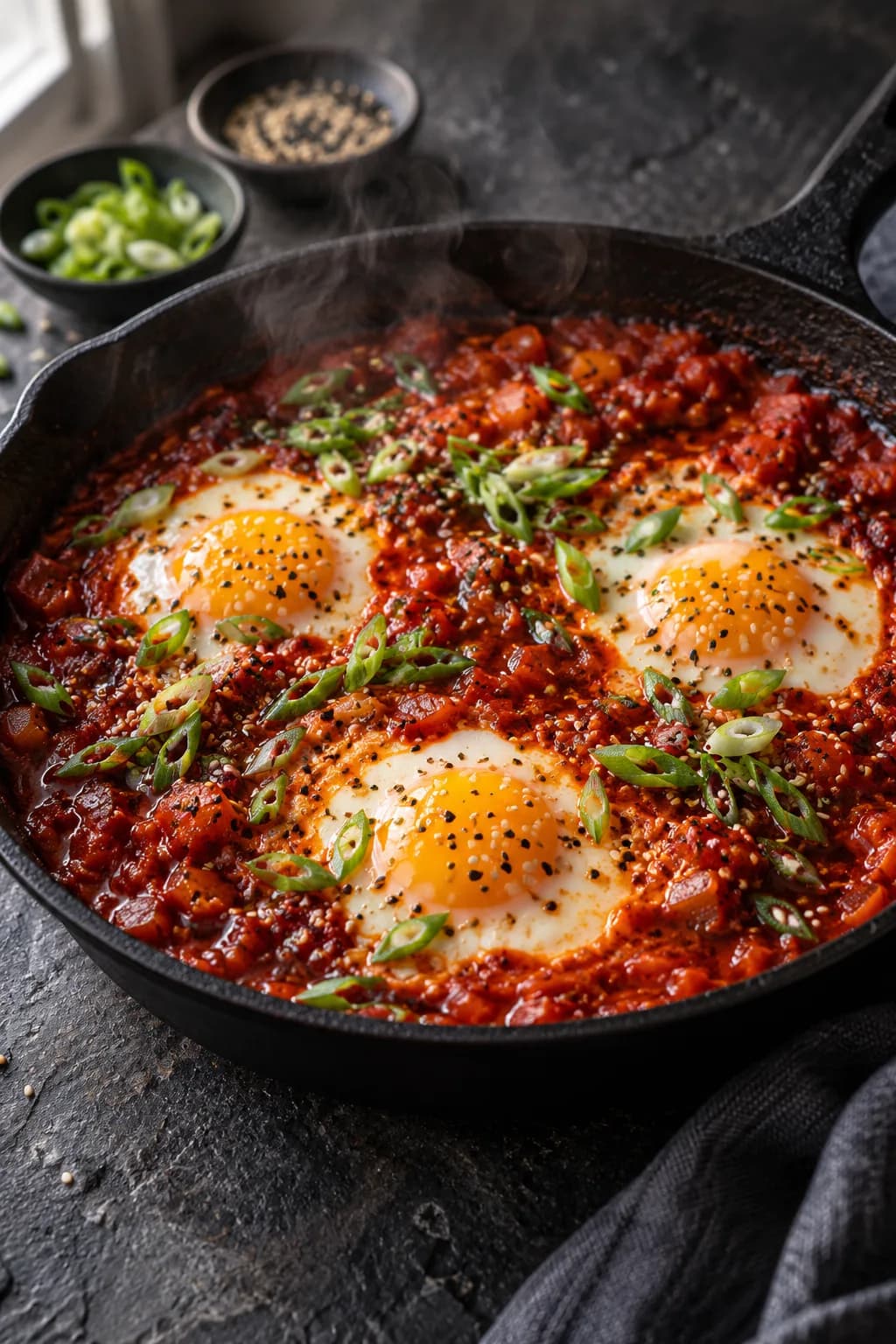
Shakshuka and gochujang are structurally compatible. Shakshuka needs: heat (gochujang has it), fermented depth (gochujang has it), tomato as the base (no change), aromatics like garlic and onion (no change). The swap is precise rather than creative — gochujang does what harissa does with its own flavor profile, and the result is clearly shakshuka but clearly Korean.
Serve with warm pita, crusty bread, or — better yet — a bowl of short-grain rice.
Ingredients
- 4-6 eggs
- 1 can (400g) crushed tomatoes
- 1 medium white onion, diced
- 4 garlic cloves, minced
- 1 red bell pepper, diced
- 2-3 tablespoons gochujang (start with 2, adjust for heat preference)
- 1 tablespoon soy sauce
- 1 tablespoon sesame oil
- 1 teaspoon gochugaru (optional — adds more heat and color)
- 1/2 teaspoon cumin
- Salt to taste
- 2 tablespoons neutral oil
To serve: Sliced green onion, sesame seeds, fresh cilantro (optional), feta cheese crumbled over (works surprisingly well with the gochujang — the brininess plays well), warm bread or rice
Instructions
1. Build the base. Heat neutral oil in a large skillet or cast iron pan over medium heat. Add the diced onion and cook until soft and beginning to brown at the edges, about 8-10 minutes. Add the red bell pepper and cook 3 minutes more.
2. Add aromatics and gochujang. Add the garlic and cook 1 minute until fragrant. Add the gochujang and stir into the vegetables — cook for 1-2 minutes, letting it caramelize slightly against the pan. Add gochugaru if using. Add cumin.
3. Add tomatoes. Pour in the crushed tomatoes. Add soy sauce. Stir to combine. Season with salt. Bring to a simmer, then reduce heat and cook 8-10 minutes until the sauce thickens slightly and the flavors meld. Taste and adjust gochujang, salt, and soy.
4. Poach the eggs. Make small wells in the sauce using the back of a spoon. Crack an egg into each well. Cover the pan with a lid. Cook 4-6 minutes until the whites are set but the yolks are still runny (or longer if you prefer fully set yolks).
5. Finish. Drizzle sesame oil over. Scatter green onion and sesame seeds. Add crumbled feta if using. Bring the pan directly to the table.
Variations
Tofu shakshuka: Replace eggs with firm tofu cut into 3cm cubes. Nestle the tofu into the sauce instead of cracking eggs; cook 5 minutes covered until the tofu absorbs the sauce. Finish identically.
Doenjang version: Replace 1 tablespoon of gochujang with 1 tablespoon doenjang for a deeper, more fermented, less spicy base. The flavor shifts toward the savory-umami register rather than the spicy one. Excellent for people who want the Korean flavor without significant heat.
Over rice: Standard in a Korean fusion context. The sauce and egg over a bowl of short-grain rice, topped with sesame and green onion, makes a complete meal in 30 minutes.
Notes
The key technique is the gochujang caramelization step — cooking the paste in the oil with the vegetables for 1-2 minutes before adding the tomatoes. This blooms the gochujang and develops a deeper flavor than simply adding it to the tomatoes. Don't skip it.
Gochujang brands vary significantly in heat level. Bibigo and Haechandle are mild-to-medium; O'Food is spicier. Taste before adding the second tablespoon.
30 recipes and 6 master sauces in the book.
Get Tokyo Meets Tuscany on AmazonAs an Amazon Associate we earn from qualifying purchases. This is an affiliate link — it costs you nothing extra.
Paperback · Kindle