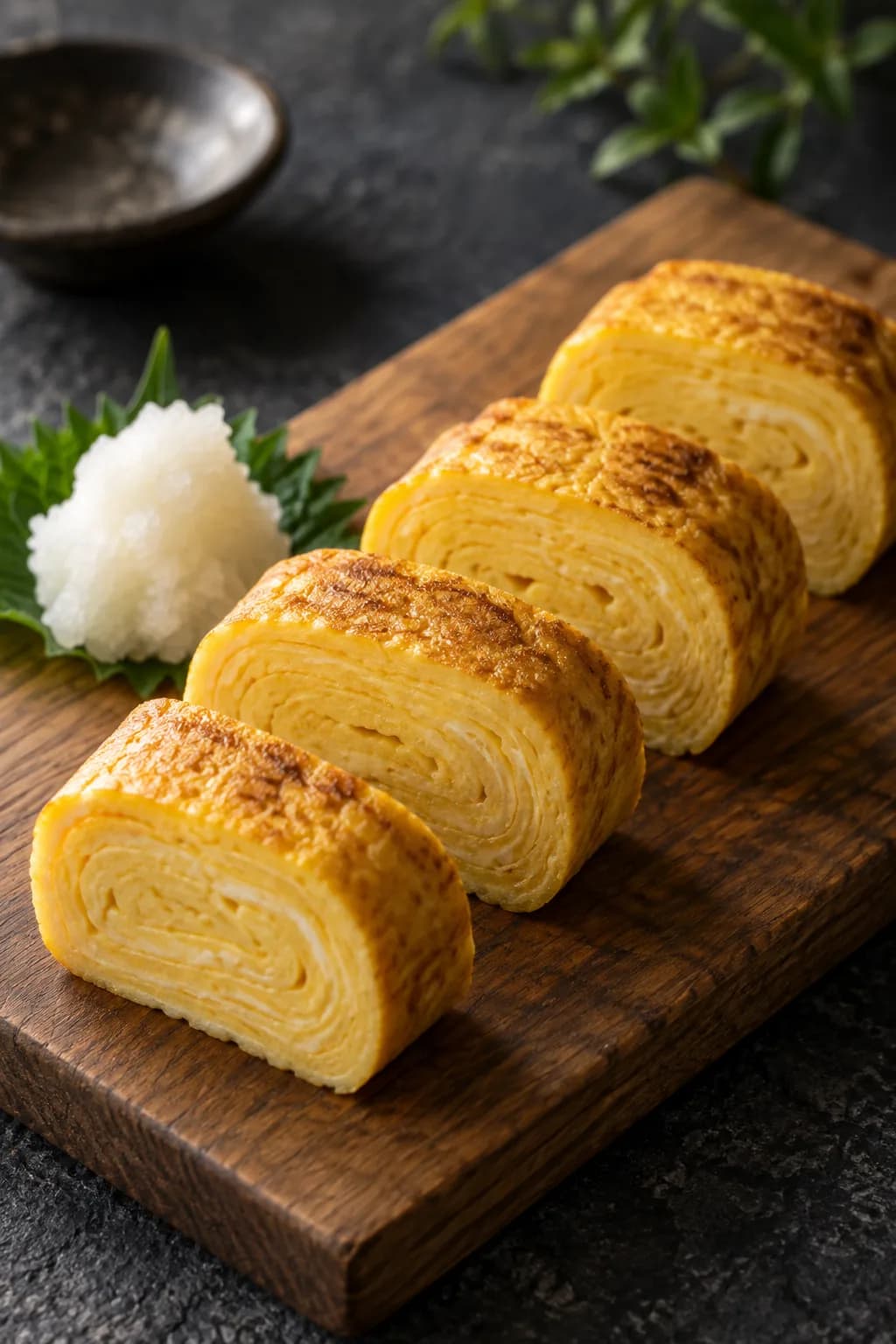
Dashimaki tamago (だし巻き玉子) is Japanese rolled egg made with dashi — the Osaka/Kyoto style, as opposed to the Tokyo sweet style (tamagoyaki). The dashi makes the egg delicate, slightly savory, and barely sweet. It is served in kaiseki meals, in sushi restaurants, in lunch boxes. It is one of those things that looks simple but reveals a technique gap immediately.
Ingredients
The egg mixture:
- 3 large eggs
- 3 tbsp dashi (real or good instant — this is where quality shows)
- 1 tsp soy sauce
- 1 tsp mirin
- Pinch of salt
- Small amount of neutral oil for the pan
To serve:
- 2 tbsp grated daikon (freshly grated, not squeezed)
- Soy sauce — a few drops
Equipment
A rectangular tamagoyaki pan (卵焼き器) is traditional and makes rolling much easier. A small round non-stick pan works but requires more technique.
Method
1. Mix the egg: Beat eggs gently — do not create foam. Add dashi, soy sauce, mirin, and salt. Mix until uniform. Strain through a fine-mesh strainer to remove any chalazae and produce a perfectly smooth mixture.
2. Heat the pan: Heat rectangular pan over medium. Brush with a thin film of oil (use a folded paper towel or brush).
3. First layer: Pour approximately ⅓ of the egg mixture into the pan — just enough to coat the surface in a thin layer. As the egg sets around the edges but is still slightly wet in the center, use chopsticks or a spatula to roll the egg from the far end toward you, forming the first roll. Push the rolled egg back to the far end of the pan.
4. Second layer: Oil the empty portion of the pan lightly. Pour another ⅓ of the mixture, lifting the first roll to let egg flow underneath it. When this layer is partially set, roll the existing roll back toward you, incorporating the new layer.
5. Third layer: Repeat with the final portion of egg. The roll grows with each layer.
6. Shape: While hot, wrap the roll in a bamboo mat (makisu) if available, or simply press into shape with your hands. Let rest 5 minutes — this firms the shape.
7. Slice: Cut into 1.5-2cm rounds. Serve with grated daikon and a few drops of soy sauce.
Notes
- The dashi ratio: 1 tbsp dashi per egg is a starting point. More dashi = more delicate, more silky, more prone to falling apart. Less = firmer, easier to roll. 3 tbsp for 3 eggs is on the delicate end.
- Heat management: Too high and the exterior browns before the interior sets — producing a rubbery, uneven roll. Medium heat, not rushing.
- Sweet version (tamagoyaki): Replace the dashi with 1 tbsp more mirin and increase sugar. Tokyo-style is sweet; Osaka-style (dashimaki) uses dashi.
- The grated daikon is not decoration — it contains enzymes that cut through the egg richness and refresh the palate. Eat them together.
30 recipes and 6 master sauces in the book.
Get Tokyo Meets Tuscany on AmazonAs an Amazon Associate we earn from qualifying purchases. This is an affiliate link — it costs you nothing extra.
Paperback · Kindle