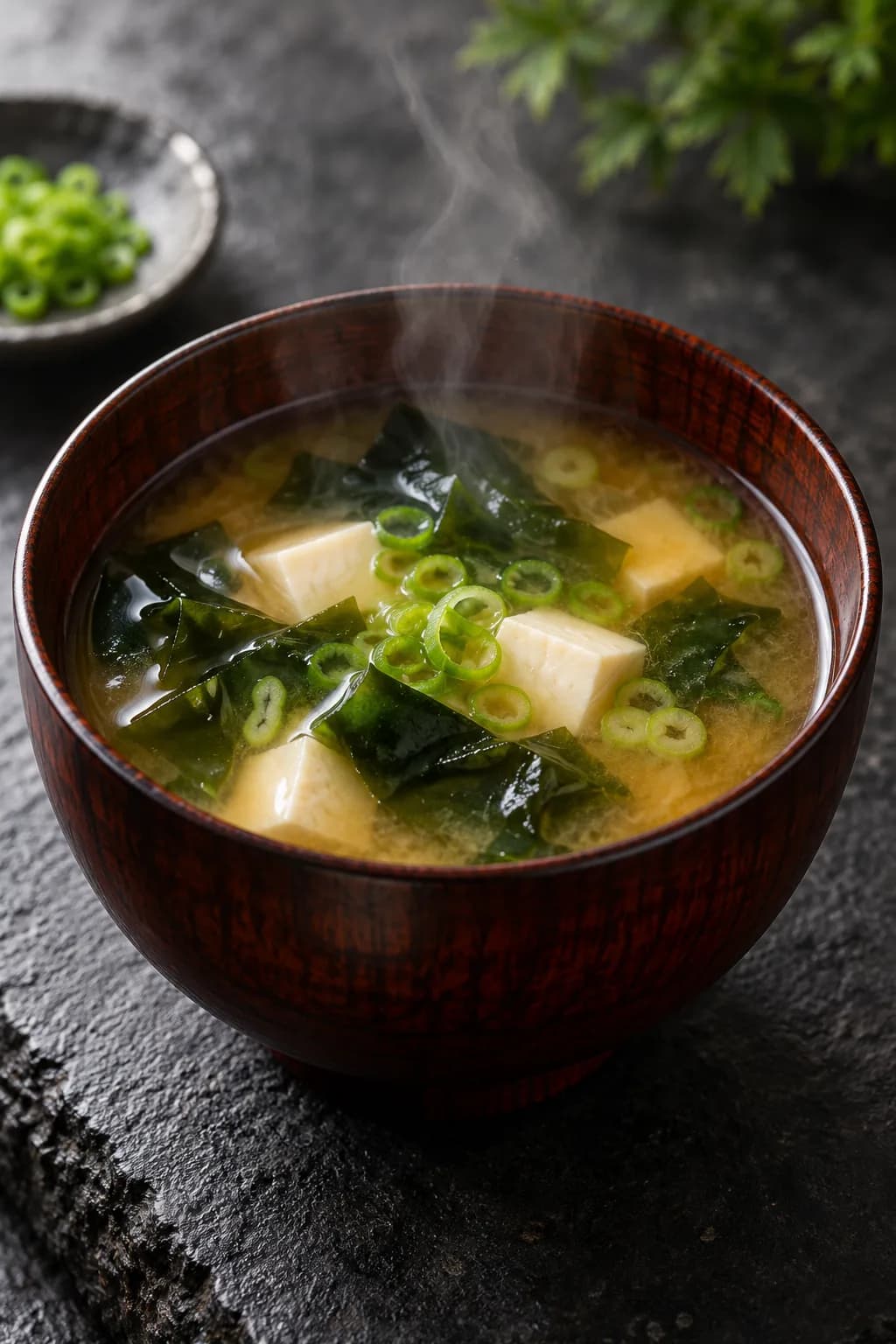
The dashi is what makes this worth making from scratch. Real kombu-katsuobushi dashi has a clean oceanic sweetness and depth that instant dashi powder approximates but doesn't replicate.
Ingredients
Dashi:
- 400ml cold water
- 1 piece kombu (about 10cm), wiped with a damp cloth
- 10g katsuobushi (dried bonito flakes, a small handful)
Soup:
- 2 tbsp miso (shinshu/yellow or white — your preference)
- 100g silken tofu, cut into 1.5cm cubes
- 5g dried wakame seaweed, soaked in cold water 5 minutes then drained
- 1 scallion, thinly sliced
Method
Make the dashi:
- Place kombu in a small saucepan with 400ml cold water. Heat slowly over medium heat.
- When the water reaches about 60°C (small bubbles appear at the bottom but not yet simmering), remove the kombu. Don't let it boil with the kombu in — boiling extracts bitterness.
- Bring the kombu water to just below boiling (small bubbles rising).
- Add katsuobushi all at once. Remove from heat.
- Let steep 3 minutes. Do not stir.
- Strain through a fine sieve. You now have ichiban dashi (first extraction).
Make the soup:
- Return dashi to a gentle heat — bring to a simmer, add tofu.
- Place miso in a small strainer or ladle. Submerge partially in the hot dashi and stir until the miso dissolves through — this prevents miso lumps and controls how much goes in.
- Add wakame.
- Remove from heat immediately. Do not let the miso boil — boiling destroys the delicate miso aroma and degrades the beneficial enzymes.
- Ladle into bowls. Top with scallion.
Why Never Boil Miso
Miso contains volatile aromatic compounds (formed during fermentation) that evaporate quickly at high temperature. Boiling miso soup for even 30 seconds noticeably flattens the aroma. The soup should be served as soon as the miso is dissolved.
Notes
- The dashi above is ichiban dashi ("first dashi") — the purest extraction. The spent kombu and bonito can be used for a second extraction (niban dashi) for braising liquid or cooking.
- White miso makes a sweeter, milder soup. Shinshu makes a more savory soup. Aka (red) miso makes a very intense, rich soup.
- Wakame expands 5-6x when rehydrated — 5g dry becomes enough for two generous servings.
30 recipes and 6 master sauces in the book.
Get Tokyo Meets Tuscany on AmazonAs an Amazon Associate we earn from qualifying purchases. This is an affiliate link — it costs you nothing extra.
Paperback · Kindle