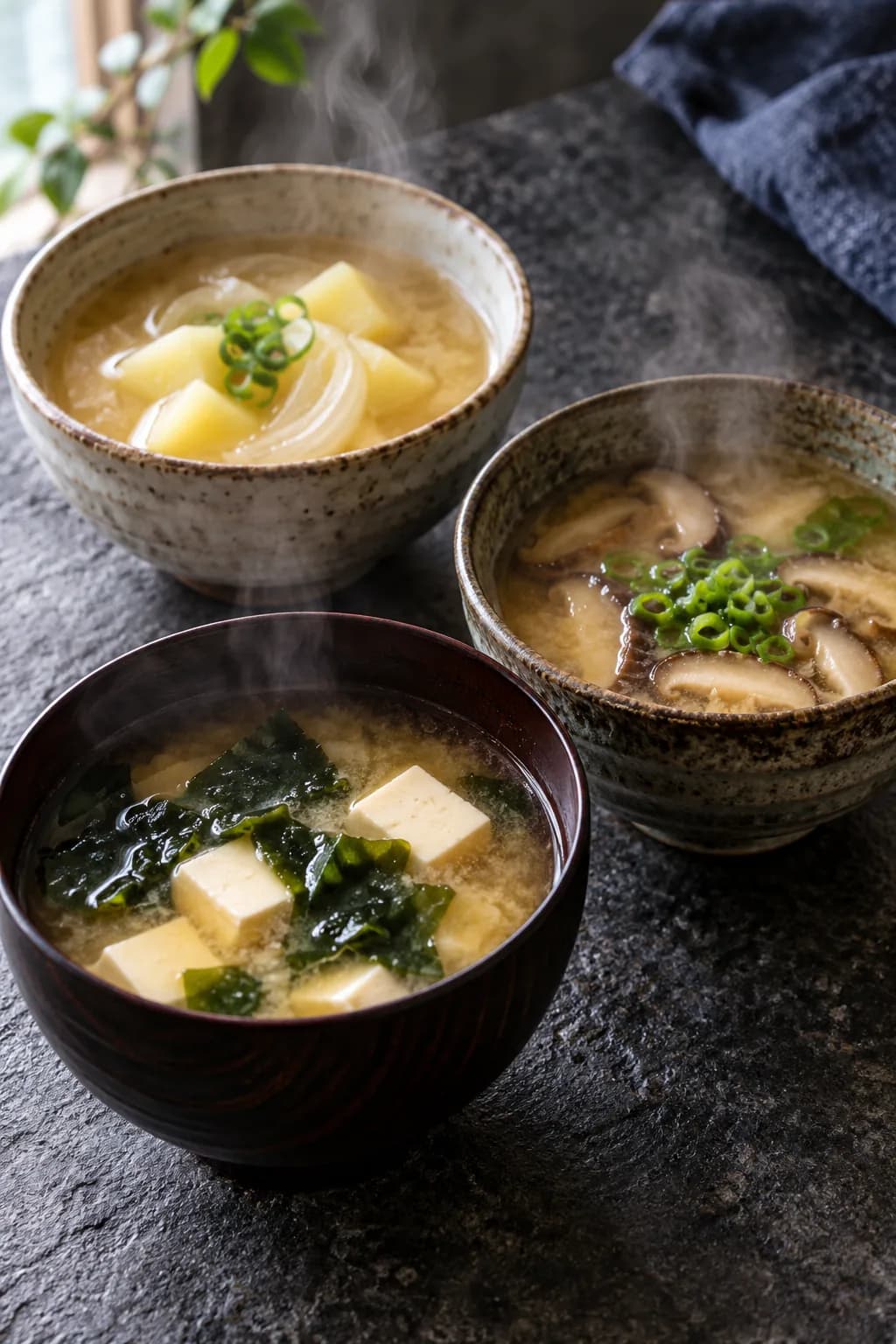
Miso soup is one of the most frequently made Japanese dishes in the world and one of the most frequently made wrong. The error is almost always the same: adding miso to water instead of dashi. Dashi is the broth base that provides the umami foundation — without it, miso soup is just salty, flat water with miso dissolved in it.
The miso dissolves last, after the broth is built and the ingredients are cooked. It never boils.
The Dashi Base (for all three recipes)
Quick dashi (serves 2):
- 400ml cold water
- 4-5cm piece of dried kombu
- 5g (small handful) of katsuobushi (dried bonito flakes)
Cold-steep the kombu in the water for 10-15 minutes. Bring to 80°C over medium heat. Remove the kombu. Add the katsuobushi. Simmer very gently 2-3 minutes. Strain through a fine mesh — press gently but don't squeeze.
Quick version: Use 1/2 tsp Hondashi (instant dashi powder) dissolved in 400ml hot water. Excellent results for everyday miso soup.
Version 1: Classic Tofu and Wakame
Ingredients:
- 400ml prepared dashi
- 1.5-2 tbsp shiro (white) or awase (blended) miso
- 100g silken or soft tofu, cubed
- 1 tbsp dried wakame seaweed
- 2 scallions, thinly sliced
Method:
- Bring dashi to a gentle simmer.
- Rehydrate dried wakame: place in a small bowl of cold water 3-5 minutes until softened, drain, and cut into smaller pieces if needed.
- Add tofu cubes to the simmering dashi. Heat through, 1-2 minutes.
- Add wakame.
- Remove from heat (or turn to very low). Dissolve miso in a small ladle of broth before adding — prevents lumps. Add dissolved miso to the pot.
- Do NOT boil after adding miso — high heat kills the beneficial live cultures and changes the flavor.
- Ladle into bowls. Top with scallions.
Version 2: Shiitake and Scallion
Ingredients:
- 400ml prepared dashi
- 1.5 tbsp red (aka) or awase miso
- 4-5 fresh shiitake mushrooms, thinly sliced (or 3 dried shiitake, rehydrated and sliced)
- 3 scallions, cut into 3cm pieces
- 1/2 tsp soy sauce (optional, if using red miso)
Method:
- Bring dashi to a simmer.
- Add shiitake mushrooms. Cook 3-4 minutes until softened and the mushroom flavor has released into the broth.
- Add scallion pieces in the last 1 minute.
- Remove from heat. Dissolve miso in a ladle of broth, add to pot.
- Ladle and serve.
Notes: Red miso (aka miso) pairs naturally with the earthier mushroom flavor here. White miso would work but is lighter than the mushroom flavor warrants.
Version 3: Potato and Onion
Ingredients:
- 400ml prepared dashi
- 1.5 tbsp awase (blended) or kome (rice) miso
- 1 medium yellow potato, thinly sliced into half-moons (5mm thick)
- 1/4 white or yellow onion, thinly sliced
- 1 scallion, sliced
Method:
- Bring dashi to a simmer.
- Add potato and onion. These take longest — cook 7-8 minutes until potato is tender when pierced with a chopstick or fork.
- Remove from heat. Dissolve miso in a ladle, add to pot.
- Top with scallion.
Notes: This version is more filling than the others. The starch from the potato thickens the broth slightly. A traditional home cook's soup when more substantial miso is needed.
Universal Miso Soup Rules
- Dashi first, always. Water alone is not a substitute.
- Never boil after adding miso. Simmer, then remove from heat, then add miso.
- Dissolve miso separately. Use a ladle to dissolve miso in a small amount of broth before stirring it in — this prevents lumps and ensures even distribution.
- Taste and adjust. Miso varies by brand and type. Add more if it tastes flat, or a small amount of soy sauce.
- Serve immediately. Miso soup does not improve sitting. The tofu softens further, the wakame becomes slimy, the vegetables continue cooking.
30 recipes and 6 master sauces in the book.
Get Tokyo Meets Tuscany on AmazonAs an Amazon Associate we earn from qualifying purchases. This is an affiliate link — it costs you nothing extra.
Paperback · Kindle