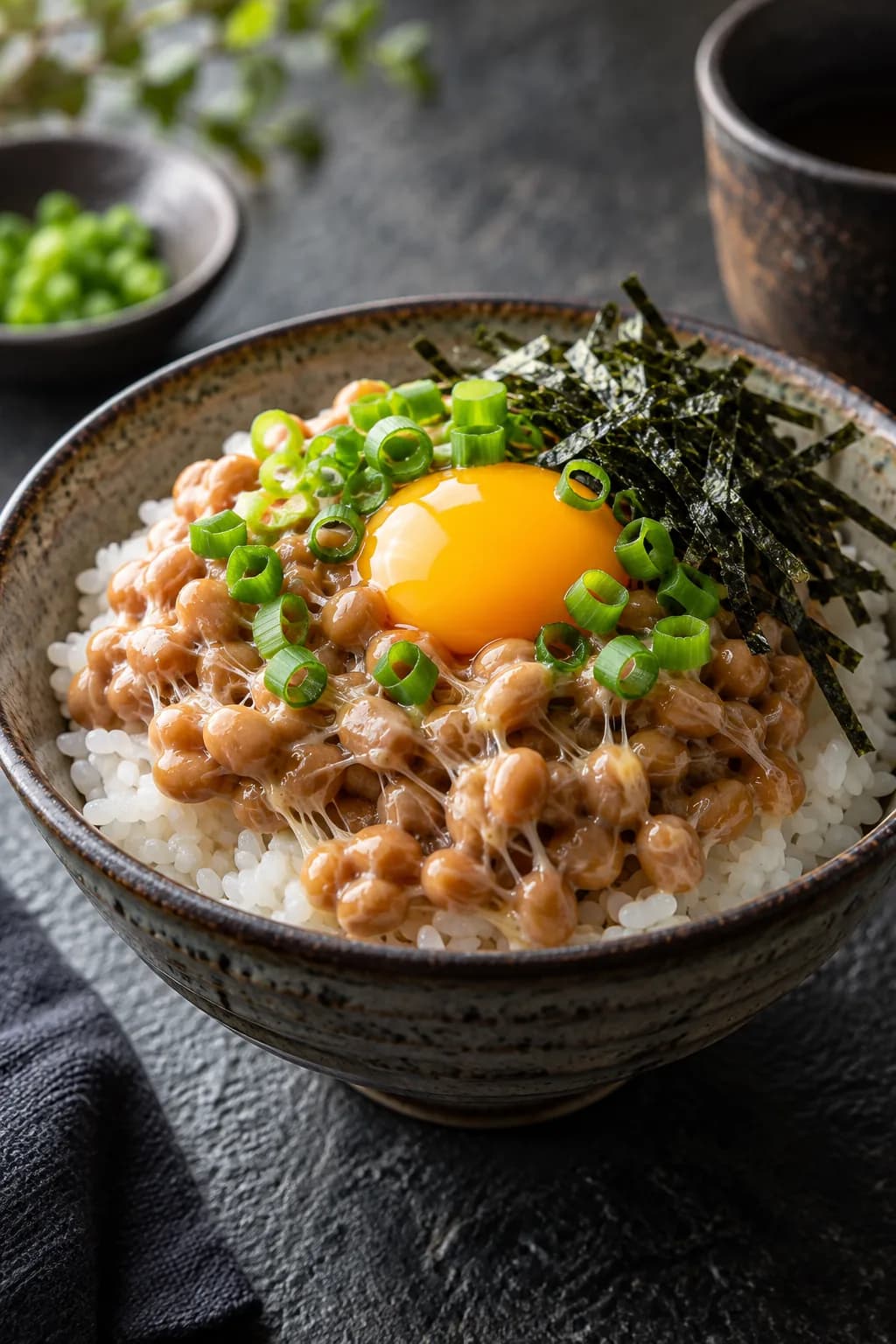
Natto (納豆) is Japan's fermented soybean paste — whole soybeans fermented with Bacillus subtilis that produces a pungent ammonia-and-cheese smell, an intensely savory flavor, and the notorious sticky white strings that form when you stir it. It is eaten daily by millions of Japanese people, revered for its nutritional profile (vitamin K2, nattokinase enzyme, complete protein), and completely misunderstood by most non-Japanese people who encounter it.
This is the standard preparation: rice bowl. It is also the correct one — the hot rice provides the neutral backdrop that makes natto's flavor work.
Ingredients
- 1 pack (50g) natto (sold in small styrofoam trays in Japanese/Korean grocery stores, always in the frozen or refrigerated section)
- 1 tbsp soy sauce
- 1 tsp karashi mustard (Japanese hot mustard, yellow) — from the packet inside the natto tray
- 1 egg yolk (optional but traditional)
- 1 bowl hot white rice (Japanese short-grain)
- Scallion, thinly sliced
- Optional: small amount of kimchi on the side
Method
Step 1 — Stir the natto. Remove natto from the tray. Stir vigorously with chopsticks for 30-40 strokes — this is the technique. As you stir, the glutinous strings multiply and turn white and slightly creamy. The stirring changes the texture significantly; under-stirred natto is sticky and clumped, properly stirred natto is creamier and more cohesive.
Step 2 — Season. Add the soy sauce packet (or 1 tbsp soy sauce) and the karashi mustard. Mix to combine.
Step 3 — Add to rice. Spoon the seasoned natto over a bowl of hot white rice. Place the egg yolk in the center (if using).
Step 4 — Add scallion on top.
Step 5 — Mix at the table. Some people mix it all together before eating; some eat it layered. Either is correct.
First-Timer Guide
If this is your first time:
- The smell is the hardest part — it is strong before you taste it. Once you actually eat it, the flavor is less overwhelming than the smell suggests.
- Start with the karashi mustard — the heat cuts through the funkiness.
- A bit of pickled something (umeboshi, pickled daikon, kimchi) alongside helps.
- The strings are not optional — they are part of the texture. Trying to eat natto without the strings (by avoiding stirring) does not make it more palatable.
Notes
- Natto is a breakfast food in Japan — this is typically a morning meal, not dinner.
- The egg yolk is optional but traditional — it makes the bowl richer and slightly mitigates the natto flavor for first-timers.
- Natto keeps in the refrigerator 4-5 days after thawing. Do not refreeze.
30 recipes and 6 master sauces in the book.
Get Tokyo Meets Tuscany on AmazonAs an Amazon Associate we earn from qualifying purchases. This is an affiliate link — it costs you nothing extra.
Paperback · Kindle