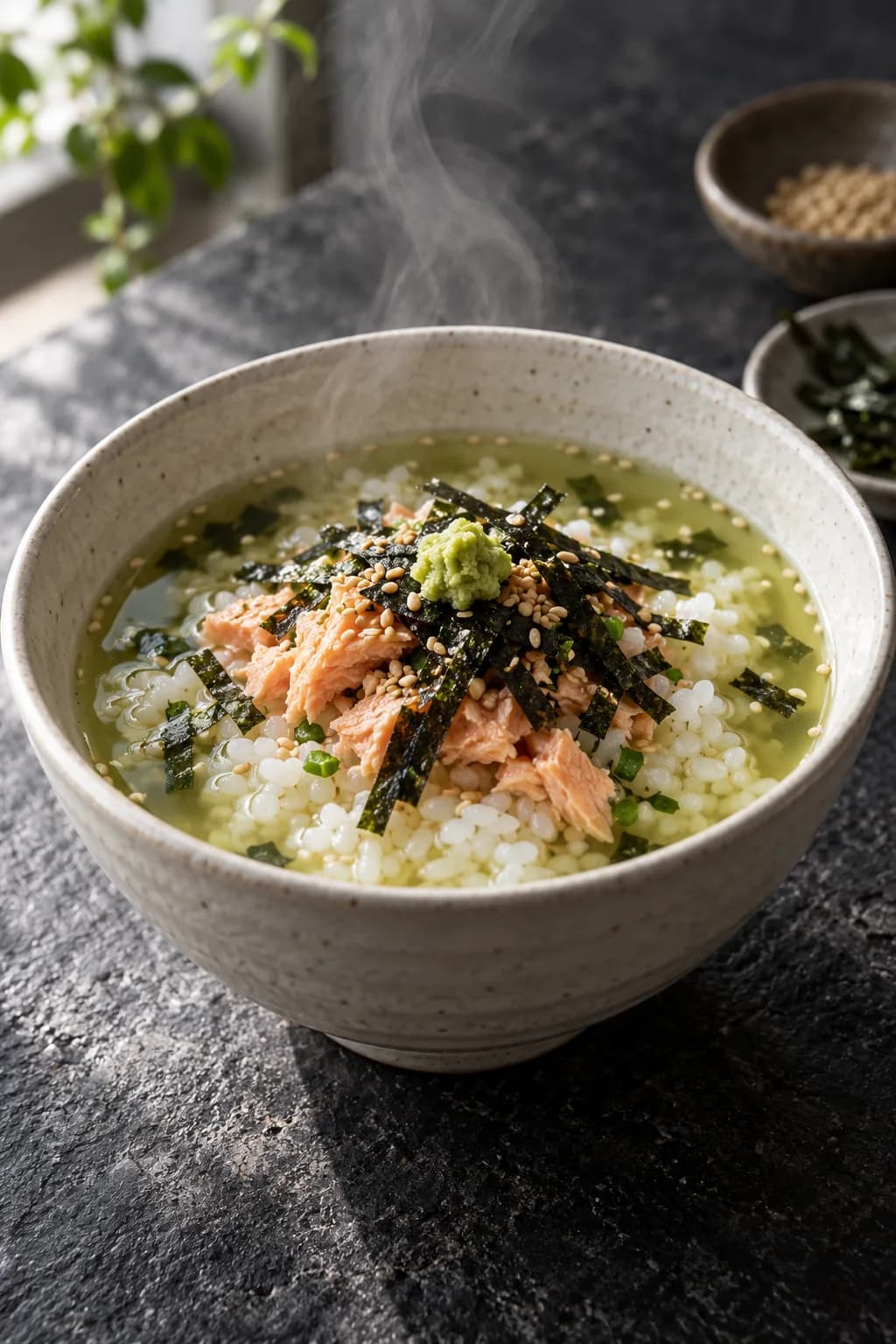
Ochazuke is what Japanese cooking does with leftover rice and five minutes. It is not a compromise — it is a specific dish that has been made this way for centuries. The green tea creates a gentle, grassy broth that is completely different from plain hot water and immediately recognizable as Japanese.
Ingredients
- 1 bowl cooked white rice (leftover works perfectly — reheated or cold both fine)
- 150-200ml freshly brewed green tea (sencha or bancha — brew at 70-80°C)
- 50g cooked salmon (flaked from fresh cooked salmon, or canned)
- 2-3 strips toasted nori
- 1/2 tsp sesame seeds
- Small amount of wasabi (pea-sized — adjust to preference)
- Soy sauce (optional — a few drops)
Method
1. Brew the tea: Heat water to 70-80°C (not boiling — boiling makes green tea bitter). Steep 1 heaping teaspoon loose-leaf sencha, or 1 tea bag, for 1-2 minutes. You want a full-flavored but not astringent tea.
2. Prepare the bowl: Place warm cooked rice in a deep bowl. The deeper the bowl, the better — the tea should pool around the rice rather than sit level with it.
3. Add toppings: Place flaked salmon on the rice. Tuck nori strips alongside. Add a small dab of wasabi off to one side (it dissolves into the tea as you eat and adds building heat).
4. Pour the tea: Pour hot tea slowly over the rice, starting from one side. Pour about 150ml — enough to come 2/3 up the rice, not submerge it completely. The top of the rice stays above the tea; the bottom softens into it.
5. Finish: Scatter sesame seeds. Add a few drops of soy sauce if you want more salt. Eat immediately while hot.
Variations
Umeboshi ochazuke: Replace salmon with 1-2 umeboshi (pickled plum). No other toppings needed — the umeboshi flavors the entire bowl as you eat.
Tarako ochazuke: Split a tarako (pollock roe) sac over the rice instead of salmon. The roe gently cooks in the hot tea.
Dashi ochazuke: Substitute dashi (kombu + bonito) for the green tea. Richer, more umami-forward. Use with simpler toppings.
Nori ochazuke: Just nori, sesame seeds, and wasabi. The simplest form — let the tea be the main flavor.
Notes
- Nagatanien's packaged ochazuke seasoning (sold at Asian grocery stores) is excellent — small packets with topping flakes and seasoning. Pour over rice with hot water. Authentic convenience food.
- Never use boiling water — it makes green tea astringent and bitter. The lower temperature steep is essential.
- Leftover rice works better than fresh in many cases — the slightly dried texture of refrigerator rice holds its shape in the tea better than freshly steamed rice.
30 recipes and 6 master sauces in the book.
Get Tokyo Meets Tuscany on AmazonAs an Amazon Associate we earn from qualifying purchases. This is an affiliate link — it costs you nothing extra.
Paperback · Kindle