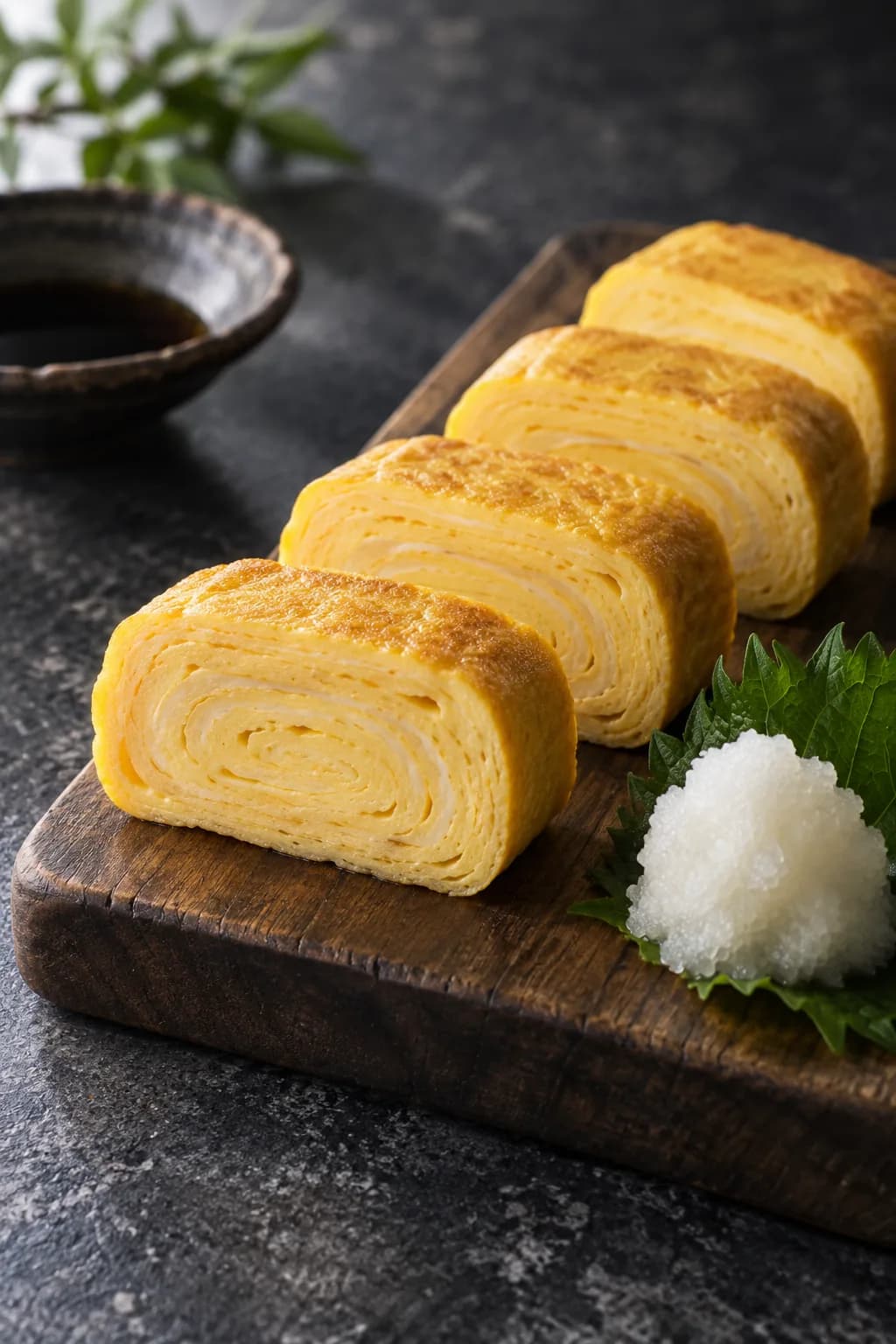
Tamagoyaki is Japan's rolled egg. Each slice reveals a spiral of golden layers — proof of the layering-and-rolling process that makes it. It's softer than a Western omelette, mildly seasoned with dashi, and eaten cold or at room temperature in bentos, or warm straight from the pan.
You need a rectangular tamagoyaki pan (tamagoyaki-ki) for clean edges, though a round pan can work with more awkward rolling.
Ingredients
Savory dashimaki style (Kansai):
- 3 large eggs
- 3 tbsp dashi (ichiban dashi or 1/4 tsp Hondashi dissolved in 3 tbsp water)
- 1/2 tsp soy sauce
- 1/2 tsp mirin
- Pinch of salt
- Neutral oil or sesame oil for cooking
Sweet bento style (Kanto):
- 3 large eggs
- 1 tbsp mirin
- 1 tsp sugar
- 1/2 tsp soy sauce
- 2 tbsp water
To serve: Grated daikon, soy sauce
Method
Mix: Beat eggs with your chosen seasonings until well combined. For the smoothest result, strain through a fine mesh to remove the chalazae.
Heat pan: Over medium heat, oil the tamagoyaki pan with a very thin layer. The pan is ready when a drop of egg sizzles on contact.
First layer: Pour 1/3 of the egg mixture into the pan. Tilt to spread evenly. Cook until the top is barely set — still slightly moist.
First roll: Roll from the far end toward you, as tightly as possible. Push the roll to the far end of the pan.
Oil again: Lightly re-oil the empty portion of the pan.
Second layer: Pour another 1/3 of mixture into the empty area. Lift the existing roll at the far end and let the new egg flow slightly underneath it. Let this layer partially set, then roll again.
Third layer: Repeat with remaining egg. You should have a plump log.
Shape: Remove from heat. While still warm, place on a bamboo sushi mat (makisu), wrap, and press gently into a rectangular shape. Hold 1-2 minutes.
Slice: Cut into 2-3cm rounds. The cross-section should show spiral layers.
Serve
With grated daikon and a few drops of soy sauce. The daikon cuts the richness.
Notes
- Temperature is critical. Too hot = egg sets before you can roll; too low = egg doesn't set and it slides around. Medium heat throughout.
- The layers separate when sliced? The egg was too dry when you rolled. The top of each layer should still have a slight sheen before rolling.
- The dashimaki style (with more dashi) is softer and more delicate — better eaten warm. The sweet bento style is firmer and packs better cold.
30 recipes and 6 master sauces in the book.
Get Tokyo Meets Tuscany on AmazonAs an Amazon Associate we earn from qualifying purchases. This is an affiliate link — it costs you nothing extra.
Paperback · Kindle