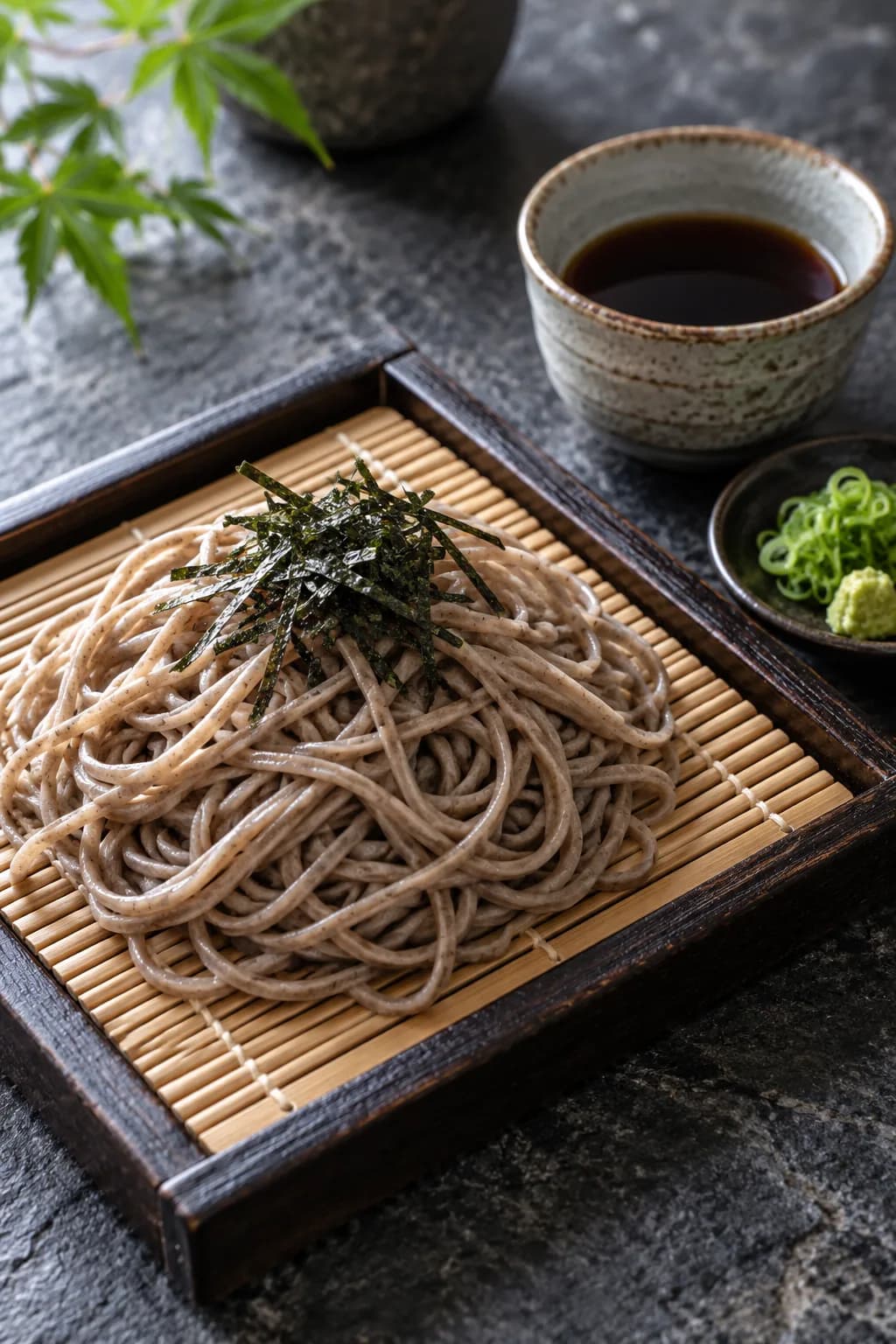
Zaru soba is Japanese minimalism as a meal. There is almost nothing to it — cold noodles, cold broth for dipping, wasabi, scallion. The technique is not complex. But the quality of the ingredients is fully exposed, and the ritual of dipping, the temperature contrast, and the sobayu ending make it one of Japan's most satisfying warm-weather dishes.
Ingredients
Tsuyu (Dipping Broth):
- 300ml dashi (katsuobushi kombu, ideally — see note)
- 4 tbsp soy sauce (koikuchi)
- 2 tbsp mirin
- 1 tsp sugar
Noodles:
- 200g dried soba noodles (juwari = 100% buckwheat; nibachi = 80% buckwheat / 20% wheat)
Garnishes:
- 2 sheets nori, cut into thin strips
- 2 scallions, thinly sliced
- Wasabi (real, or wasabi paste)
Method
Make tsuyu: Combine dashi, soy sauce, mirin, and sugar in a small saucepan. Bring just to a boil to cook off the mirin alcohol. Remove from heat. Cool completely. Refrigerate until cold. (Can be made a day ahead — flavor improves.)
Cook soba: Bring a large pot of unsalted water to a rolling boil. Add soba noodles and cook according to package (typically 4-5 minutes for dried, 90 seconds for fresh). Important: save a cup of the cooking water (sobayu) before draining.
Rinse: Drain soba into a colander. Rinse vigorously under cold running water, rubbing the noodles between your hands to remove surface starch. The water should run clear. The noodles should be cold.
Serve: Pile cold soba on a bamboo zaru mat or a plate with a wire rack (any elevated surface that drains). Lay nori strips over the top. Pour cold tsuyu into individual cups.
Condiments: Place wasabi and scallion in small dishes. Each person adds wasabi and scallion to their tsuyu cup to taste, then dips soba and eats.
Sobayu: After finishing the noodles, pour the reserved sobayu into leftover tsuyu — it dilutes it to a warm, cloudy, slightly starchy broth to drink like a tea. This is standard practice in soba restaurants.
Dashi Note
For a quick dashi: place 1 piece kombu (10cm) in 400ml cold water. Heat to 60°C, hold 20 minutes. Remove kombu. Bring to just below boiling. Add a large handful of katsuobushi (dried bonito flakes). Remove from heat. Steep 3 minutes. Strain. That's about 300ml dashi.
Alternatively: 1/2 tsp dashi powder (hondashi) dissolved in 300ml hot water, cooled. Acceptable for weeknight use.
Notes
- Soba noodles keep cooking after they come off heat. Don't walk away; 30 seconds overcooked means mushy soba.
- The nori on top is what distinguishes zaru soba from mori soba — they are otherwise identical. In Japan, zaru is considered the superior presentation.
- Tsuyu can be stored refrigerated for up to 2 weeks — make a large batch.
30 recipes and 6 master sauces in the book.
Get Tokyo Meets Tuscany on AmazonAs an Amazon Associate we earn from qualifying purchases. This is an affiliate link — it costs you nothing extra.
Paperback · Kindle