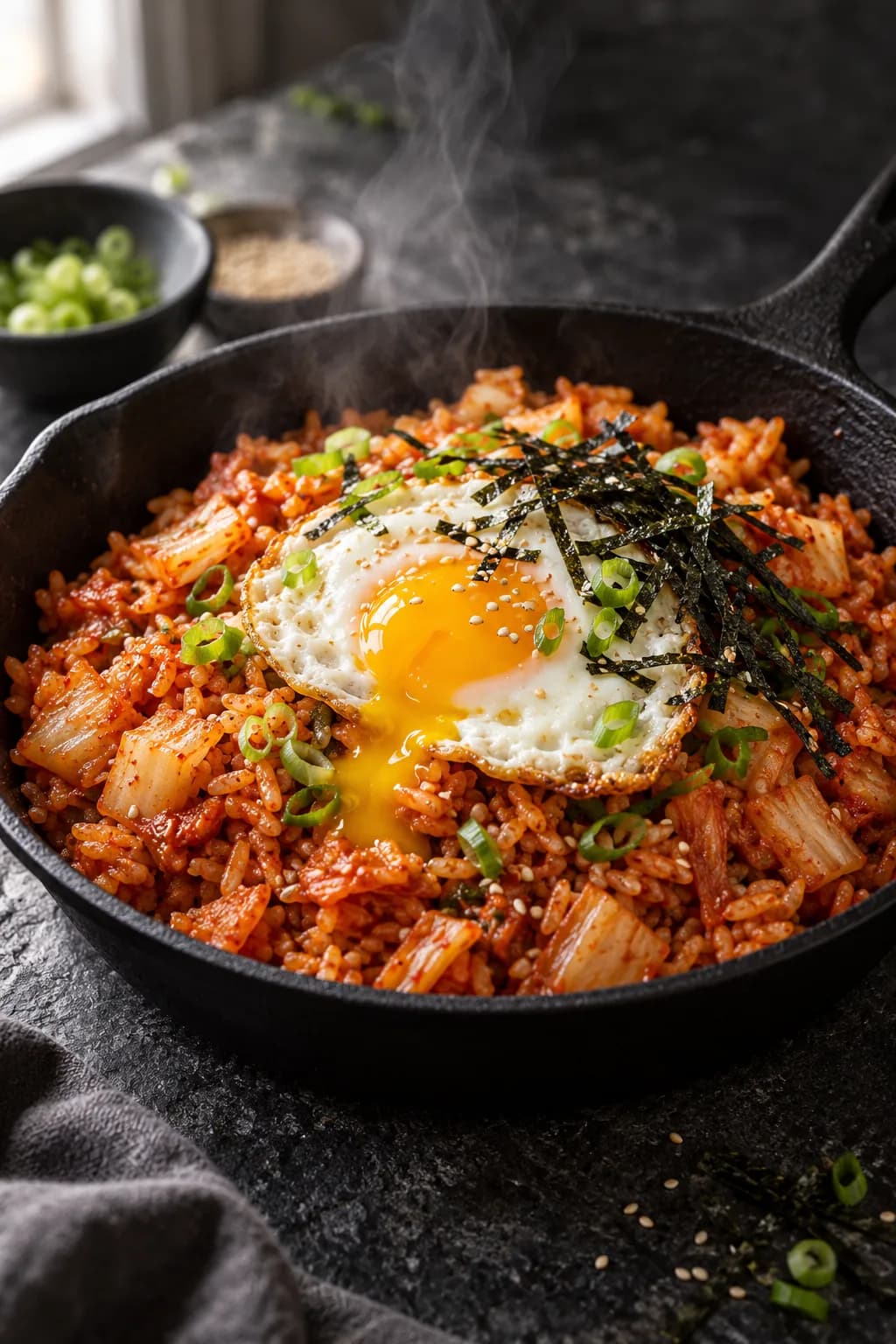
Kimchi bokkeumbap is one of those recipes that gets better the less precious you are about it. It is a fridge-clear-out dish by design — a meal that exists because Korean home cooks had leftover rice and kimchi that was past its prime for eating fresh. The twist is that both of those "past their best" ingredients are actually ideal here.
The kimchi situation matters. Fresh kimchi — the kind that's been in the fridge less than a week — is bright, crunchy, and mildly sour. It's great for eating alongside rice. It is not great for this recipe. What you want is kimchi that has been fermenting for at least two weeks, ideally a month or more. The kind that's lost its crunch, turned deeply sour, and smells aggressively funky when you open the jar. That kimchi, when it hits a very hot pan, caramelizes at the edges. The sourness mellows. The fermented funk transforms into something savory and rich. The sugars brown. It goes from "slightly too sour to eat straight" to "the most flavorful thing in your kitchen."
The rice situation is equally non-negotiable. Cold, day-old rice from the fridge. Fresh rice is too wet and will steam instead of fry, turning your bokkeumbap into a gluey mess. The drying that happens overnight in the fridge is what allows each grain to move freely in the pan, get coated in oil and kimchi juice, and develop a slight crust on the bottom. That crust — called nurungji — is not an accident. It is the goal.
Ingredients
The base:
- 2 cups cold cooked short-grain rice (day-old, straight from the fridge)
- 1 cup aged kimchi, roughly chopped (the older the better — at least 2 weeks fermented)
- 3 tablespoons kimchi juice (from the jar — do not discard this)
- 1 tablespoon gochujang (optional, for extra heat and depth)
- 1 tablespoon soy sauce
- 1 teaspoon sesame oil (for finishing, not cooking)
- 3 cloves garlic, minced
- 3 green onions — white and light green parts minced, dark green parts thinly sliced for serving
- 2 tablespoons neutral oil (grapeseed, vegetable, or canola)
Optional protein (pick one or none):
- 4-6 slices Spam, cut into small cubes — the traditional addition, and genuinely the best choice here; don't dismiss it until you've tried it
- 100g pork belly, cut into thin strips
- 150g firm tofu, pressed and cubed
To serve:
- 2 eggs
- Sesame seeds
- 1 sheet nori, torn into small pieces (optional but recommended)
- Extra sesame oil for drizzling
Method
Prep everything before you start. This cooks fast. Once the pan is hot, there is no time to chop garlic. Have your kimchi chopped, your kimchi juice measured, your rice broken up into loose clumps, and your green onions ready.
1. Get the pan very hot. Place a well-seasoned cast iron skillet or carbon steel wok over high heat. Let it heat for at least 2 minutes — it should be visibly shimmering and beginning to smoke slightly. Add the neutral oil and swirl to coat. The oil should ripple and nearly smoke immediately.
2. If using protein, cook it first. Add Spam, pork belly, or tofu to the hot oil. Cook without stirring for 1-2 minutes until browned on at least one side. Remove from pan and set aside. Leave any rendered fat in the pan.
3. Aromatics. Add the minced garlic and white/light green parts of the green onion to the hot pan. Stir constantly for 30 seconds — they will color quickly. Do not let the garlic burn.
4. Add the kimchi. Add the chopped kimchi to the pan. Spread it out. Let it cook without stirring for 2 minutes — you want it to start caramelizing and getting slightly charred at the edges. Stir, then let it sit again for another minute. The kimchi should look darker and smell sweeter than when it went in.
5. Add kimchi juice and gochujang. Pour the kimchi juice into the pan. If using gochujang, add it now. Stir to combine, scraping up any browned bits from the bottom of the pan. Let the liquid reduce for 30 seconds.
6. Add the rice. Add the cold rice, breaking up any remaining clumps with your hands or a spoon before it goes in. Stir to combine everything — the kimchi should distribute through the rice and tint it red-orange. Flatten the rice into an even layer pressing it against the pan surface. Leave it without stirring for 1-2 minutes. This is how you build nurungji — a slight crust on the bottom that adds texture and a toasted note. You will know it is working when you smell a faint nuttiness and can hear a gentle crackling. Stir to combine the crust back through, then flatten and leave for another minute.
7. Season and finish. Return the protein to the pan if using. Add the soy sauce and stir to combine. Taste and adjust — it may need more soy sauce or a pinch of salt. Remove from heat. Add the sesame oil and stir to incorporate.
8. Fry the eggs. In a separate small pan, fry two eggs sunny-side-up in a small amount of oil. The whites should be fully set, the yolks runny.
9. Serve immediately. Divide the rice between two bowls. Place a fried egg on top of each. Garnish with the sliced dark green parts of the green onion, sesame seeds, and torn nori if using. Drizzle with a small amount of additional sesame oil.
Eat immediately. Break the yolk and stir it into the rice as you eat — the richness of the egg yolk balances the acid and heat of the kimchi. This does not reheat well. Make it, eat it.
Notes
On the egg: sunny-side-up is traditional. A softly scrambled egg stirred directly into the rice during the last minute of cooking is also excellent — less visually dramatic but more evenly distributed richness.
On Spam: if you have never eaten Spam, this is the recipe that will convert you. The salt content is high and intentional — it seasons the dish as it cooks. Reduce the soy sauce slightly if you add Spam. Korean cuisine has a long relationship with Spam dating to the American military presence post-Korean War, and it appears in budae jjigae and many home-cooked rice dishes. There is no shame in using it.
On kimchi age: if your kimchi is fresh and you want to make this today, simmer the kimchi in a dry pan for 5 minutes before adding it to the recipe. This reduces some moisture and jump-starts the Maillard reaction. It is not the same as properly aged kimchi, but it is significantly better than using fresh kimchi directly.
30 recipes and 6 master sauces in the book.
Get Tokyo Meets Tuscany on AmazonAs an Amazon Associate we earn from qualifying purchases. This is an affiliate link — it costs you nothing extra.
Paperback · Kindle