Ingredients
Beef:
- 500g rib-eye or sirloin, partially frozen (makes slicing thin easier)
Marinade:
- 4 tbsp soy sauce
- 2 tbsp sesame oil
- 2 tbsp sugar (or honey)
- 4 garlic cloves, minced
- 1 tsp grated ginger
- 100g Asian pear (or Korean pear bae), grated — this is the tenderizer
- 1 tbsp mirin (optional)
- 1 tsp sesame seeds
- 2 scallions, finely sliced
To serve: Scallion, sesame seeds, lettuce wraps (optional)
Method
Slice the beef: While partially frozen, slice across the grain into 2-3mm slices. If the butcher offers pre-sliced bulgogi beef, use that.
Marinate: Combine all marinade ingredients. Add beef slices. Toss well to coat every slice. Marinate 30 minutes at room temperature or up to 4 hours refrigerated. Do not marinate longer — the pear enzymes will start breaking down the texture too much.
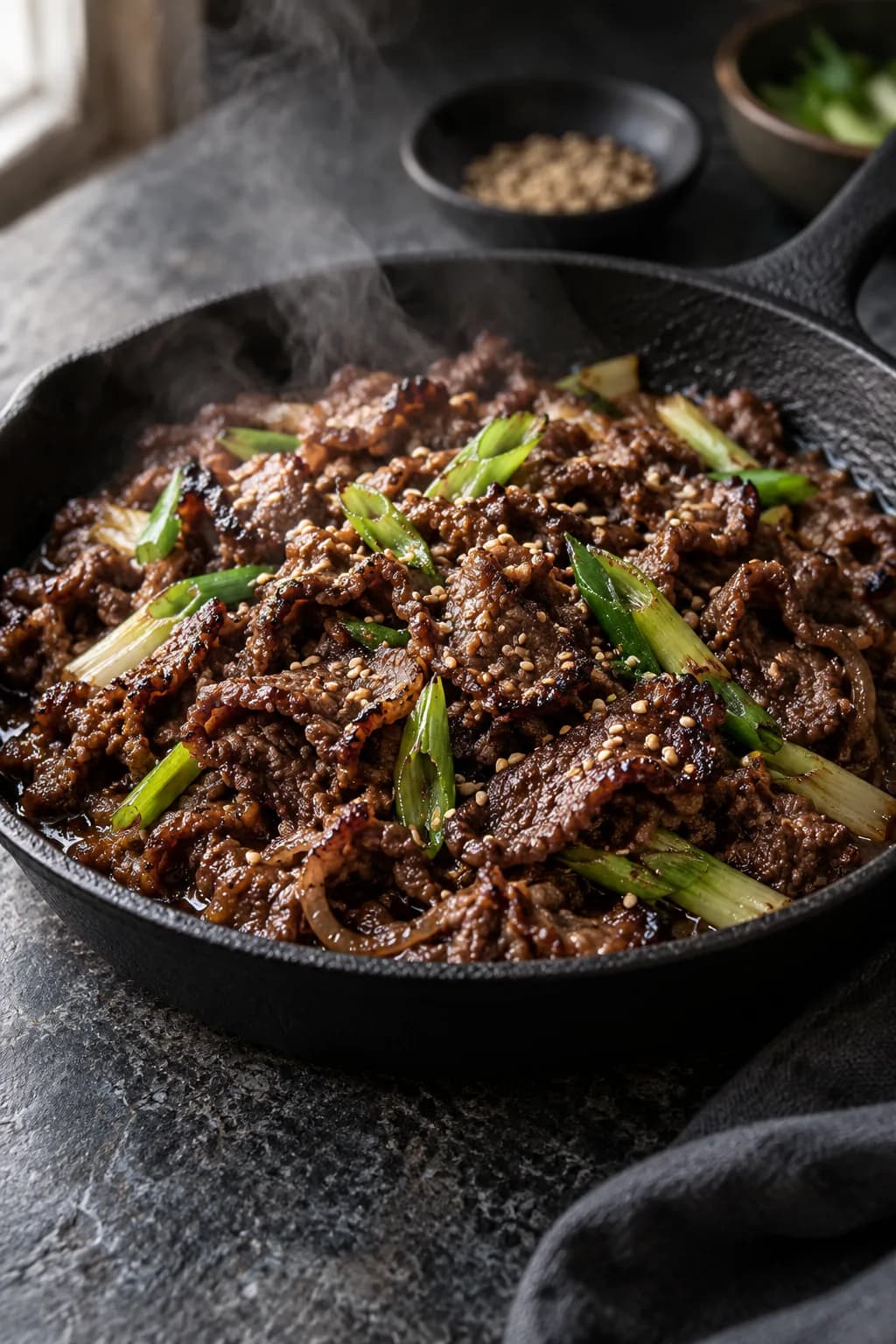
Cook: Heat a cast iron pan or heavy skillet over high heat until very hot. Add a small amount of neutral oil. Work in batches — don't crowd (crowding steams instead of sears). Add beef in a single layer. Cook 1-2 minutes without stirring until the bottom is caramelized. Flip once. Cook 30-60 seconds more.
The caramelized edges are where the soy sugar has reduced and charred slightly — this is the flavor goal. If the pan isn't hot enough, the beef releases moisture and steams.
Repeat with remaining beef.
Garnish with scallion and sesame seeds. Serve with rice.
Lettuce Wrap Version
Serve with red leaf lettuce, sesame leaves (perilla), ssamjang, sliced garlic, and sliced green chili. Wrap a few pieces of bulgogi in a lettuce leaf with ssamjang.
Notes
- Asian pear substitutes: Kiwi (very potent — use 1/4 kiwi and reduce marinade time to 15-20 minutes), or regular apple (milder, less effective).
- Day-old rice is best here — the dry rice absorbs the bulgogi juices better.
- The marinade works equally well on chicken thighs (slice thinly), pork shoulder (slice thinly), or firm tofu.
30 recipes and 6 master sauces in the book.
Get Tokyo Meets Tuscany on AmazonAs an Amazon Associate we earn from qualifying purchases. This is an affiliate link — it costs you nothing extra.
Paperback · Kindle