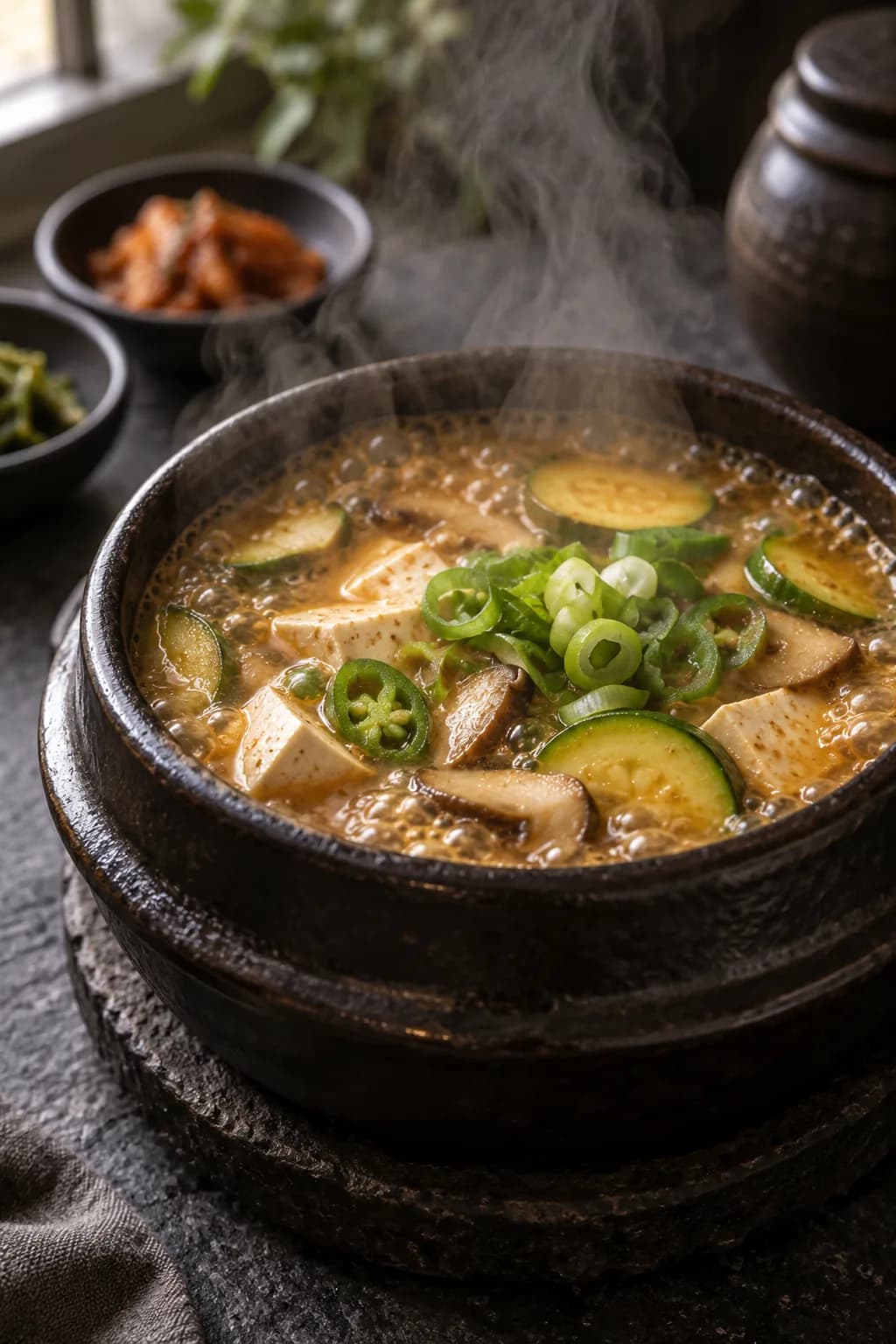
Doenjang jjigae (된장찌개) is the cornerstone of Korean home cooking. It appears on the breakfast table, the lunch table, and the dinner table. It is the stew that Koreans are most likely to cite when asked what they want when they're homesick.
The stew is deeply savory and slightly bitter from the fermented soybean paste, which does not fade with cooking but develops further.
Ingredients
Broth base:
- 600ml anchovy stock (myeolchi yuksu): simmer 8-10 dried anchovies in 700ml water 10 minutes, strain. Alternatively: instant anchovy stock packet, or mild chicken stock.
Stew:
- 2-3 tbsp doenjang (fermented soybean paste — not miso, though miso in a 1:1 mix with doenjang works in a pinch)
- 200g firm tofu, cut into 2cm cubes
- 1 small zucchini, halved lengthwise and cut into 1cm half-moons
- 3-4 dried shiitake mushrooms, rehydrated and sliced (or fresh)
- 3 cloves garlic, minced
- 1 chili pepper, sliced (or ½ tsp gochugaru)
- 1 scallion, cut into 3cm pieces
- 1 tsp sesame oil (to finish)
- Optional: ½ potato, small onion, mushrooms
Method
1. Make the broth: If making fresh anchovy broth: place anchovies in cold water, bring to simmer, cook 10 minutes, strain. The anchovies give the broth a specific savory depth that makes doenjang jjigae distinctly Korean.
2. Dissolve the doenjang: Bring broth to a simmer. Add doenjang by dissolving it directly in the hot broth — hold the paste in a strainer and stir through, or simply add and stir well. Start with 2 tbsp, taste, add more. Doenjang saltiness varies by brand and age.
3. Add vegetables and aromatics: Add garlic, zucchini, mushrooms, and chili. Simmer 5 minutes.
4. Add tofu: Add tofu cubes gently. Simmer another 3-4 minutes. Do not stir vigorously — tofu breaks.
5. Finish: Add scallion in the last minute. Add sesame oil just before serving.
Serve in the pot or transferred to a dolsot (stone pot) — the earthenware retains heat and keeps the stew simmering at the table.
Notes
- Do not boil hard once the doenjang is added — extended boiling can introduce bitterness. A gentle steady simmer is correct.
- Better the next day: Doenjang jjigae improves 12-24 hours as the fermented paste integrates more fully into the broth. Reheat gently to just below a simmer.
- Variations: Add potato for heartiness (gamja doenjang jjigae), whole clams or mussels for seafood depth, enoki mushrooms for texture.
- Doenjang vs miso: Korean doenjang has a more assertive, slightly funkier flavor than Japanese miso because it uses wild fermentation (without controlled koji). Japanese white miso in a doenjang jjigae will produce a milder, sweeter stew — acceptable but different.
30 recipes and 6 master sauces in the book.
Get Tokyo Meets Tuscany on AmazonAs an Amazon Associate we earn from qualifying purchases. This is an affiliate link — it costs you nothing extra.
Paperback · Kindle