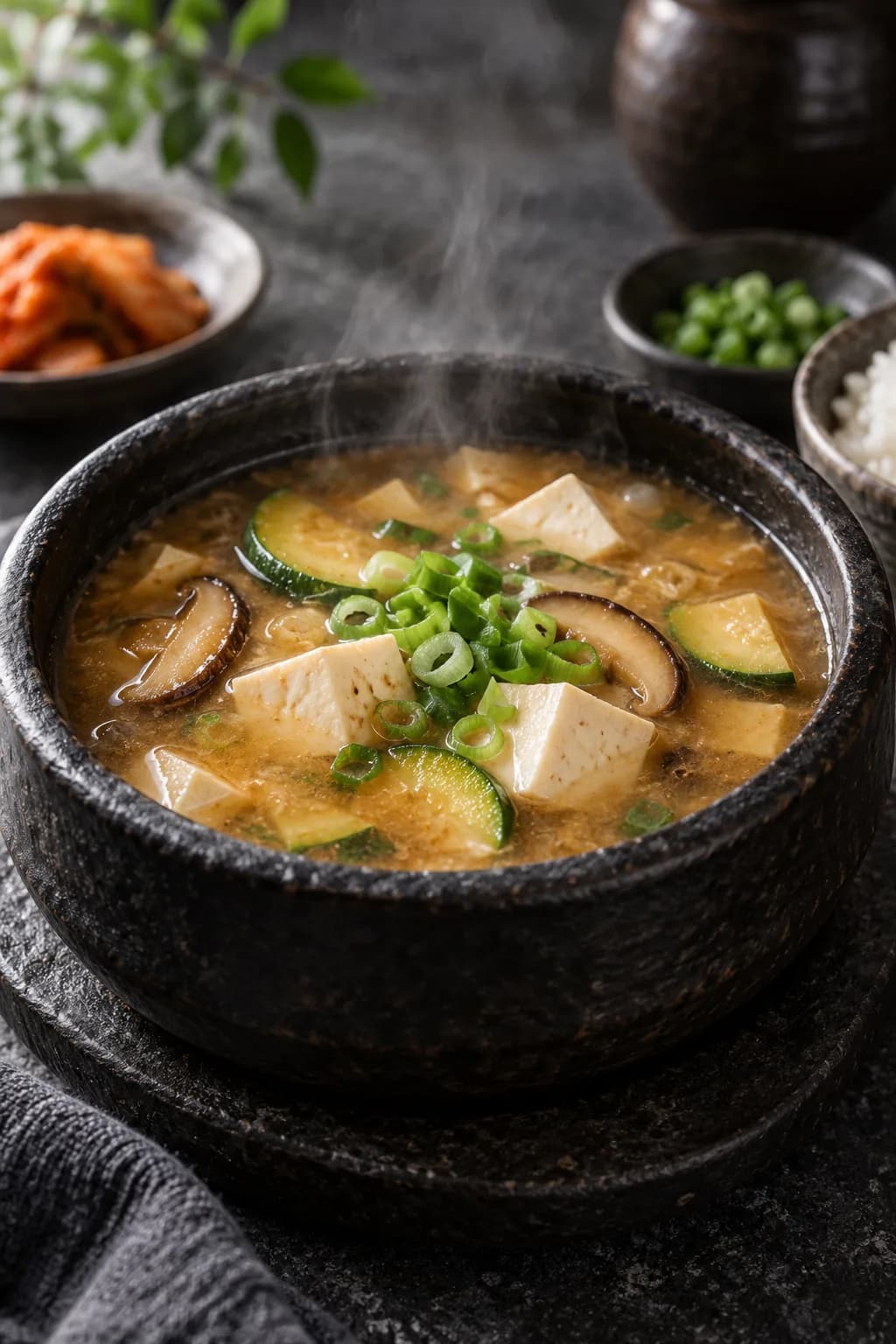
Doenjang guk (된장국) is the everyday Korean soup — lighter in body than doenjang jjigae (which is a stew), but built on the same fermented paste that defines Korean cooking. This is the soup at the breakfast table, the lunch table, the dinner table.
Ingredients
The broth:
- 600ml water
- 5-6 dried anchovies (myeolchi), heads and guts removed
- 1 piece dried kelp (dashima), about 5x5cm
The seasoning:
- 2 tbsp doenjang (Korean fermented soybean paste — not Japanese miso)
- 1 tsp gochugaru (optional — for heat)
- 1 tsp minced garlic
The vegetables:
- 150g soft or silken tofu, cubed
- 1/2 medium zucchini (hobak), sliced into half-moons
- 2 shiitake mushrooms, sliced (or 4-5 dried mushrooms, rehydrated)
- 2 scallions, cut into 3cm pieces
Garnish:
- Additional scallion, sesame oil (1/2 tsp)
Method
1. Make the anchovy broth: Combine water, dried anchovies, and kelp in a pot. Bring to a simmer over medium heat. Simmer 10 minutes. Remove anchovies and kelp with tongs or a strainer.
Shortcut: Use 600ml dashi instead of making anchovy broth from scratch.
2. Add the doenjang: Dissolve doenjang in a small amount of broth in a small bowl before adding to the pot — this prevents lumps. Add the dissolved paste to the pot. Add minced garlic and gochugaru if using.
3. Add the vegetables: Add zucchini and mushrooms to the simmering broth. Cook 4-5 minutes until the zucchini is just tender.
4. Add the tofu: Add tofu cubes gently. Simmer 2-3 minutes. Tofu doesn't need long — just enough to heat through and absorb a little broth.
5. Add scallions: Add scallions in the final 1 minute of cooking.
6. Taste and serve: Taste the broth — doenjang varies in saltiness. Adjust with a small amount of salt if needed (not more doenjang). Drizzle with sesame oil before serving.
Tips
Use Korean doenjang, not Japanese miso: Doenjang is stronger, earthier, and less sweet than Japanese miso. It has a different flavor profile — more fermented, more pungent, more complex. The dishes are distinct.
Don't boil aggressively after adding doenjang: Simmer gently. Strong boiling drives off the nuanced fermented flavors.
The broth base matters: Anchovy broth gives the soup its proper Korean character. Dashi is a decent substitute; plain water results in a flatter soup.
Other additions: Potato (cubed, added with zucchini), clams (add in the last 5 minutes), dried shrimp, or radish (daikon) cubed and added early.
Serving
Serve hot in individual bowls alongside rice. This soup is eaten throughout the meal — a few spoonfuls of soup, some rice, some banchan, back to soup. It's not consumed all at once before the meal.
30 recipes and 6 master sauces in the book.
Get Tokyo Meets Tuscany on AmazonAs an Amazon Associate we earn from qualifying purchases. This is an affiliate link — it costs you nothing extra.
Paperback · Kindle