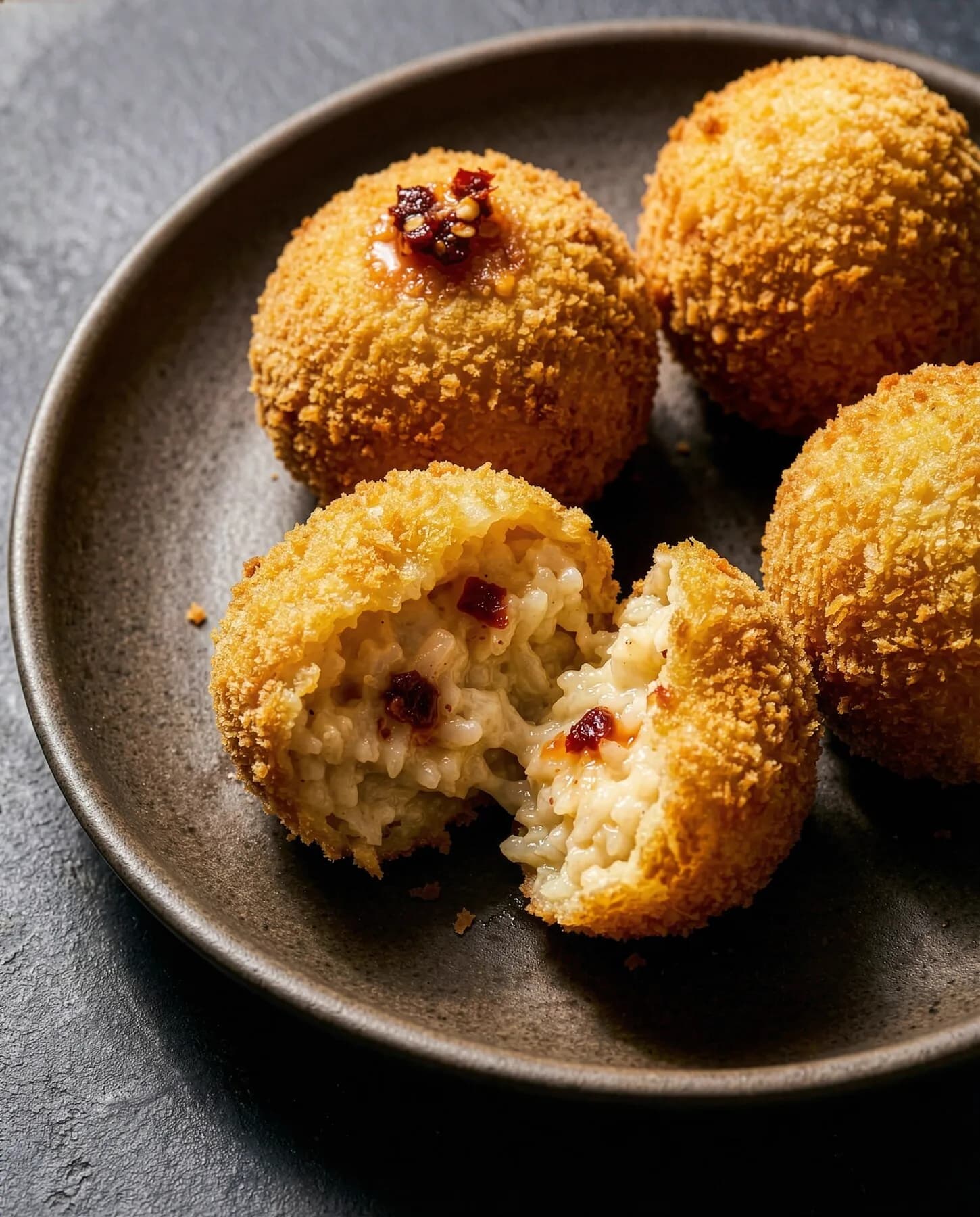
Arancini are Sicilian street food — fried risotto balls, stuffed with ragù and mozzarella, coated in breadcrumbs, deep fried. They're served hot, eaten by hand. The interior is molten.
Korean ingredients fit this format naturally. Kimchi replaces the ragù: both are savory, acidic, complex. Mozzarella stays. A gochujang aioli replaces the tomato sauce traditionally served alongside. The technique is entirely Italian; the flavor is Korean-Italian.
Ingredients
Risotto base:
- 300g arborio or carnaroli rice
- 1 small white onion, finely diced
- 2 garlic cloves, minced
- 150ml dry white wine
- 1 liter warm chicken or vegetable stock
- 40g unsalted butter
- 40g Parmesan, grated
- Salt and pepper
Kimchi filling:
- 200g well-fermented kimchi, squeezed dry and roughly chopped
- 150g fresh mozzarella, cut into 1cm cubes
- 1 tablespoon gochujang
- 2 spring onions, sliced
Breading:
- 2 eggs, beaten
- 100g all-purpose flour
- 150g panko breadcrumbs
- Neutral oil for deep frying
Gochujang aioli:
- 3 tablespoons mayonnaise
- 1 tablespoon gochujang
- 1 teaspoon sesame oil
- 1 teaspoon rice vinegar
- 1 garlic clove, minced
Instructions
1. Make the risotto. Heat oil in a wide pan over medium heat. Sweat the onion until soft, 5 minutes. Add garlic, cook 1 minute. Add rice and toast 2 minutes. Add wine and stir until absorbed. Add warm stock one ladle at a time, stirring frequently and adding the next ladle only when the previous has been absorbed. Continue for 18-20 minutes until rice is al dente and creamy. Remove from heat. Stir in butter and Parmesan. Season generously. Spread on a tray and refrigerate until completely cold — at least 1 hour.
2. Prepare the filling. Mix together the drained kimchi, gochujang, and spring onions. Set the mozzarella cubes separately.
3. Form the arancini. With wet hands, take 2-3 tablespoons of cold risotto and flatten in your palm. Place 1 teaspoon of kimchi mixture and 1 mozzarella cube in the center. Close the risotto around the filling, pressing firmly to form a compact ball (golf ball to slightly larger). Repeat with remaining risotto.
4. Bread the arancini. Set up three stations: flour, beaten egg, panko. Roll each ball in flour (shake off excess), dip in egg (full coat), roll in panko (press to adhere). The panko should be thick and even.
5. Fry. Heat oil to 175°C (350°F) in a deep pot — at least 5cm deep. Fry in batches of 3-4, turning occasionally, for 3-4 minutes until golden all over. The interior should be hot and the mozzarella melted. Drain on a wire rack.
6. Gochujang aioli. Whisk all ingredients together. Taste and adjust.
7. Serve immediately with the gochujang aioli.
Notes
The risotto must be completely cold before forming — warm risotto won't hold its shape and will fall apart when breaded and fried. Overnight in the refrigerator is ideal.
Squeeze the kimchi thoroughly before adding to the filling. Excess moisture makes the filling wet, which can cause the arancini to burst open during frying.
These are best eaten within 5 minutes of frying. They lose their crispness as they cool. If serving as part of a larger spread, fry in batches as guests eat.
30 recipes and 6 master sauces in the book.
Get Tokyo Meets Tuscany on AmazonAs an Amazon Associate we earn from qualifying purchases. This is an affiliate link — it costs you nothing extra.
Paperback · Kindle