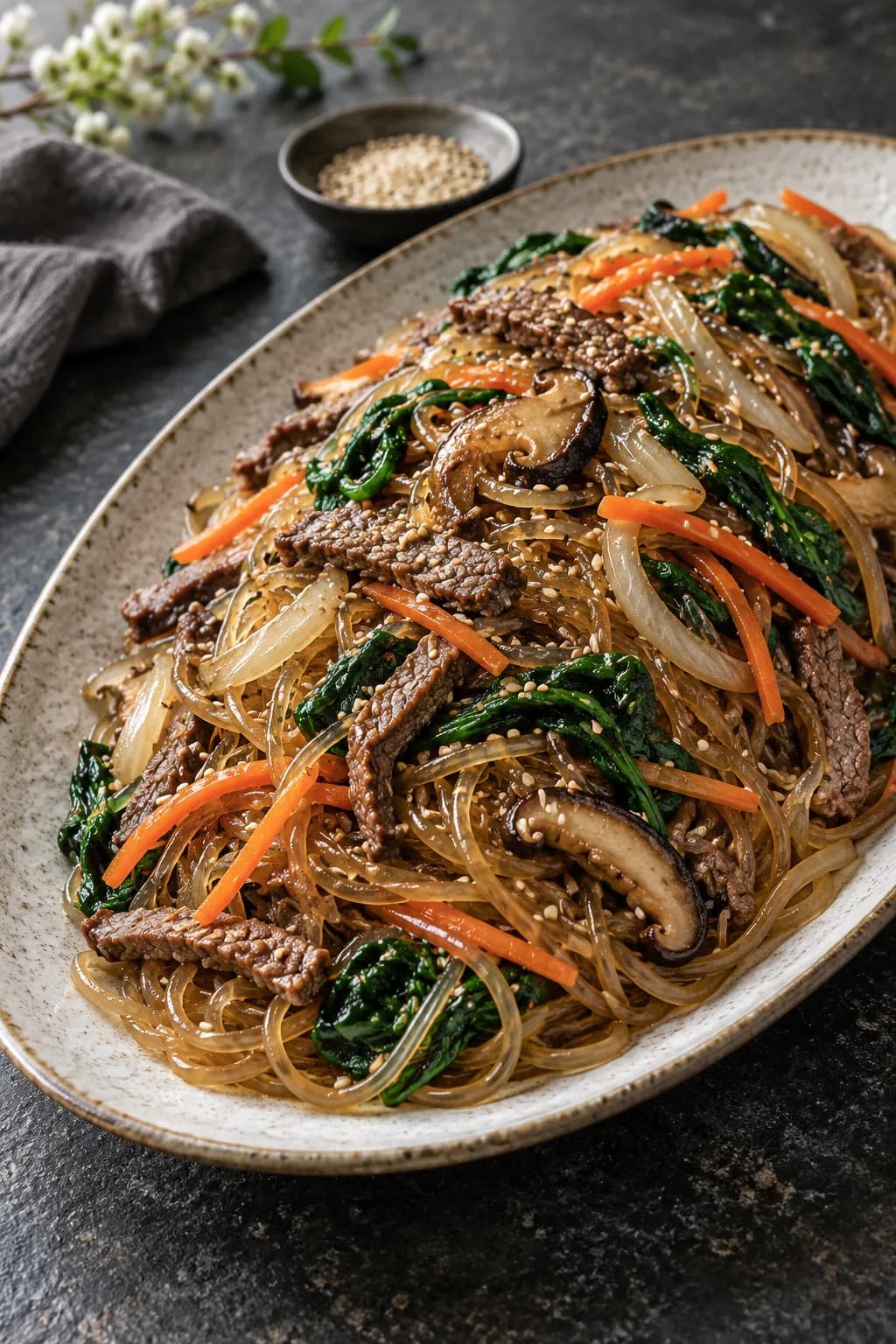
Japchae (잡채) is one of Korea's best-loved dishes for celebrations — its varied colors (each vegetable cooked separately and arranged), the chewy translucent noodles, and the sweet-savory-sesame sauce make it both visually impressive and deeply satisfying.
Ingredients
Noodles:
- 200g dangmyeon (당면, Korean sweet potato glass noodles)
Beef (or mushrooms for vegetarian):
- 150g beef (sirloin or rib-eye), thinly sliced
- 1 tbsp soy sauce, 1 tsp sesame oil, 1 tsp sugar (for beef marinade)
Vegetables (each cooked separately):
- 1 medium carrot, julienned
- 100g spinach, blanched and squeezed dry
- 2 scallions, cut into 3cm pieces
- 4-5 shiitake mushrooms, stems removed, thinly sliced
- 1/2 onion, thinly sliced
- Optional: 1/2 red bell pepper, julienned; rehydrated wood ear mushrooms
Egg garnish:
- 1 egg (white and yolk cooked separately into thin strips)
Sauce:
- 3 tbsp soy sauce
- 2 tbsp sugar
- 2 tbsp sesame oil
- 1 tsp sesame seeds
Method
1. Cook and season the noodles: Soak dangmyeon in cold water 30 minutes. Boil in plenty of water 6-8 minutes until tender but still chewy. Drain. Cut with scissors into 15-20cm lengths. Season with 1 tbsp soy sauce, 1 tsp sesame oil, 1 tsp sugar. Set aside.
2. Marinate and cook beef: Marinate beef with soy sauce, sesame oil, sugar for 10 minutes. Stir-fry in a hot oiled pan 2-3 minutes. Set aside.
3. Cook each vegetable separately in a lightly oiled pan over medium-high. Season each with a pinch of salt and a few drops of sesame oil before removing. This keeps each vegetable's color and texture distinct:
- Carrots: 2 minutes
- Onion: 3 minutes until softened
- Shiitake: 3 minutes
- Spinach: 1 minute (or just blanch and squeeze dry, season with sesame oil and salt)
- Scallions: 30 seconds
4. Cook the egg garnish: Separate egg. Beat white with salt; cook in a lightly oiled pan to make a thin flat omelet. Repeat with yolk. Slice both into thin strips.
5. Combine: In a large bowl, combine noodles, beef, and all vegetables. Pour sauce (soy sauce + sugar + sesame oil) over everything. Toss gently to coat. Adjust seasoning.
6. Serve at room temperature, garnished with egg strips and sesame seeds.
Notes
- Dangmyeon must be sweet potato starch noodles (semi-translucent, greyish before cooking, clear when cooked). Regular glass noodles work but are less chewy.
- Japchae can be made 1-2 hours ahead. The noodles absorb the sauce over time — this is fine.
- Vegetarian version: omit beef, add more mushrooms (shiitake + wood ear).
30 recipes and 6 master sauces in the book.
Get Tokyo Meets Tuscany on AmazonAs an Amazon Associate we earn from qualifying purchases. This is an affiliate link — it costs you nothing extra.
Paperback · Kindle