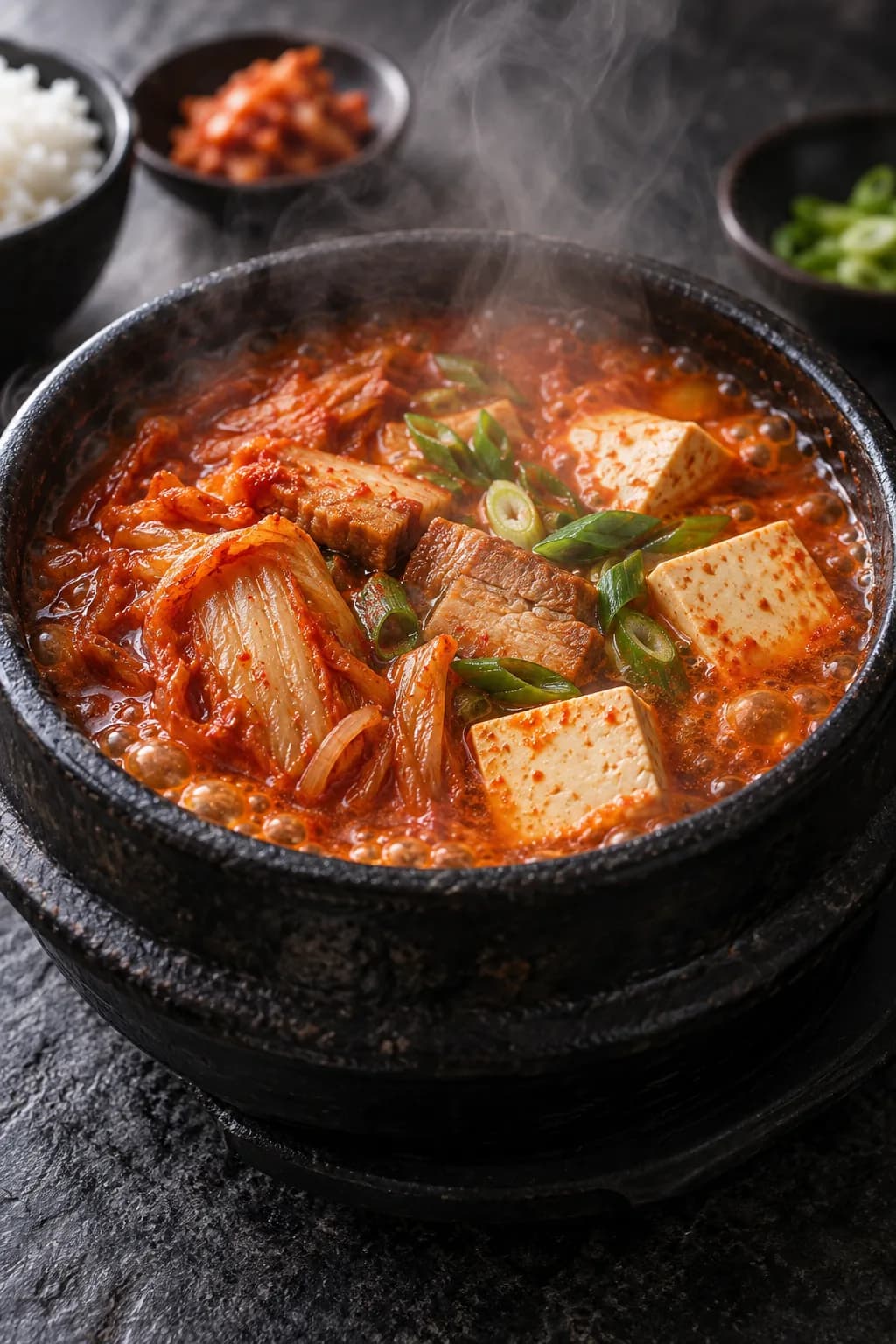
Kimchi jjigae is the stew that turns "bad" kimchi into the best thing on the table. Old, sour, past-its-prime kimchi is the correct ingredient — the fermented acidity becomes complex depth when cooked.
Ingredients
- 300g old kimchi (well-fermented, quite sour) + 3 tbsp kimchi juice
- 200g pork belly, thinly sliced
- 200g firm tofu, cubed
- 1/2 onion, sliced
- 2 cloves garlic, minced
- 1 tbsp gochujang
- 1 tbsp gochugaru (optional, for more heat)
- 1 tsp soy sauce
- 1 tsp sesame oil
- 300ml water or anchovy broth
- 1 scallion, sliced
Method
Sauté pork: In a heavy pot over medium-high heat, cook pork belly 2-3 minutes until beginning to brown.
Add kimchi: Add kimchi + kimchi juice to the pork. Stir-fry together 2-3 minutes — this step creates the flavor base.
Add aromatics: Add garlic, gochujang, gochugaru, soy sauce.
Add liquid: Pour in water or broth. Add onion. Bring to a boil.
Simmer: Reduce heat, simmer 15-20 minutes until kimchi softens and broth darkens.
Add tofu: Gently add tofu in the last 5 minutes.
Finish: Sesame oil, scallion. Serve in the pot with white rice.
Canned Tuna Version
Replace pork with 1 can (150g) well-drained tuna. Skip the initial sauté (no fat to render). Add tuna in the last 3 minutes only — it overcooks quickly. Lighter, faster, equally delicious.
Notes
- The kimchi should be the oldest, sourest kimchi you have. Kimchi bought fresh from a store (usually only 1-2 weeks old) won't produce the same depth. Let it ferment longer.
- A tiny pinch of sugar (1/4 tsp) balances extreme sourness without eliminating it.
- The ratio of kimchi to liquid should make the stew more stew than soup — don't add too much water.
30 recipes and 6 master sauces in the book.
Get Tokyo Meets Tuscany on AmazonAs an Amazon Associate we earn from qualifying purchases. This is an affiliate link — it costs you nothing extra.
Paperback · Kindle