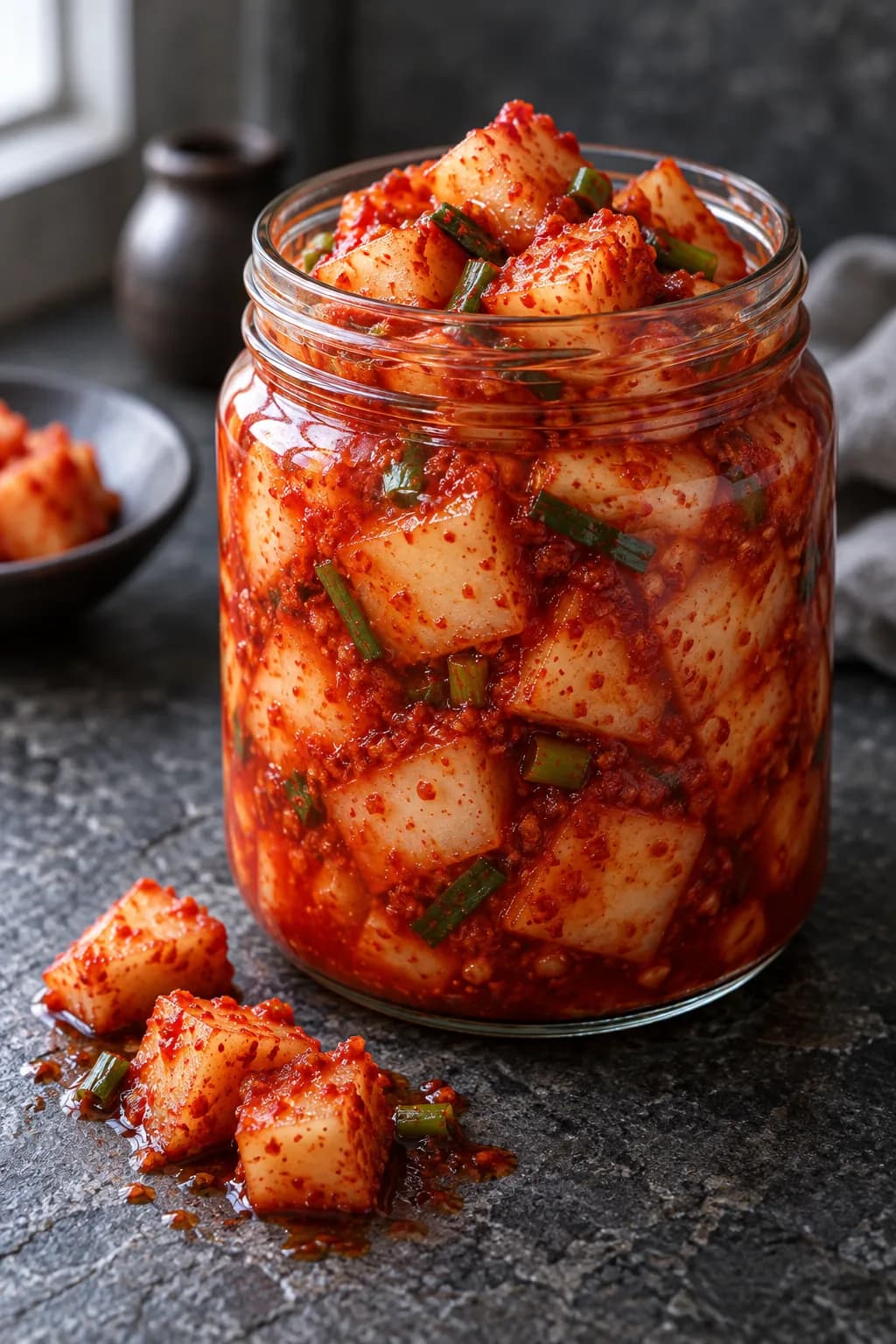
Kkakdugi is easier to make than baechu kimchi because the radish is cut into cubes (no need to salt large cabbage leaves), requires less salting time, and ferments more quickly. The result is a crunchier, slightly sweeter kimchi with a different fermentation profile from the cabbage version.
Ingredients
- 600g Korean radish (mu) or daikon — Korean radish is preferred (denser, less watery, slightly sweeter)
- 1.5 tsp salt
- 1 tsp sugar
- 2.5 tbsp gochugaru (Korean red pepper flakes)
- 1 tbsp fish sauce
- 1 tbsp salted shrimp (saeujeot, minced) — or additional 1 tbsp fish sauce
- 4 garlic cloves, minced
- 1 tsp ginger, grated
- 2 scallions, cut into 2cm pieces
Method
Salt the radish: Peel and cut radish into 2-3cm cubes. Place in a bowl with salt and sugar. Toss well. Let sit 20-30 minutes. The radish will release water and become slightly softer. Drain the liquid.
Make the paste: In a bowl, combine gochugaru, fish sauce, salted shrimp (or extra fish sauce), garlic, and ginger. Mix to combine.
Combine: Add the drained radish cubes and scallion pieces to the paste. Toss with clean hands (wear gloves — gochugaru stains) until every cube is evenly coated.
Pack and ferment: Pack tightly into a clean glass jar, pressing down to remove air pockets. Cover loosely (not airtight — CO2 needs to escape). Leave at room temperature 1-2 days.
Signs of fermentation: The juice level in the jar will rise as the radish continues to release liquid and CO2 is produced. Taste after 1 day — it should be slightly tangy, spicy, with the raw garlic beginning to mellow.
Refrigerate after 1-2 days at room temperature. The kimchi continues to ferment slowly in the refrigerator, improving over 1-2 weeks.
When to Eat
- Day 2-3: Fresh and crunchy, slightly tangy, spicy, raw garlic forward
- Week 1-2: Peak flavor — the fermentation has rounded the flavors, the radish is slightly softer but still retains crunch, the gochugaru has deepened in color
- Week 3+: More sour, chewier, use for cooking (kimchi fried rice, kimchi pancakes)
Notes
- Korean radish (mu) is shorter, wider, and denser than Japanese daikon. If using daikon, reduce salt slightly — daikon releases more water.
- The sugar is essential — it provides fermentable substrate for the bacteria and mellows the initial sharpness.
- Without saeujeot (salted shrimp): the result is still very good, just slightly less complex in the base flavor. A vegan version omits both fish sauce and shrimp — use more salt plus soy sauce.
30 recipes and 6 master sauces in the book.
Get Tokyo Meets Tuscany on AmazonAs an Amazon Associate we earn from qualifying purchases. This is an affiliate link — it costs you nothing extra.
Paperback · Kindle