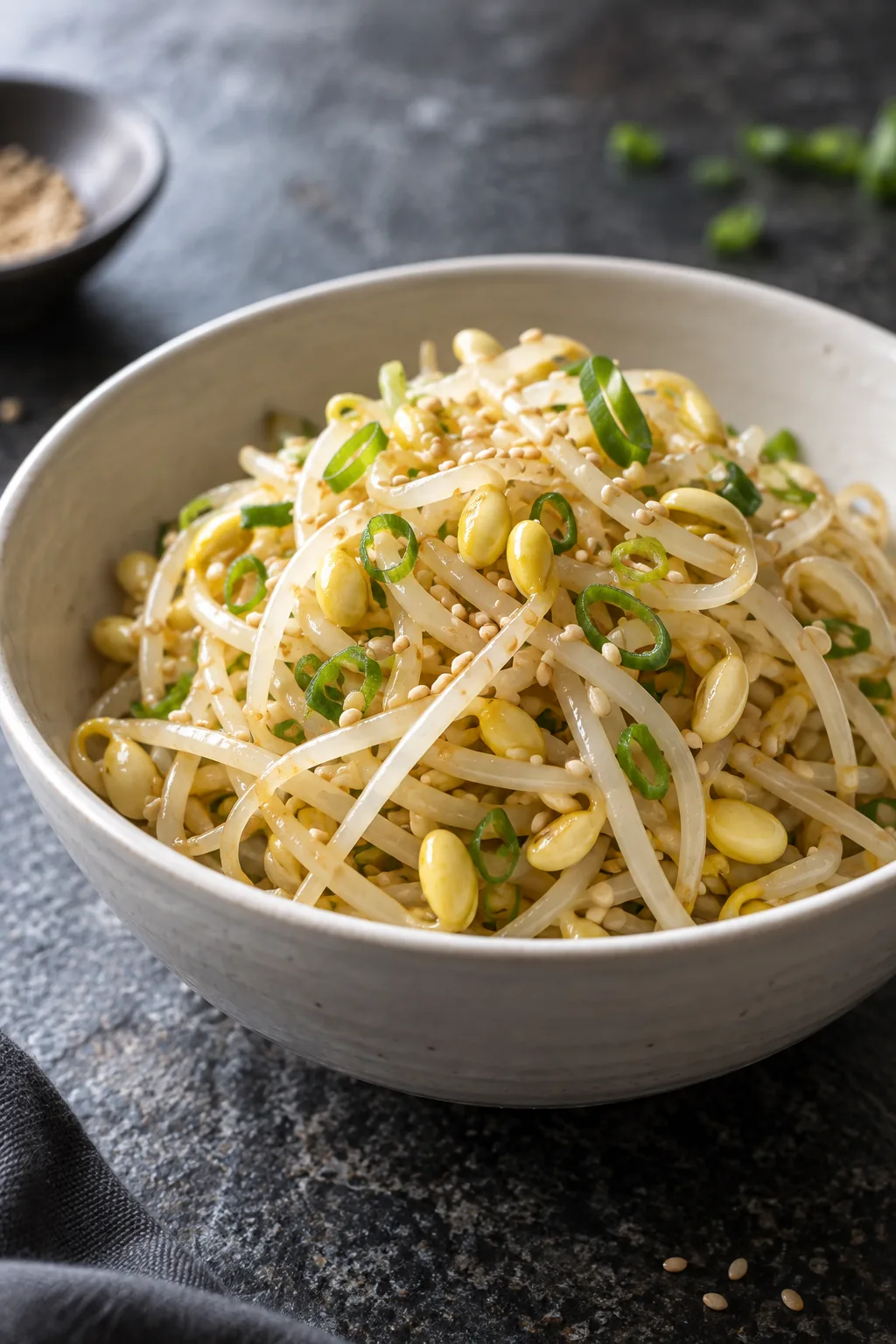
Kongnamul (콩나물) is Korea's most elemental side dish — three ingredients, ten minutes, and a banchan that belongs on every Korean table. The technique is exactly the same every time; the only variable is how crunchy you want the sprouts.
Ingredients
- 300g soybean sprouts (kongnamul, not mung bean sprouts — the larger, yellow-headed variety)
- 1 tsp sesame oil
- 1 tsp soy sauce
- 1 clove garlic, minced (optional for milder version)
- 1 scallion, thinly sliced
- 1 tsp sesame seeds
- Salt
Note on sprouts: Soybean sprouts have a larger yellow head and a longer tail than mung bean sprouts. The head has a distinct nutty flavor. Mung bean sprouts are thinner, more delicate, shorter, and produce a slightly different banchan (sukju namul). Both work; they are different dishes.
Method
1. Blanch: Bring a pot of salted water to a boil. Add the soybean sprouts. Return to boil. Cook:
- 2-3 minutes for slightly crunchy (recommended — the sprout retains bite)
- 4-5 minutes for tender
2. Drain and rinse under cold water immediately to stop cooking. Squeeze out as much water as possible.
3. Season: In a bowl, combine blanched sprouts with sesame oil, soy sauce, garlic (if using), and a pinch of salt. Toss well to coat evenly.
4. Finish: Add scallion and sesame seeds. Toss once more.
Serve at room temperature or cold. Keeps refrigerated 3-4 days.
Notes
- The sesame oil is the flavor — don't reduce it. It should coat the sprouts.
- For bibimbap: this is one of the five standard toppings. Make a larger batch and use it all week.
- Spicy version: add ½ tsp gochugaru (chili flakes) with the seasoning.
- Do not skip the cold rinse — warm sprouts continue cooking in their own heat and will turn mushy.
30 recipes and 6 master sauces in the book.
Get Tokyo Meets Tuscany on AmazonAs an Amazon Associate we earn from qualifying purchases. This is an affiliate link — it costs you nothing extra.
Paperback · Kindle