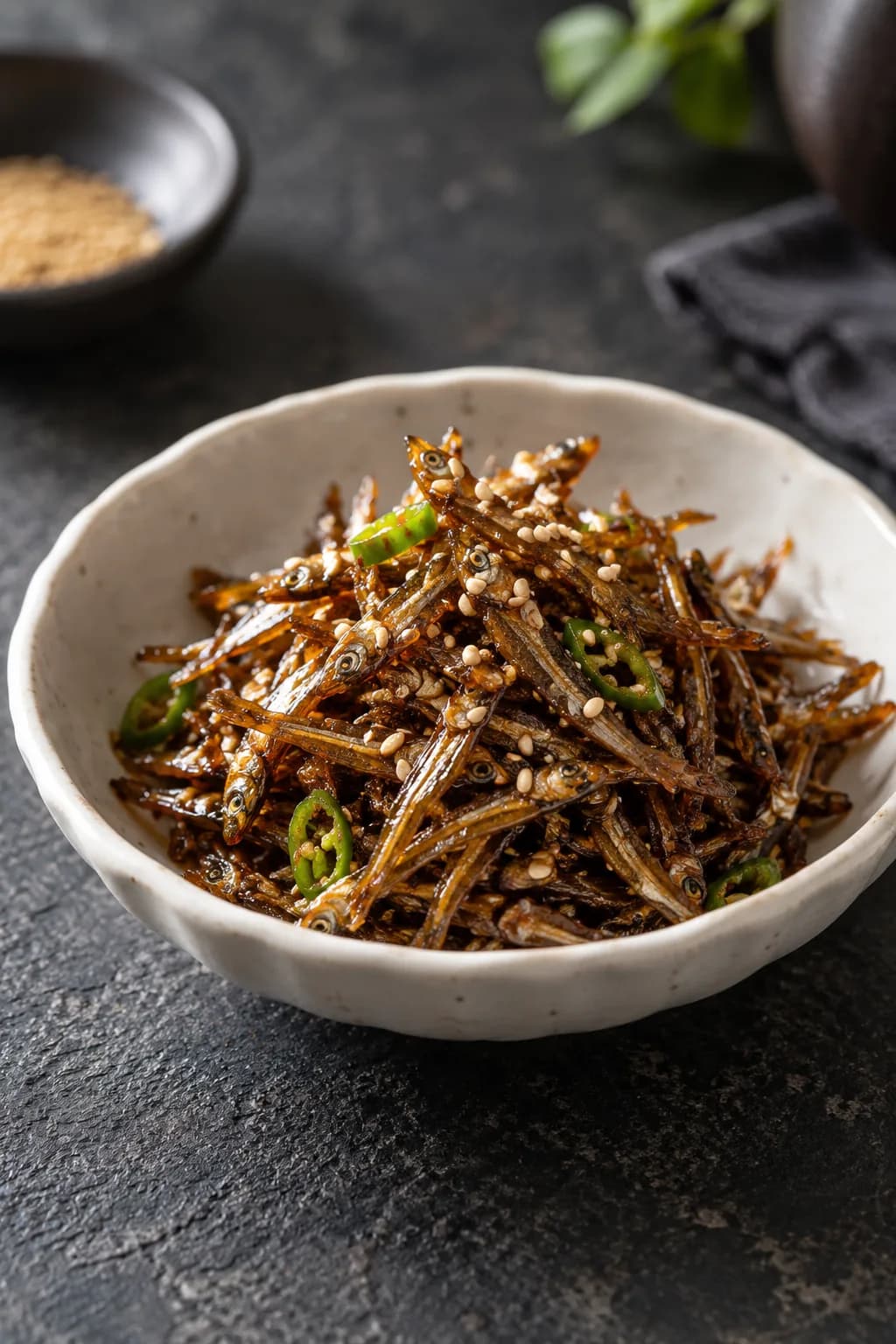
Myeolchi jorim (멸치조림) is the Korean banchan that appears in every dosirak (lunch box), beside every bowl of bibimbap, and on every home table that takes banchan seriously. It is salty, sweet, slightly spicy, crunchy, and takes 10 minutes to make. It keeps for a week. There is no excuse not to have it in the refrigerator.
Ingredients
- 100g small dried anchovies (anju or bokkeum size — about 3-4cm. Do not use large anchovies — those are for broth)
- 1.5 tbsp soy sauce
- 1 tbsp sugar (or oligosaccharide syrup mulyeot for a glossier finish)
- 1 tbsp sake or rice wine
- 1 tsp sesame oil
- 1 tsp sesame seeds
- 1 tbsp vegetable oil
- 2 cloves garlic, minced
- 1 small dried chili pepper or ½ tsp gochugaru (optional)
- 1 tbsp water
Method
1. Dry-toast the anchovies (optional but improves texture): In a dry pan over medium heat, toast the anchovies 1-2 minutes, stirring, until they feel crisp and smell nutty. This removes any residual moisture and fishiness. Remove from pan and set aside.
2. Sauté aromatics: Add vegetable oil to pan. Add garlic and dried chili. Stir-fry 30 seconds over medium heat — do not burn the garlic.
3. Add anchovies: Add anchovies to the pan. Toss with garlic.
4. Add braising liquid: Mix soy sauce, sugar, sake, and water. Pour over anchovies. Toss to coat.
5. Glaze: Cook over medium heat, stirring frequently, until the liquid reduces and coats the anchovies in a sticky glaze — approximately 3-4 minutes. As the sauce gets very thick, reduce heat slightly and stir constantly to prevent burning.
6. Finish: Remove from heat. Add sesame oil and sesame seeds. Toss.
Cool before storing. Keeps refrigerated 7-10 days.
Notes
- Anchovy size matters: Small dried anchovies (잔멸치, jan-myeolchi) are specifically used for jorim — the small size means the whole anchovy is eaten, head and all, which is correct. Large anchovies (국물멸치, gukul-myeolchi) are for broth only.
- Do not over-reduce: If the glaze goes past sticky to hard and crystallized, add a small splash of water to loosen.
- Add-ins: Some recipes add peanuts, pine nuts, or green chili pepper along with the anchovies for extra texture and visual variety.
- This banchan is also used as a dosirak (lunch box) filling because it keeps well without refrigeration for several hours — a practical advantage in the pre-refrigeration era of Korean lunch boxes.
30 recipes and 6 master sauces in the book.
Get Tokyo Meets Tuscany on AmazonAs an Amazon Associate we earn from qualifying purchases. This is an affiliate link — it costs you nothing extra.
Paperback · Kindle