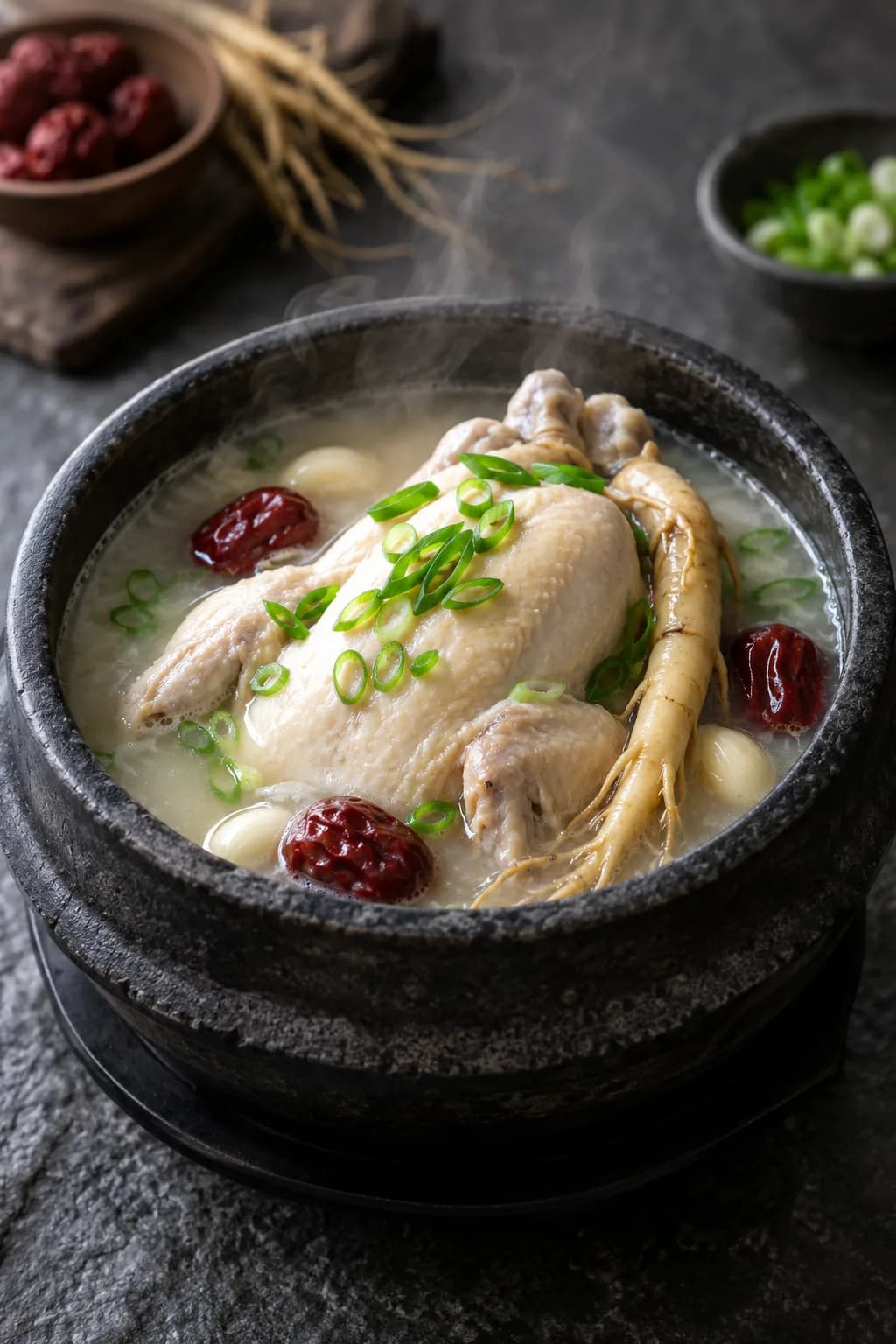
Samgyetang is Korea's answer to summer exhaustion — a whole chicken stuffed with rice, ginseng, and dates and simmered until the broth is rich and the meat falls from the bone. The logic: fighting summer heat with restorative heat. The result: a complete, healing meal.
The chicken is not carved. It arrives whole in the bowl. You take it apart yourself.
Ingredients (serves 2)
Per chicken:
- 2 small whole chickens (about 500-600g each) — Cornish game hens are the correct Western substitute
- 6 tbsp glutinous rice (찹쌀), soaked in cold water 1-2 hours, then drained
- 1-2 pieces fresh or dried ginseng root (인삼)
- 3-4 jujube dates (대추, Korean red dates), dried
- 4 cloves garlic, whole
- 2 liters water (enough to submerge chickens)
- 2 scallions for garnish
At the table:
- Flaky sea salt (each diner seasons their own)
- Black pepper
- Sliced scallions
Method
1. Prepare the chickens: Rinse each chicken inside and out under cold water. Pat dry.
Combine the soaked and drained glutinous rice with the garlic cloves, ginseng pieces, and jujube dates.
Stuff the cavity of each chicken loosely with this mixture — the rice will expand significantly during cooking so do not overfill (aim for 3/4 full maximum). Tie the legs together with kitchen twine, or cross them and tuck each under the other to hold the cavity closed.
2. Pre-boil (optional but recommended): Place stuffed chickens in a large pot. Cover with cold water. Bring to a boil. Pour off the water — this removes the gray foam and impurities that would cloud the final broth.
3. Simmer: Place chickens in a clean heavy pot. Add 2 liters of cold water (just enough to cover). Bring to a boil over high heat.
Skim off any remaining foam that rises in the first few minutes.
Reduce heat to a very low simmer (barely bubbling). Cover and cook 1.5 to 2 hours. Do not rush. The broth should be ivory-white and the chicken should be very tender — the leg should move freely and the meat should be beginning to pull from the bone.
4. Season at the table: Do not season the broth during cooking. Bring the entire pot (or individual bowls) to the table. Each diner adds sea salt and black pepper to taste.
The broth has significant flavor from the ginseng, jujube, and chicken — the salt adjustment is personal, not fixed.
5. Garnish: Top each bowl with sliced scallions.
How to Eat
Each person receives one whole chicken in broth, with a bowl of white rice alongside.
Take the chicken apart with chopsticks and a spoon directly in the bowl — remove the legs first, then the breast meat.
The stuffed rice in the cavity is very sticky glutinous rice — scoop it out with a spoon and eat it from the bowl alongside the broth. It is not meant to replace the white rice served alongside; both are eaten.
Drink the broth throughout — it is the restorative part.
Notes
- Ginseng amount: Fresh ginseng is preferred and stronger. Dried ginseng slices work. Powdered ginseng does not produce the same result. If ginseng is unavailable: omit or substitute a few slices of astragalus root (hwanggi, available at Korean grocery stores).
- This dish is traditionally made with very small young chickens. Regular chicken quarters or a halved chicken will not produce the same experience. Cornish game hens are widely available and the correct size.
- The broth should be ivory-white, not clear. The natural gelatin from the bones and the starch from the glutinous rice produce this characteristic color.
30 recipes and 6 master sauces in the book.
Get Tokyo Meets Tuscany on AmazonAs an Amazon Associate we earn from qualifying purchases. This is an affiliate link — it costs you nothing extra.
Paperback · Kindle