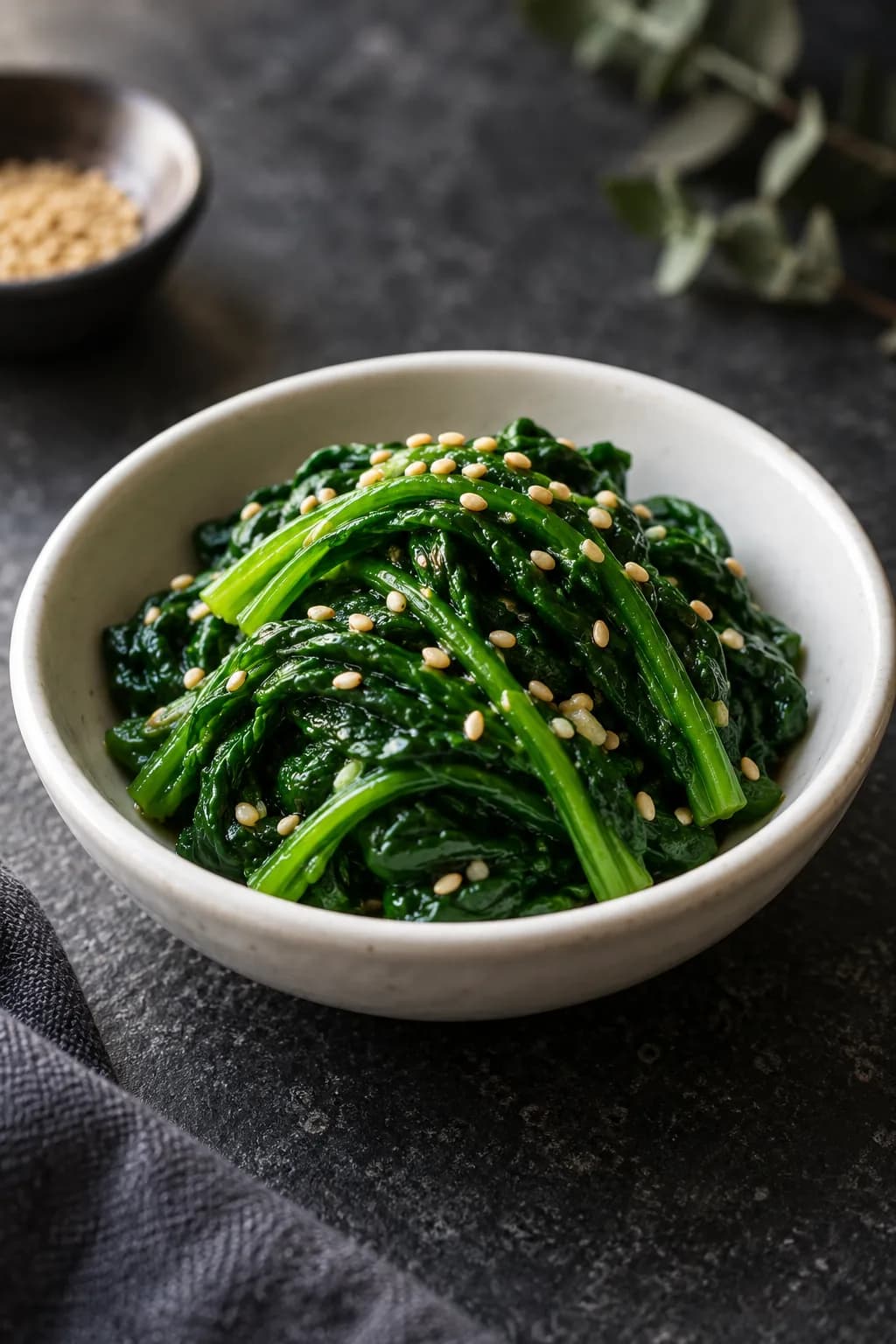
Sigeumchi namul (시금치나물) is the spinach banchan found on virtually every Korean home table. It is one of the simplest things in Korean cooking and one of the things that most clearly demonstrates the Korean seasoning principle: the same vegetables, seasoned with the same ingredients, produce a clearly Korean result.
Ingredients
- 300g fresh spinach (baby spinach or regular leaf spinach)
- 1 tsp sesame oil
- 1 tsp soy sauce
- 1 clove garlic, minced
- 1 tsp sesame seeds
- Salt
- Optional: ¼ tsp gochugaru (for a mild heat note)
Method
1. Blanch: Bring a pot of lightly salted water to a rolling boil. Add the spinach. Return to boil. Cook 30-45 seconds only — spinach wilts much faster than bean sprouts. Do not overcook.
2. Immediately drain and plunge into cold water. This stops cooking and preserves the vivid green color.
3. Squeeze out all water. This step matters: hold the spinach in your fist and squeeze firmly. Repeat. The spinach should feel nearly dry. Watery spinach produces diluted, soggy namul — the seasoning won't cling.
4. Season: If the spinach is in one large mass, separate it loosely. In a bowl, combine with sesame oil, soy sauce, garlic, and a pinch of salt. Toss well.
5. Finish: Add sesame seeds and optional gochugaru. Taste — the flavor should be savory, garlicky, nutty. Adjust salt if needed.
Serve at room temperature or cold. Keeps refrigerated 3-4 days.
Notes
- Squeeze, then season: Do not season wet spinach. The water dilutes the sesame oil and the soy sauce won't coat properly.
- The garlic can be raw or very lightly sautéed: Raw garlic is traditional and produces a sharper, more assertive namul. Sautéed garlic (30 seconds in sesame oil first) is milder and rounder.
- Bibimbap component: Sigeumchi namul is one of the five standard bibimbap toppings — along with kongnamul, gosari namul, seasoned beef, and a fried egg.
- Regular leaf spinach and baby spinach both work. Leaf spinach has more body; baby spinach is more delicate. Either is correct.
30 recipes and 6 master sauces in the book.
Get Tokyo Meets Tuscany on AmazonAs an Amazon Associate we earn from qualifying purchases. This is an affiliate link — it costs you nothing extra.
Paperback · Kindle