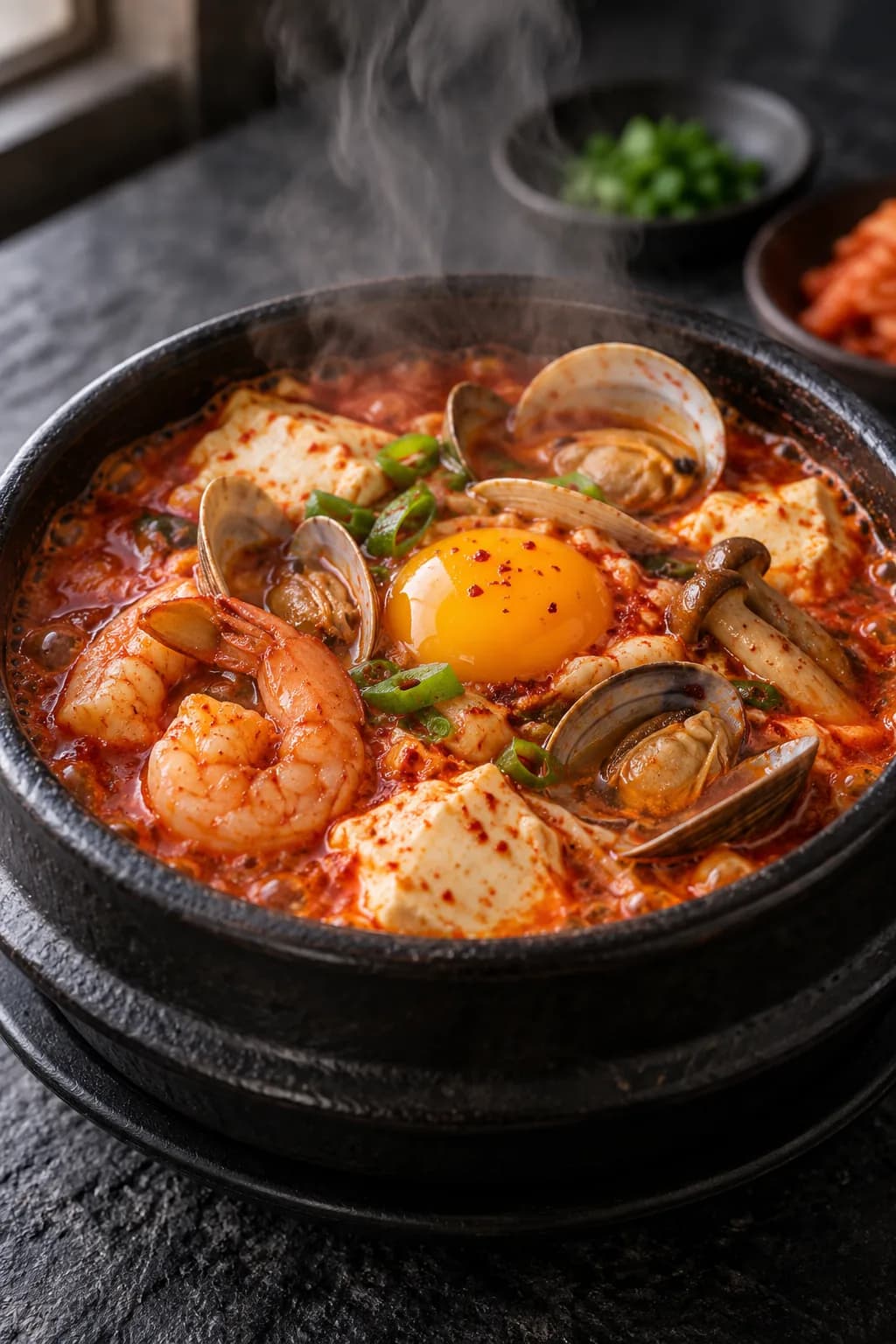
Soondubu jjigae is the stew built around soft, silken tofu — sundubu. The tofu breaks apart in the spicy broth, creating soft, silky pools that absorb the gochugaru heat and the seafood umami. The egg, cracked in at the table, completes it.
Ingredients
The base:
- 1 tube (350g) soondubu (soft silken tofu, the tube-shaped packaged variety)
- 2 tbsp sesame oil
- 2 tbsp gochugaru (Korean chili flakes — not powder)
- 1 tbsp gochujang (optional — adds depth)
- 3 cloves garlic, minced
- 300ml anchovy-kelp broth (or chicken broth)
- 1 tbsp fish sauce
Seafood:
- 150g shrimp, peeled and deveined
- 150g clams, purged of sand
- 4-5 shiitake mushrooms, sliced
At the table:
- 2 eggs (1 per person)
- 2 scallions, sliced
- Sesame seeds
Method
1. Bloom the gochugaru: Heat sesame oil in a small stone pot (dolsot) or heavy-bottomed pot over medium heat. Add gochugaru and stir constantly for 60-90 seconds — the oil will turn red and fragrant. Add garlic and cook 30 seconds more. This step is essential: blooming the chili in fat unlocks the oil-soluble flavor compounds in gochugaru that are not water-soluble.
2. Add broth: Add the anchovy broth. Stir to incorporate the chili-oil base. Bring to a simmer. Add fish sauce and gochujang if using.
3. Add the seafood: Add clams first (they take longest). Simmer 2-3 minutes. Add shrimp and mushrooms. Simmer 2 minutes until shrimp turn pink.
4. Add the tofu: Cut or break the soondubu into large irregular pieces and add to the pot. Do NOT stir — let the tofu sit and warm in the broth for 2-3 minutes. It will break apart somewhat, which is expected.
5. Crack the egg: Remove from heat (or leave at very low heat). Crack one egg into the center of each serving. The egg will set partially from the residual heat of the stone pot — yolk should remain runny.
6. Garnish and serve: Top with scallions and sesame seeds. Serve immediately, with white rice alongside.
The Dolsot Advantage
Cooking and serving in a stone pot (dolsot) maintains heat significantly longer than a regular pot. The stew will continue to bubble and the egg will continue to set at the table. The stone pot also develops a slight crust of tofu and broth on the bottom (nurungji) that adds flavor as you eat down to the bottom.
A regular pot works but the stone pot is worth getting if you cook Korean food regularly.
Tips
- Don't stir the tofu. Soondubu breaks apart easily. Let it soften in the broth undisturbed.
- The egg yolk should be partially set, not fully cooked. The residual heat does the job. Remove from heat right before adding the egg.
- This dish is always served with white rice. Spoon the stew over the rice, or alternate bites.
- For a vegetarian version: Substitute mushroom broth, use miso or ganjang instead of fish sauce, omit seafood and add extra mushrooms (shiitake, oyster, enoki).
30 recipes and 6 master sauces in the book.
Get Tokyo Meets Tuscany on AmazonAs an Amazon Associate we earn from qualifying purchases. This is an affiliate link — it costs you nothing extra.
Paperback · Kindle