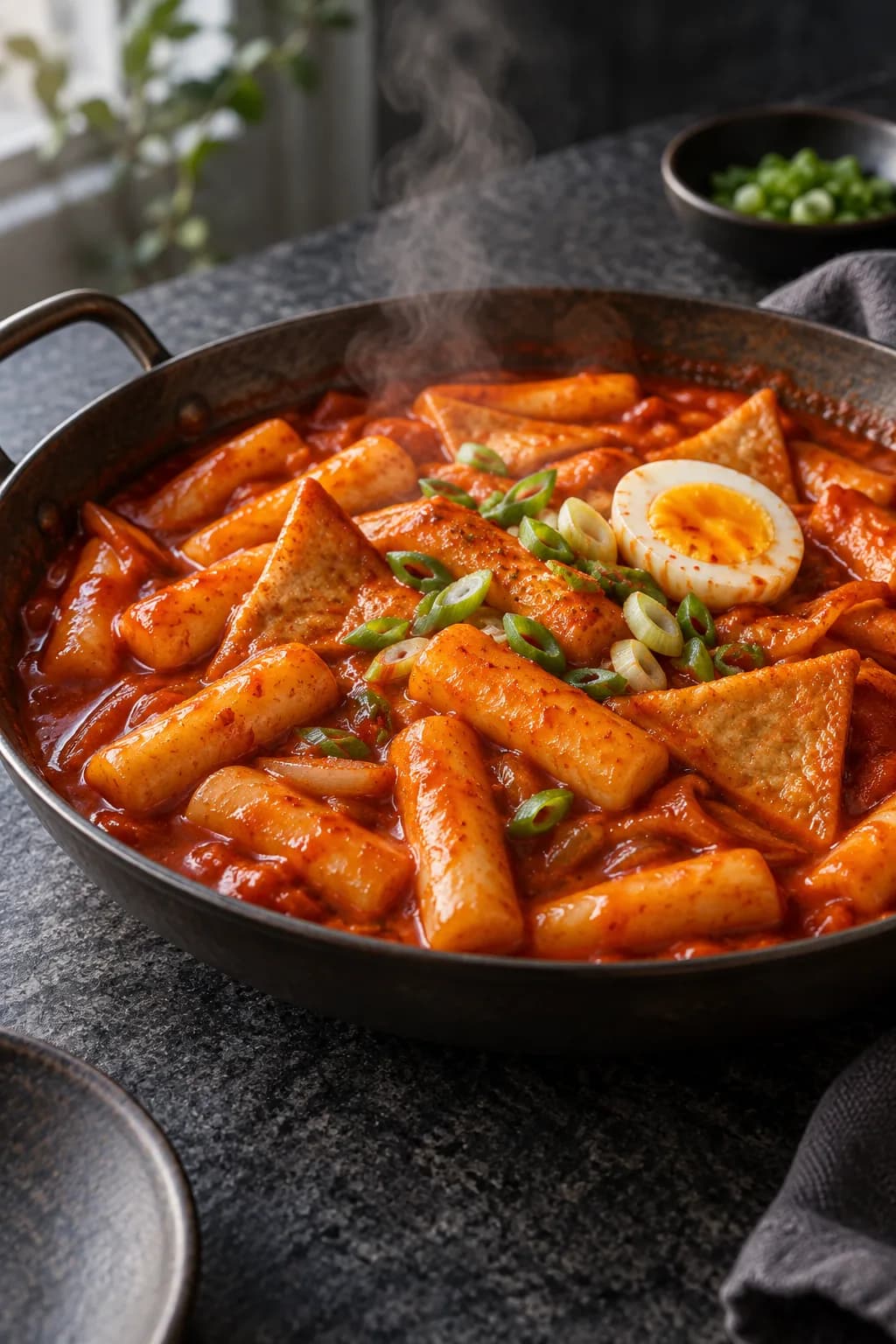
Ingredients
- 300g cylindrical rice cakes (garae-tteok, fresh or refrigerated — if dried, soak 1 hour)
- 200g fishcake (eomuk), cut into 3-4cm pieces
- 2 hard-boiled eggs, peeled
- 2 scallions, cut into 3cm pieces
Sauce:
- 3 tbsp gochujang
- 1 tbsp gochugaru
- 1 tbsp soy sauce
- 2 tbsp sugar
- 1 tbsp corn syrup or honey (optional — adds gloss)
- 300ml anchovy broth (or water)
Anchovy broth (quick): Simmer 5 dried anchovies (heads removed) and 1 small piece of kelp in 400ml water for 10 minutes. Strain.
Method
Soak the rice cakes: If using refrigerated or dried rice cakes, soak in cold water 30-60 minutes until pliable. Drain.
Make the sauce: In a wide pan or shallow pot, combine anchovy broth, gochujang, gochugaru, soy sauce, and sugar. Stir to combine. Bring to a boil.
Add rice cakes and fishcake: Add soaked rice cakes and fishcake pieces to the simmering sauce. Stir.
Reduce: Cook over medium heat, stirring frequently, 8-10 minutes until the sauce thickens and the rice cakes are coated and tender all the way through. The sauce should reduce to a thick, glossy consistency — not watery.
Add eggs in the final 3 minutes — they will absorb the sauce color.
Add scallions in the last minute. Serve immediately.
Notes
- Fresh rice cakes don't need soaking and cook faster. Refrigerated rice cakes need soaking or they stay firm in the center.
- The sauce ratio: gochujang provides the fermented base flavor; gochugaru adds heat and fresh pepper flavor; sugar balances the heat. Adjust the sugar to your taste — some recipes use twice as much sugar.
- Corn syrup (mulyeot) adds glossiness and is standard in Korean street food tteokbokki. Honey works as a substitute.
- Leftovers: the rice cakes continue to absorb the sauce and will be even more flavorful the next day, though they lose some chewiness.
30 recipes and 6 master sauces in the book.
Get Tokyo Meets Tuscany on AmazonAs an Amazon Associate we earn from qualifying purchases. This is an affiliate link — it costs you nothing extra.
Paperback · Kindle