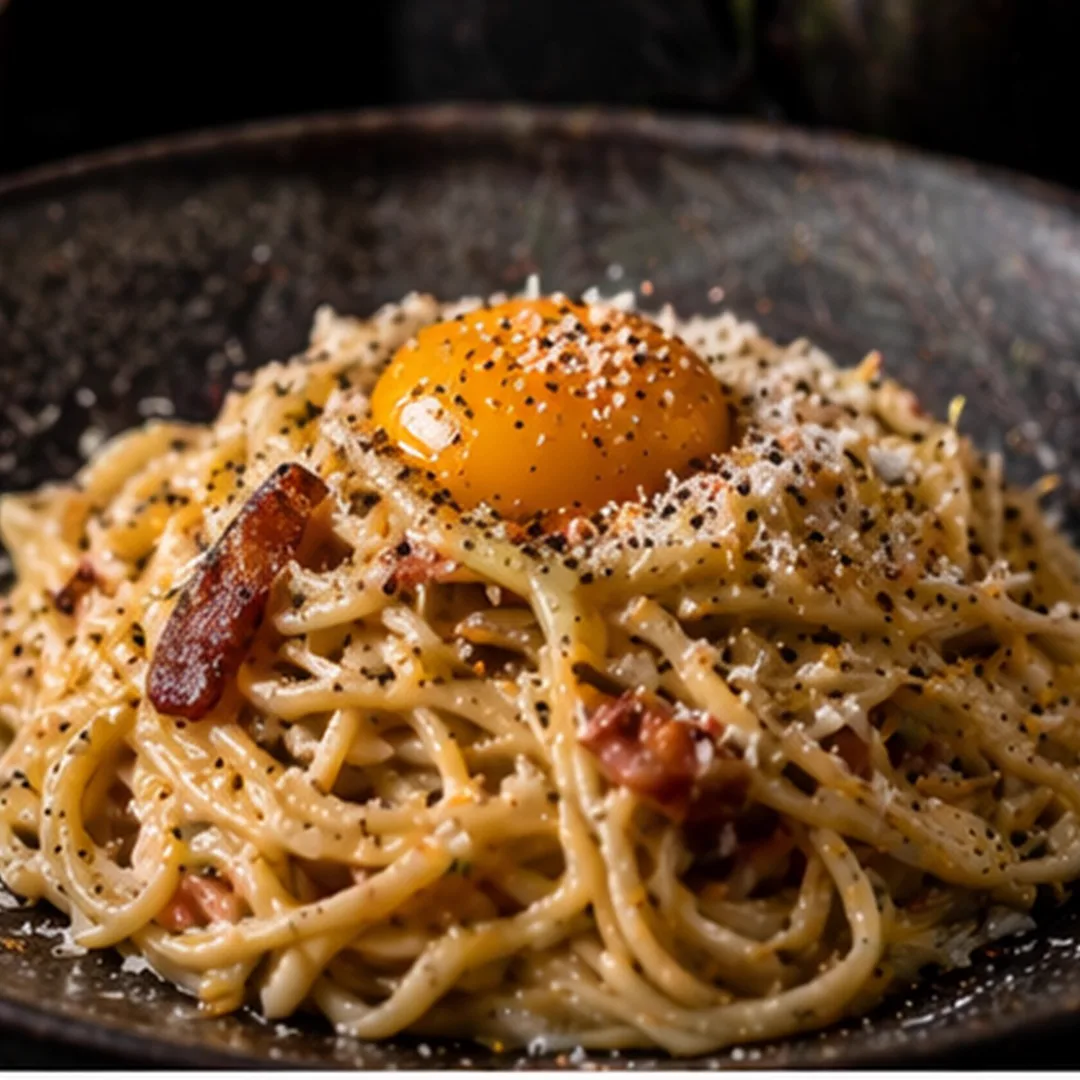
Carbonara's flavor — the salty-fatty-eggy-fermented register — already has a Japanese counterpart in the way dashi-seasoned dishes taste: deeply savory, umami-forward, somehow greater than the sum of the parts. This recipe doesn't Italian-ify Japanese food. It identifies the shared flavor logic and uses Japanese miso to push it further.
White (shiro) miso is mild, slightly sweet, with a fermented depth that complements rather than competes with Pecorino Romano. Together they produce a sauce with more layers than standard carbonara, while staying structurally identical to the original.
Ingredients
- 200g spaghetti or spaghettoni
- 100g pancetta (or guanciale), diced
- 3 eggs + 1 additional yolk
- 50g Pecorino Romano, finely grated (plus more to serve)
- 1 tablespoon white (shiro) miso
- Freshly ground black pepper, generously
- Reserved pasta water (important — keep 1 cup)
Instructions
1. Sauce base. In a bowl, whisk together the eggs, yolk, grated Pecorino Romano, and white miso until smooth and combined. Season generously with black pepper. Set aside at room temperature.
2. Render the pancetta. In a large skillet or pan over medium heat (no added oil — the fat from the pancetta is sufficient), cook the pancetta until the fat has rendered and the pieces are crispy and golden. Remove from heat. Leave the rendered fat in the pan.
3. Cook the pasta. Boil the spaghetti in generously salted water until 1 minute before al dente (the pasta will finish cooking in the pan). Before draining, reserve at least 1 cup of pasta water.
4. Combine — carefully. This is where carbonara succeeds or fails. The egg-cheese sauce must never touch direct heat or it scrambles.
Add the hot pasta directly to the pan with the pancetta fat. Toss to coat. Remove the pan from the heat entirely.
Pour the egg mixture over the pasta. Add 3-4 tablespoons of pasta water. Toss vigorously — this is critical. The heat of the pasta and pan (not direct flame) cooks the egg into a glossy sauce. Add more pasta water a tablespoon at a time if the sauce tightens too much. The consistency should be flowing and creamy, coating each strand.
5. Taste and adjust. The miso and Pecorino are both salty — taste before adding any additional salt. The black pepper should be prominent.
6. Serve immediately in warm bowls with additional grated Pecorino and black pepper.
Why This Works
Carbonara is built on the Maillard reaction (pancetta), fermented aged cheese (Pecorino), and egg proteins (the sauce). White miso is also a fermented product with amino acid complexity from the soybean proteins broken down during fermentation. The flavor frequencies overlap rather than clash.
The miso does not taste like miso in this dish. It tastes like a deeper, more complex version of the Pecorino — which is the point. You're not replacing anything; you're amplifying what's already there.
Notes
White miso only. Red or dark miso is too assertive and will overwhelm the Pecorino. Shiro miso's mild sweetness is the correct register for this application.
Guanciale (cured pork cheek) is more traditional than pancetta and has more flavor; use it if available. The fat content is higher, which makes the sauce richer.
Temperature management is the only technical challenge. If the eggs scramble, you moved too fast or the pan was too hot. Start with the pan off the heat.
30 recipes and 6 master sauces in the book.
Get Tokyo Meets Tuscany on AmazonAs an Amazon Associate we earn from qualifying purchases. This is an affiliate link — it costs you nothing extra.
Paperback · Kindle