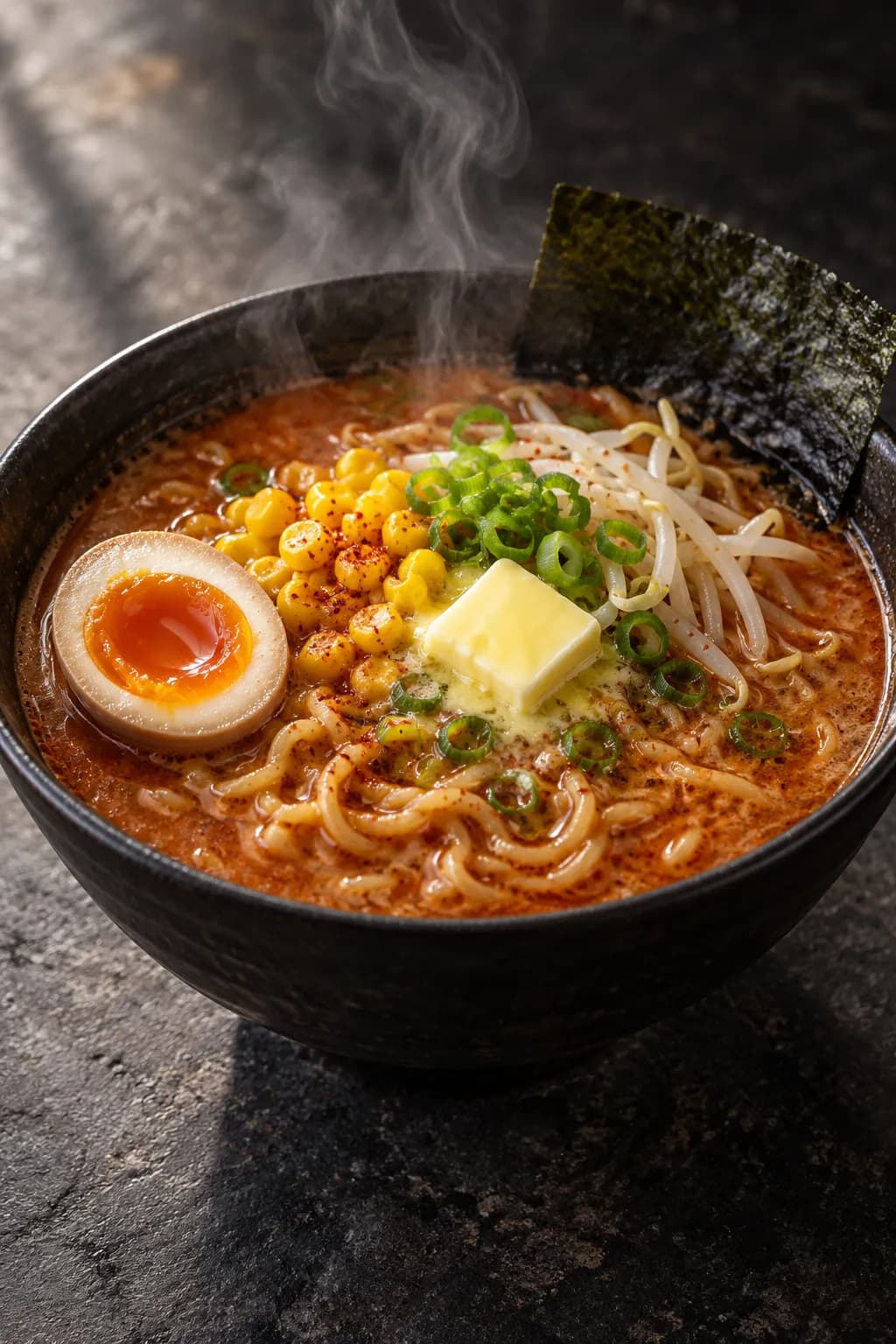
Most people who say homemade ramen takes all day are making broth from scratch, which is a beautiful and worthwhile project on a Sunday when you have six hours and a pork spine. This is not that recipe.
This recipe treats ramen as what it actually is in the restaurant: a component assembly problem. Ramen shops do not make one unified pot of ramen — they make broth, they make tare, they prepare toppings, and they assemble each bowl to order. The tare (concentrated seasoning sauce) is what gives each bowl its flavor identity. The broth is the liquid base. The toppings are prepared separately. Understanding this structure is what makes 30-minute ramen possible and good.
Here is the key insight: the broth needs to be good but not great on its own, because the tare will finish it. A store-bought chicken stock enhanced with dashi and a few aromatics gets you 80% of the way there. The miso tare makes up the remaining 20%. The toppings — particularly the soft-boiled egg and the pat of butter that melts into the hot broth at serving — push you past 100%.
The butter is not optional. It is the finishing technique of Sapporo-style miso ramen, the city where miso ramen was invented, and it transforms the broth from good to deeply rich in a way that is disproportionate to the amount added. A 5g pat of butter per bowl is the move.
Ingredients
The miso tare (make first):
- 3 tablespoons white miso (shiro miso)
- 1 tablespoon red miso (aka miso)
- 1 tablespoon sake
- 1 tablespoon mirin
- 2 cloves garlic, finely grated
- 1 teaspoon fresh ginger, finely grated
- 1 teaspoon sesame oil
- 1-2 tablespoons gochujang (adjust to your heat preference — 1 tablespoon is moderate, 2 is genuinely spicy)
The broth:
- 800ml good chicken stock (store-bought is fine — use a low-sodium brand for control)
- 1 teaspoon dashi powder (or 1 piece dried kombu steeped in the stock for 20 minutes)
- 1 tablespoon soy sauce
- 1 tablespoon mirin
- 1 teaspoon sesame oil
The noodles:
- 200g fresh ramen noodles (from an Asian grocery — look in the refrigerated section)
- If fresh unavailable: 200g dried ramen noodles
- Do not use instant ramen noodles — the flavor balance is designed for the seasoning packet, not a proper broth
The toppings:
- 2 eggs
- 1/2 cup canned corn kernels, drained
- 1 cup bean sprouts
- 2 green onions, thinly sliced
- 2 sheets nori, cut in half
- 2 teaspoons sesame seeds
- 10g unsalted butter (divided into two 5g pats) — this is the Sapporo finishing move; do not skip it
Optional but excellent:
- Chashu pork (braised pork belly — store-bought from an Asian grocery is acceptable)
- Soft tofu, cut into cubes
- Menma (pickled bamboo shoots, from a jar)
- Togarashi or chili oil for extra heat at the table
Method
Start the eggs and tare simultaneously — these are your two longest steps.
1. Make the miso tare. Combine white miso, red miso, sake, mirin, grated garlic, grated ginger, sesame oil, and gochujang in a small bowl. Stir until smooth. Taste — it should be deeply savory, spicy, and intensely flavored. It will seem aggressively strong. That is correct. You are using only 1-2 tablespoons per bowl, and it will dilute significantly in the broth. Set aside.
2. Soft-boil the eggs. Bring a small pot of water to a full boil. Gently lower the eggs in with a spoon. Set a timer for exactly 6 minutes. Meanwhile, prepare an ice bath (bowl of cold water with ice). When the timer goes off, transfer the eggs immediately to the ice bath. Leave for at least 3 minutes. Peel carefully — the whites are set but the yolk is very jammy and will not be fully solid. Halve lengthwise just before serving.
3. Make the broth. In a medium saucepan, combine chicken stock, dashi powder, soy sauce, mirin, and sesame oil. If using kombu instead of dashi powder, steep the kombu in cold stock for 20 minutes, then remove before heating. Bring to a gentle simmer over medium heat — do not boil hard, which makes the broth cloudy. Taste and adjust: the broth should taste slightly flat and under-seasoned at this point. That is correct. The tare will complete the seasoning in the bowl. Keep at a gentle simmer while you prepare everything else.
4. Prepare the toppings. While the broth simmers, prepare: drain the corn, rinse the bean sprouts, slice the green onions, cut the nori. If using chashu or tofu, slice or portion now. Have everything ready and staged before the noodles go in.
5. Cook the noodles. Bring a separate pot of water to a boil — do not cook the noodles in the broth. Ramen noodles release starch as they cook, which will cloud and thicken your broth. Cook fresh ramen noodles for 1-2 minutes per package directions. They should be just cooked through with a slight chew. Drain well.
6. Warm the bowls. Pour hot water into your serving bowls, let them sit for 30 seconds, then pour the water out. A warm bowl keeps the ramen hot longer and is a small detail that makes a real difference.
7. Assemble each bowl. To each warmed bowl: add 1 tablespoon of miso tare (1.5 tablespoons if you want more heat and flavor). Ladle 350-400ml of hot broth into the bowl. Stir to dissolve the tare completely. Taste — if it needs more seasoning, add a few drops of soy sauce. Add the cooked noodles. Arrange toppings: bean sprouts, corn, halved soft-boiled egg, nori sheets propped against the edge, green onion, sesame seeds. Place a 5g pat of butter directly on the surface of the broth.
Serve immediately. The butter will melt as you carry the bowls to the table. Stir it into the broth as you eat. Ramen waits for no one — noodles continue cooking in the hot broth and the toppings wilt. Eat fast.
Notes
On the tare ratio: the tare recipe makes enough for 4-6 bowls. Leftover tare keeps in the fridge for two weeks. It is excellent stirred into a bowl of plain rice, used as a marinade for chicken, or mixed into a stir-fry sauce.
On dashi: instant dashi powder (hondashi) is available at any Asian grocery and most supermarkets. It dissolves completely in hot liquid and is a legitimate pantry staple — many Japanese home cooks use it daily. If you prefer scratch dashi, steep 10g dried kombu in 800ml cold water for 20 minutes, bring to just below a boil, remove the kombu, add a handful of katsuobushi (bonito flakes), steep off heat for 5 minutes, and strain. It takes 30 minutes total and makes noticeably better broth.
On noodle type: ramen noodles are alkaline — they are made with kansui (a sodium carbonate solution), which gives them their yellow color and chewy, slightly bouncy texture. This is not replicated by any other noodle. Fresh ramen noodles from the refrigerated section of an Asian grocery store are the correct choice. If unavailable, look for dried ramen noodles in the same store (they are better than instant). In an emergency, dried spaghetti cooked al dente is a more acceptable substitute than instant ramen noodles.
On the spice level: gochujang is not traditional in Japanese miso ramen — this is a fusion addition. Traditional spicy miso ramen uses togarashi or toban djan (chili bean paste). The gochujang version is deeply savory with a fermented-chili heat that works exceptionally well. If you prefer a more traditional profile, substitute toban djan or skip the chili component and add togarashi at the table.
30 recipes and 6 master sauces in the book.
Get Tokyo Meets Tuscany on AmazonAs an Amazon Associate we earn from qualifying purchases. This is an affiliate link — it costs you nothing extra.
Paperback · Kindle