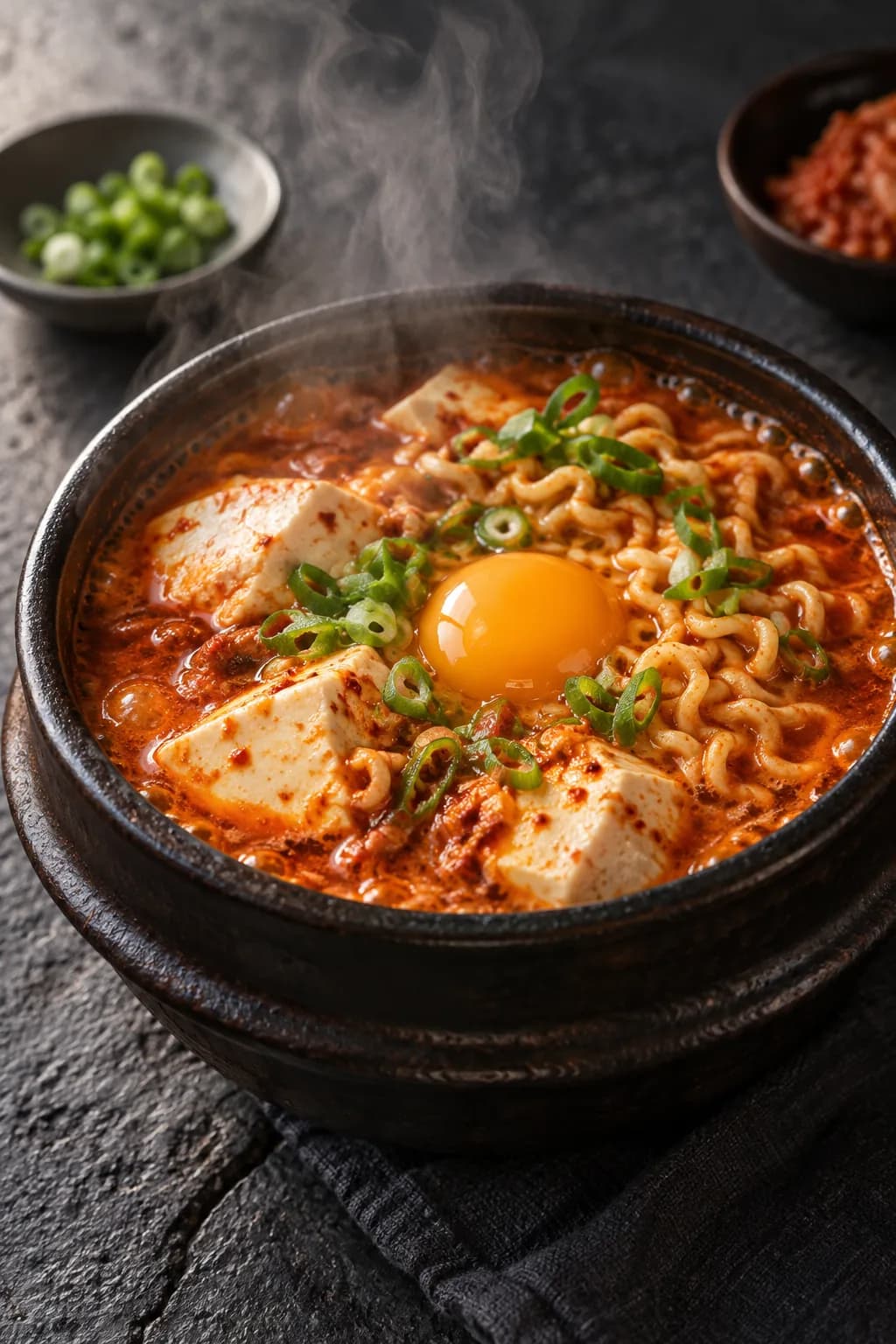
Sundubu jjigae is a Korean soft tofu stew built on a spicy, deeply savory broth of gochugaru, dashi or anchovy stock, and pork. The broth is naturally ramen-compatible — both Korean jjigae and Japanese ramen rely on an umami-rich, soy-forward stock as their base. The difference is that sundubu is served with rice on the side, where the rice is used to absorb the remaining broth. Ramen noodles do the same job but do it inside the pot.
The result is a soup that is more filling than either dish alone: the tofu provides protein and a silky texture; the noodles provide chew and body; the broth carries both. It is also simpler than ramen — no twelve-hour stock required. The broth comes together in fifteen minutes from pantry ingredients.
The raw egg is not optional. Cracking a raw egg into the bowl at the table is traditional in sundubu jjigae, and it works exactly the same way here. The residual heat from the broth cooks the egg gently from the outside in, producing a soft-set white and a warm but liquid yolk. Let the egg sit for 30–45 seconds before breaking it into the soup.
Ingredients
For the broth:
- 1 tablespoon sesame oil
- 1 tablespoon gochugaru (coarse Korean red pepper flakes)
- 200g pork belly, sliced thin, or 200g ground pork
- 4 cloves garlic, minced
- 1 tablespoon gochujang
- 800ml anchovy stock or dashi (or chicken stock as a substitute)
- 1 tablespoon soy sauce
- 1 teaspoon fish sauce (optional but recommended)
- Salt to taste
For the bowl:
- 1 tube sundubu (soft silken tofu, about 350g), cut into rough 4cm chunks
- 200g fresh ramen noodles (refrigerated, not instant)
- 2 eggs, raw
- 4 green onions, sliced — white and green parts separated
To finish:
- A few drops sesame oil per bowl
- Additional gochugaru if you want more heat
Method
1. Bloom the gochugaru. Heat sesame oil in a heavy-bottomed pot or earthenware dolsot over medium heat. Add gochugaru and stir constantly for 30–45 seconds until fragrant and the oil turns deep orange-red. Don't walk away — gochugaru burns fast and goes bitter immediately.
2. Brown the pork. Add the pork to the pot and cook, breaking it up if using ground pork, until no longer pink — about 3 minutes. Add the white parts of the green onion and the garlic. Stir and cook 1 minute more.
3. Build the broth. Add gochujang and stir to coat everything in the pot. Add the anchovy stock or dashi. Bring to a boil, then reduce to a simmer. Add soy sauce and fish sauce. Taste and adjust salt. The broth should be spicy, savory, and slightly rich from the pork fat.
4. Add the tofu. Gently add the sundubu chunks to the simmering broth. Don't stir vigorously — soft tofu breaks apart easily. Simmer for 5 minutes, allowing the tofu to warm through and absorb the broth.
5. Cook the noodles separately. Bring a separate pot of unsalted water to a boil. Cook the fresh ramen noodles according to package directions — usually 1–2 minutes for fresh. Drain well and divide between two bowls.
6. Assemble. Ladle the hot broth and tofu over the noodles in each bowl. The bowls should be full — this is a generous soup. Immediately crack one raw egg into the center of each bowl. Scatter the green parts of the green onion over the top. Add a few drops of sesame oil.
7. The egg timing. Do not stir immediately. Let the bowl sit for 30–45 seconds. The egg white will begin to set at the edges while the yolk remains liquid. At this point, you can break the yolk gently into the broth and let it swirl through, or leave the egg intact and eat around it, letting it cook further as you eat.
Serve with rice on the side if you want to stretch the meal, or eat the soup as a complete dish as written.
Notes
Fresh ramen noodles are sold refrigerated at Japanese and Korean grocery stores. Dried ramen noodles work but produce a softer, less chewy result. Do not use instant ramen noodle packets — the noodles are fine but discard the seasoning packets entirely.
Anchovy stock (made from boiling dried Korean anchovies and dried kelp) is the most traditional base for sundubu. Dashi is Japanese and nearly identical in function. Either works. In a pinch, chicken stock is acceptable — it lacks the oceanic minerality but the gochugaru and pork carry the broth.
30 recipes and 6 master sauces in the book.
Get Tokyo Meets Tuscany on AmazonAs an Amazon Associate we earn from qualifying purchases. This is an affiliate link — it costs you nothing extra.
Paperback · Kindle