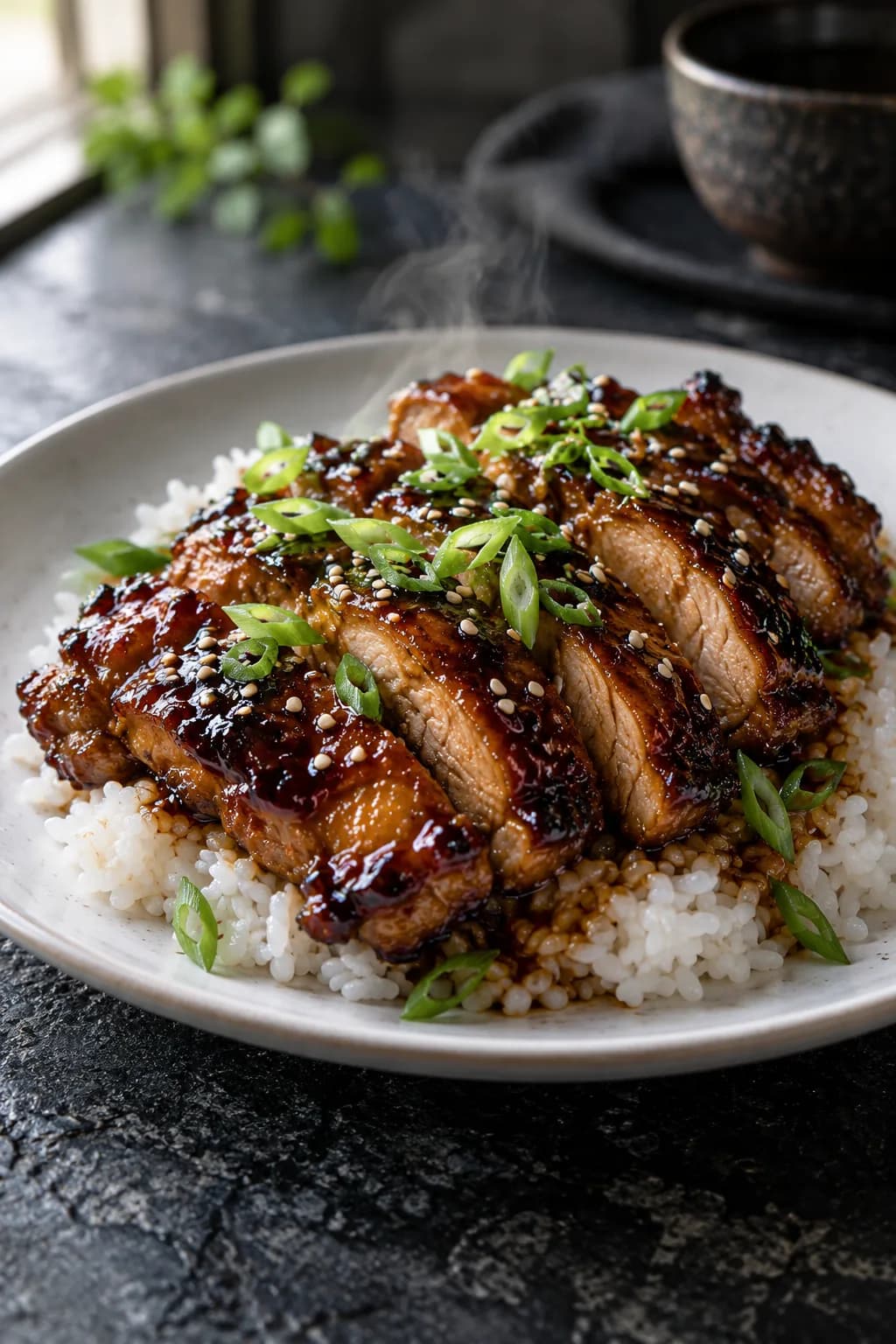
The bottled teriyaki sauce you buy at the supermarket is a reasonable convenience product. But the version you make in the pan, from scratch, in under 20 minutes — with four ingredients — is categorically better. It has depth the bottle doesn't have. The glaze is glossier. The chicken caramelizes properly.
Real teriyaki is a pan technique, not a marinade. You cook the chicken first. The sauce goes in after. It reduces around the chicken, caramelizes from the sugars in the mirin and soy sauce, and coats the surface with a glaze that's impossible to replicate from a bottle.
What Teriyaki Actually Means
Teri (照り) means "luster" or "shine" — the reflective glaze on the surface of finished teriyaki. Yaki (焼き) means "grilled" or "broiled."
Teriyaki is a cooking method, not a flavor. The flavor comes from the glaze — soy sauce (umami + salt), mirin (sweetness + body), sake (alcohol + acid lift), and sugar (additional caramelization and gloss). These four ingredients reduce in the pan around the protein to form a glossy, clingy glaze.
The traditional Japanese version uses chicken thighs, salmon, or yellowtail (buri). The Americanized version added pineapple, sesame seeds, garlic, and ginger — none of which belong in traditional Japanese teriyaki, though all of them taste fine.
The Recipe
Serves: 2
Time: 20 minutes
Ingredients
For the chicken:
- 4 boneless, skin-on chicken thighs (about 600g / 1.3 lbs)
- Salt
- 1 teaspoon neutral oil or a small amount of butter
For the teriyaki glaze:
- 4 tablespoons soy sauce (koikuchi shoyu — regular Kikkoman)
- 4 tablespoons mirin (hon mirin — real mirin, not mirin-style)
- 2 tablespoons sake
- 1 tablespoon sugar
That's it. Four ingredients. No garlic. No ginger. No sesame oil. This is the classic version.
Method
1. Score and season the chicken.
With skin-on chicken thighs, score the skin in a few places with a sharp knife — this prevents the skin from curling as it cooks and allows better browning. Pat completely dry with paper towels. Season lightly with salt.
2. Cook the chicken — skin side down first.
Heat a skillet (cast iron or stainless steel) over medium-high heat. Add a very thin layer of oil. When the pan is hot, place the chicken thighs skin-side down.
Cook without moving for 6–7 minutes. The skin will release its own fat as it cooks — let it render. Resist the urge to move the chicken. The skin is done when it's deep golden-brown and crispy, and it releases from the pan without sticking.
Flip. Cook the flesh side 4–5 more minutes until cooked through (74°C / 165°F internal). Remove the chicken from the pan and set aside. Pour out most of the rendered fat — leave a thin coating.
3. Make the teriyaki glaze in the same pan.
Over medium heat, add the soy sauce, mirin, sake, and sugar to the pan. Stir to combine and to pick up any caramelized bits from the chicken.
Let the sauce simmer and reduce, stirring occasionally, until it thickens to a glaze — it should coat a spoon and have a shiny, slightly sticky surface. This takes about 2–3 minutes. Watch carefully: the sugar can burn if the heat is too high.
4. Glaze the chicken.
Return the chicken to the pan. Turn to coat in the glaze. Cook 1 minute per side, letting the glaze reduce further and cling to the chicken. The final surface should be glossy, caramelized, and slightly sticky.
5. Rest and slice.
Transfer to a cutting board. Rest 2 minutes. Slice on the bias into 1.5cm strips — this reveals the glaze on the cut surfaces and makes chopstick-picking easier.
How to Serve
The Japanese way: sliced teriyaki chicken over Japanese rice, with a simple salad of shredded cucumber dressed with rice wine vinegar and sesame oil. A drizzle of the remaining glaze over the rice.
With vegetables: sauté seasonal vegetables (broccoli, snap peas, bell pepper) in the same pan after the chicken, with a splash of the remaining glaze. A complete meal in one pan.
In a bento box: teriyaki chicken is one of the most common bento components in Japanese lunch culture. Slice cold (from the fridge) and pack with rice and pickled vegetables.
Why Skin-On Chicken Thighs
Chicken breasts cook faster but their lower fat content means they dry out more easily if the glaze reduces around them too long. Chicken thighs have enough fat to stay moist even when the pan gets hot. The skin renders and becomes crispy — adding a textural contrast to the glossy glaze.
If you prefer boneless, skinless: the technique works the same way, but reduce the cooking time slightly (4–5 minutes per side), and the final result won't have the crispy skin element.
The Bottled Sauce Question
Commercial teriyaki sauce contains a reasonable approximation of the flavor, plus stabilizers, corn syrup, and preservatives to extend shelf life and make the flavor consistent. The result is sweeter and one-dimensional. The homemade version uses real mirin (not corn syrup), which adds a fermented depth that can't be replicated synthetically.
More practically: making teriyaki sauce from scratch in the pan takes 5 minutes and uses pantry ingredients you likely have for other recipes. The bottle exists for convenience; the from-scratch version is for when you want the real thing.
The Fusion Extension
In the Borderless Kitchen context, teriyaki's structure — caramelized soy-mirin glaze over protein — maps directly to Italian techniques like the wine-and-sugar pan sauces that finish duck, quail, and pork in Venetian cuisine. Both use deglazing liquid, sugars, and time to build a concentrated glaze on the protein surface.
Teriyaki as Italian pan sauce: After searing duck breast (or pork tenderloin), deglaze with equal parts soy sauce and mirin instead of red wine. Reduce to a glaze. The result is a soy-caramel pan sauce that works as a bridge between Italian technique and Japanese flavor.
Teriyaki chicken with pasta: Thin the teriyaki glaze with chicken stock, add a knob of butter, and toss with cooked spaghetti. Top with sliced teriyaki chicken. The sweet-savory soy glaze works surprisingly well as a pasta sauce — umami-forward in a way that Italian aglio e olio is, but different.
For the full teriyaki sauce guide — including ratios for fish, pork, and beef applications — see Teriyaki Sauce Recipe: Homemade and How to Use It.
For mirin — the ingredient that makes teriyaki gloss — see Mirin: What It Is, Substitutes, and How to Use It.
Free recipes from this world
Related reading
The full recipes live in the book.
Get Tokyo Meets Tuscany on AmazonAs an Amazon Associate we earn from qualifying purchases. This is an affiliate link — it costs you nothing extra.
Paperback $19.99 · Kindle $9.99