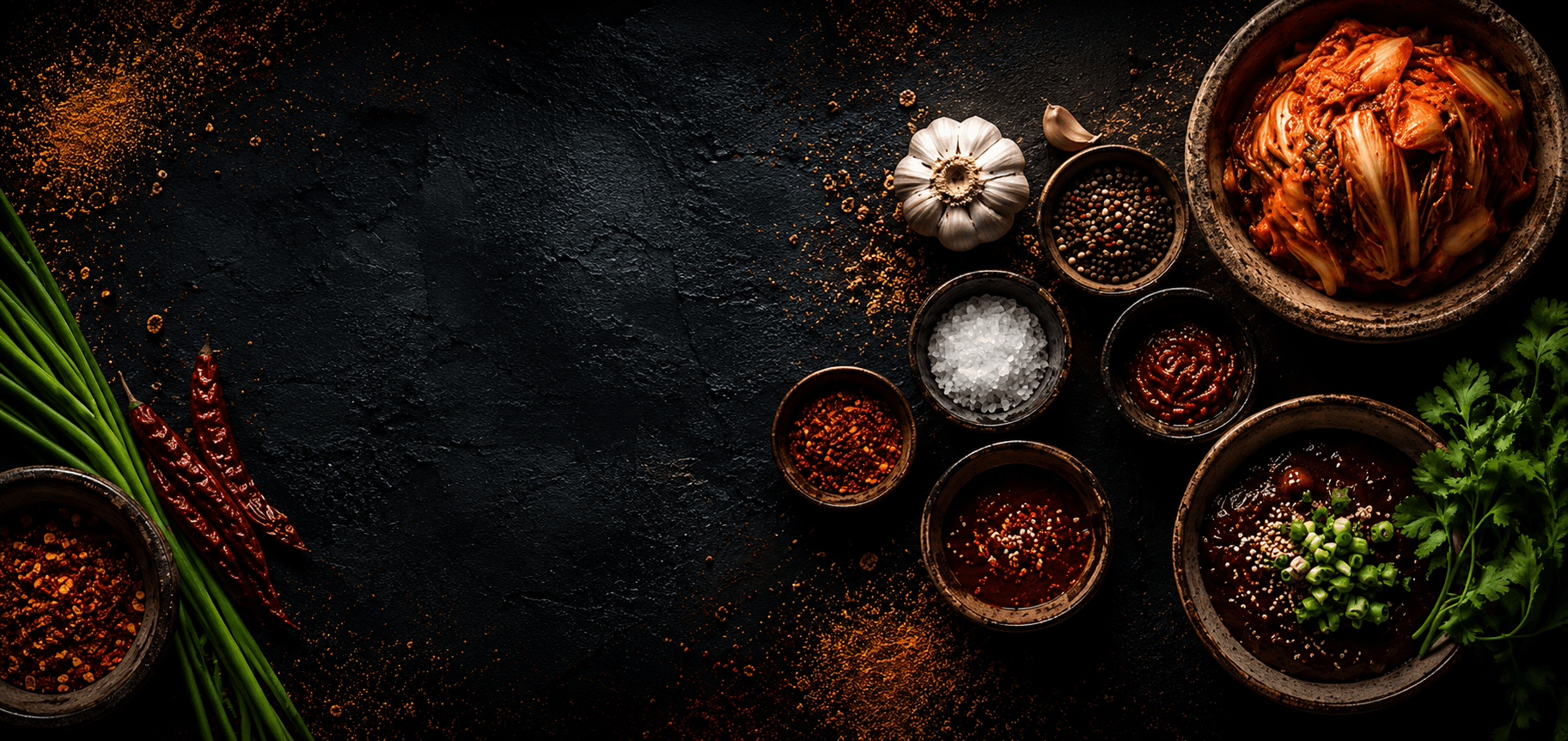
Bibimbap — Korean "mixed rice" — is not a recipe in the traditional sense. It's an assembly: individually cooked and seasoned vegetables (namul), a protein, a fried egg, gochujang sauce, and rice in a bowl. The harmony comes from contrast: each vegetable is separately seasoned, so each bite is different depending on which combination ends up on the spoon.
Italian risotto is the opposite structure. Every ingredient cooks together, building a unified flavor through the slow absorption of stock into the rice starch. The result is homogeneous — one flavor coating every grain.
This recipe takes the ingredients and flavor logic of bibimbap and applies the risotto method to them. The individual vegetables are still cooked and seasoned separately (that contrast matters), but they're folded into finished risotto rather than placed on top of plain rice. The gochujang sauce is still on top. The fried egg is still on top. But the rice beneath them is creamy, risotto-style — loaded with sesame and doenjang depth from the stock — rather than plain steamed.
The result is bibimbap that has been upgraded by Italian technique: more cohesive, richer, still distinctly Korean in flavor.
From Seoul Meets Mexico City
This recipe is a preview from Seoul Meets Mexico City — Vol. II of the Borderless Kitchen series. The same logic that makes Japanese and Italian flavors work together applies to Korean and Italian: both Korean and Italian cooking are organized around fermented umami bases, long-cooked stocks, and starch as a vehicle for sauce.
Bibimbap risotto is the clearest demonstration: the Korean flavors are unchanged, the Italian technique elevates the texture, and the result belongs to neither tradition more than the other.
What you'll need
For the doenjang stock
- 1 liter water
- 1 tablespoon doenjang (Korean fermented soybean paste)
- 1 tablespoon soy sauce
- 1 teaspoon sesame oil
- 1 dried shiitake mushroom (optional, for depth)
For the risotto
- 200g (7 oz) Arborio or Carnaroli rice
- 2 tablespoons sesame oil, divided
- 4 cloves garlic, minced
- 100ml (scant ½ cup) dry sake (or dry white wine)
- 800ml (3½ cups) doenjang stock, warm
- 1 tablespoon doenjang
- 1 tablespoon soy sauce
- 1 tablespoon unsalted butter (for mantecatura)
- 20g (¾ oz) Parmigiano-Reggiano, finely grated — optional but excellent
For the bibimbap vegetables (namul)
Choose 3-4 from: spinach, bean sprouts, carrots, zucchini/courgette, mushrooms (shiitake or oyster). Each is cooked separately.
Per vegetable: Blanch or sauté briefly in sesame oil + salt + 1 small clove minced garlic. The vegetables should stay distinct in flavor and texture.
For serving
- 2 eggs, fried or soft-boiled
- Gochujang sauce (see below)
- Sesame seeds, toasted
- Sliced scallions/green onions
- Optional: julienned cucumber, toasted sesame oil drizzle
Gochujang sauce
- 2 tablespoons gochujang
- 1 tablespoon sesame oil
- 1 tablespoon rice wine vinegar
- 1 tablespoon soy sauce
- 1 teaspoon sugar or honey
- 1 tablespoon water
Whisk together until smooth. Taste and adjust. The sauce should be spicy-sweet-acidic. Make this first; it improves as it sits.
Method
Make the doenjang stock
Bring 1 liter of water to a gentle simmer. Whisk in doenjang, soy sauce, and sesame oil until the doenjang fully dissolves. Add the dried shiitake if using. Keep warm over low heat throughout the risotto process. The stock should be hot when added to the rice — cold stock shocks the starch and slows the risotto's development.
Prepare the namul vegetables
Cook each vegetable separately before starting the risotto. They can sit at room temperature while you make the risotto; fold in warm at the end.
Spinach: Blanch in boiling salted water for 30 seconds. Drain, squeeze dry, season with sesame oil, salt, and a clove of minced garlic.
Bean sprouts: Blanch 1 minute. Drain, season with sesame oil, salt, a few drops of soy sauce.
Carrots: Cut into thin matchsticks. Sauté in sesame oil 2-3 minutes. Season with salt and a pinch of sugar.
Mushrooms: Sauté in sesame oil over medium-high heat until golden. Season with soy sauce off heat.
Make the risotto
In a wide, heavy pan over medium heat, warm 1 tablespoon sesame oil. Add garlic and cook until fragrant, 30 seconds. Add rice and stir to coat in the oil — you're toasting it lightly, which helps the grains maintain structure as they absorb stock.
Add sake. Stir until fully absorbed — 1-2 minutes.
Begin adding the warm doenjang stock, one ladle (about 100ml) at a time, stirring regularly. Add the next ladle only when the previous has been absorbed. This process takes 18-20 minutes. Do not rush it.
After 15 minutes, stir in the doenjang and soy sauce. Taste for seasoning. The rice should have a slight bite at the center — it should not be mushy.
When the risotto is nearly done (rice al dente, consistency loose and flowing), remove from heat. Add butter and, if using, Parmigiano. Stir vigorously for 30 seconds — this is the mantecatura, the Italian technique of beating fat into the starch off heat to create a creamy emulsion. The risotto will tighten slightly as it cools.
Taste again. It should be deeply savory, slightly sweet from the sake, with the distinctive doenjang earth note underneath.
Fry the eggs
In a separate pan, fry 2 eggs in sesame oil until the whites are set but the yolks are still runny. The runny yolk will break into the gochujang sauce and risotto as you eat — this is the intended effect.
Assemble
Divide the risotto between wide, warmed bowls. Fold in the prepared vegetables gently, or arrange them on top in sections (more visually striking; more bibimbap-authentic). Place a fried egg in the center. Drizzle generously with gochujang sauce. Sprinkle sesame seeds and sliced scallions. Add a small drizzle of sesame oil over everything.
The technique notes
Why mantecatura? The Italian technique of beating butter (and optionally cheese) into risotto off heat at the end creates an emulsion between the fat and the starchy cooking liquid. This is what gives risotto its characteristic creamy, coating consistency — not cream added to the dish, but the starch from the rice itself, organized by the fat addition. Bibimbap risotto uses this technique with butter rather than the sesame oil used throughout the cooking, because butter emulsifies more readily.
Why doenjang in the stock? Traditional bibimbap uses plain rice. Making the stock from doenjang instead of water (or neutral chicken stock) builds the fermented soy flavor into every grain, rather than leaving it to the gochujang sauce on top. The risotto rice becomes the carrier for the Korean flavor, not just a neutral base.
Why sake? The risotto method traditionally uses white wine to deglaze after the rice is toasted. Sake performs the same function — deglazing and adding liquid — without white wine's tartaric acid, which would fight the doenjang. See Sake vs White Wine for the full explanation.
Make-ahead
The namul vegetables can be made up to 24 hours ahead and kept refrigerated. Bring to room temperature before folding into the risotto.
The gochujang sauce keeps refrigerated for 2 weeks and improves over 24 hours as the flavors blend.
The risotto itself does not hold well — serve immediately after mantecatura.
The full Seoul Meets Mexico City collection takes Korean-Italian and Korean-Mexican combinations across every course. Now available in paperback and Kindle. For Vol. I — the Japanese-Italian collection — see Tokyo Meets Tuscany.
30 recipes and 6 master sauces in the book.
Get Tokyo Meets Tuscany on AmazonAs an Amazon Associate we earn from qualifying purchases. This is an affiliate link — it costs you nothing extra.
Paperback · Kindle
More free recipes