Arancini are Sicilian fried rice balls — a vehicle for using leftover risotto, typically stuffed with ragù or mozzarella, breadcrumbed, and deep-fried until the outside is shatteringly crisp and the inside is a molten pocket of starch and fat. The form is perfect: contrast between exterior crunch and interior softness, concentrated flavor, a handheld format that makes everything inside taste more intense.
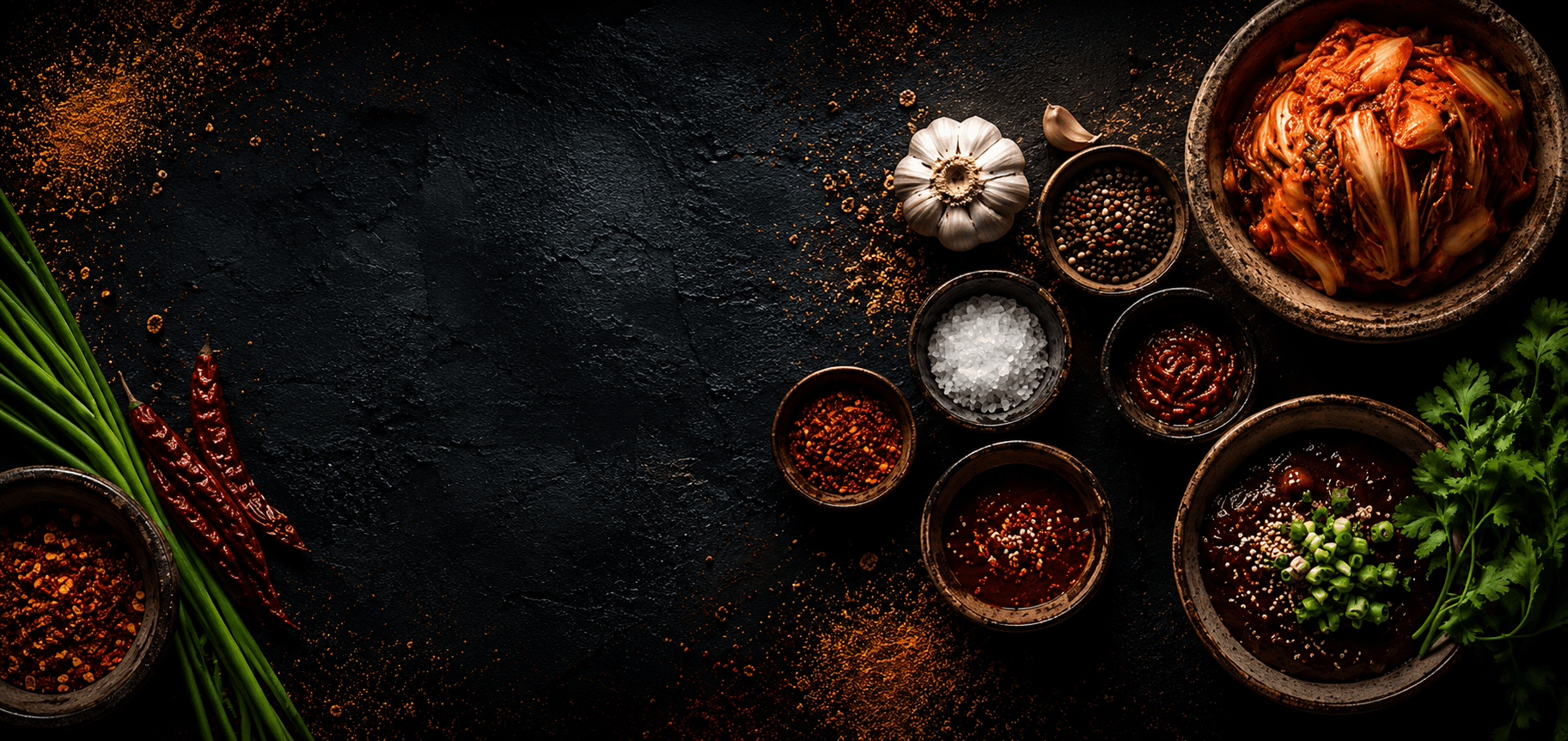
Kimchi fried rice — kimchi bokkeumbap — is Korean comfort food at its most efficient. Leftover rice, well-fermented kimchi, gochujang, sesame oil, a fried egg on top. The kimchi's lactic acid and the gochujang's fermented heat combine into a flavor profile that is simultaneously funky, spicy, rich, and slightly sweet.
The merge is logical. Both are leftover-rice dishes. Both concentrate flavor through fat (butter or sesame oil, breadcrumb fry or plain pan sear). The arancini shell gives kimchi fried rice something it lacks: crust. When the exterior shatters and you hit the kimchi-gochujang core, the contrast between the crisp exterior and the humid, tangy interior is what makes this work.
What you'll need
For the kimchi fried rice filling:
- 2 cups cooked short-grain rice (day-old is better — drier, firmer)
- 1 cup kimchi, well-fermented, roughly chopped
- 2 tablespoons kimchi brine (from the jar)
- 1 tablespoon gochujang
- 2 teaspoons sesame oil
- 1 teaspoon soy sauce
- 2 green onions, thinly sliced
- 1 tablespoon neutral oil (for frying)
- 2 eggs (1 for the filling, 1 for breading)
- 80g (3 oz) mozzarella, cut into 12 small cubes
For breading and frying:
- ½ cup all-purpose flour
- 1 egg, beaten
- 1 cup panko breadcrumbs
- Neutral oil for deep frying (about 2 inches / 5cm deep in a pot)
- 1 teaspoon salt (for seasoning the breadcrumbs)
For the dipping sauce:
- 3 tablespoons gochujang
- 1 tablespoon rice wine vinegar
- 1 tablespoon honey
- 1 teaspoon sesame oil
- 2 tablespoons water
Method
1. Make the kimchi fried rice (25 minutes, then cool)
Heat neutral oil in a large skillet over medium-high heat. Add the chopped kimchi and cook for 3-4 minutes until it starts to caramelize at the edges — the sugars in the kimchi will brown and the acidity will mellow slightly.
Add gochujang and cook for 1 minute, stirring constantly so it doesn't burn. The paste should darken one shade and smell toasted.
Add the cold rice, breaking up clumps with a spatula. Pour the kimchi brine over the rice. Stir-fry for 3-4 minutes until the rice is well coated and some grains are starting to crisp against the pan.
Push the rice to the sides to create a well in the center. Crack one egg into the well and scramble it briefly before folding it through the rice — you want soft, just-cooked egg pieces distributed through the mixture, not a dry fried egg layer.
Add sesame oil and soy sauce off heat. Stir in green onions. Taste: should be spicy, funky, slightly sweet, and very savory. If it tastes flat, add more kimchi brine. If it's too spicy, add a small amount of sugar.
Spread on a baking sheet and refrigerate for at least 30 minutes, or up to overnight. The filling needs to be cold and stiff to shape into balls.
2. Shape the arancini
Take about 3 tablespoons of the cold kimchi rice. Flatten it in your palm, place a cube of mozzarella in the center, and close the rice around it, pressing firmly into a ball. The mozzarella goes in the center so it melts into a pocket of molten cheese rather than integrating into the rice.
Wet hands help: keep a small bowl of water nearby and dampen your palms between balls. This prevents the rice from sticking and lets you pack the balls more tightly.
Place shaped balls on a parchment-lined tray. You should have 12-14 balls, depending on size. Refrigerate for 15 minutes to firm up before breading.
3. Bread in stages (flour → egg → panko)
Set up three bowls: flour in the first, beaten egg in the second, panko mixed with salt in the third.
Roll each ball in flour first — this creates a dry surface for the egg to adhere to. Then roll in egg, letting excess drip off. Then roll in panko, pressing gently so the breadcrumbs adhere on all sides.
The double-coating method (flour-egg-panko) creates a thicker, more even crust than egg-panko alone. The flour absorbs some of the egg moisture and creates a glue layer.
4. Fry
Pour neutral oil into a heavy pot — at least 2 inches deep. Heat to 175°C / 350°F. Test with a small piece of panko: it should sizzle immediately and float, not sink.
Fry 3-4 arancini at a time to avoid crowding and temperature drops. Fry for 3-4 minutes, turning once or twice, until golden brown on all sides.
Drain on a wire rack (not paper towels — they trap steam and soften the crust). Season immediately with a pinch of flaky salt.
5. Make the dipping sauce (5 minutes)
Whisk all dipping sauce ingredients together. The sauce should be slightly thick, glossy, and balance heat (gochujang) with acid (rice wine vinegar) and sweetness (honey). Adjust the water to thin if needed.
The mozzarella question
Traditional arancini use mozzarella because it melts into a molten, stretchy core — the dramatic cheese pull is part of the experience. For this recipe, you could substitute:
- Brie: creamier, more neutral fat — lets the kimchi flavor dominate
- Scamorza affumicata (smoked mozzarella): adds a wood-smoke note that plays against gochujang's earthiness
- Emmental: more elastic stretch than mozzarella, slightly nuttier
Avoid: cheddar (too oily, leaks), goat cheese (too acid, competes with kimchi's lactic acid), Parmigiano (doesn't melt, wrong texture).
The make-ahead angle
These are one of the better make-ahead party foods in this collection. The kimchi fried rice can be made 2-3 days ahead (improves as the flavors deepen). Shaped, breaded balls can be frozen on a tray and then stored in a bag for up to 1 month — fry directly from frozen, adding 2-3 minutes to the fry time.
This makes them genuinely useful: batch once, fry when needed.
What's happening flavor-wise
Kimchi's lactic acid (from the lactobacillus fermentation of the cabbage) and gochujang's fermented heat both bring umami and acidity to the rice filling. The arancini shell adds fat (the fry) and texture (panko crust). The mozzarella adds neutral dairy fat and moisture.
The result hits most of the major flavor and texture dimensions: spicy, funky, rich, creamy, crunchy. The gochujang dipping sauce adds another acid-sweet-heat layer that extends the flavor range.
The Italian technique (arancini) serves the Korean flavor (kimchi fried rice) by providing the crust it never had in its original form. The form enhances the filling. That's what the best fusion cooking does.
This recipe is a preview from the upcoming Seoul Meets Mexico City collection — Korean and Mexican cooking applied to Italian and Japanese techniques. The full collection is currently in development. To be notified when it's available, sign up at borderlesskitchenseries.com/connect.
The complete Flavor Pairing Matrix — including how Korean fermentation (kimchi, gochujang, doenjang) maps to Italian fermentation (Pecorino, guanciale, anchovy) — is at borderlesskitchenseries.com/free.
30 recipes and 6 master sauces in the book.
Get Tokyo Meets Tuscany on AmazonAs an Amazon Associate we earn from qualifying purchases. This is an affiliate link — it costs you nothing extra.
Paperback · Kindle
More free recipes