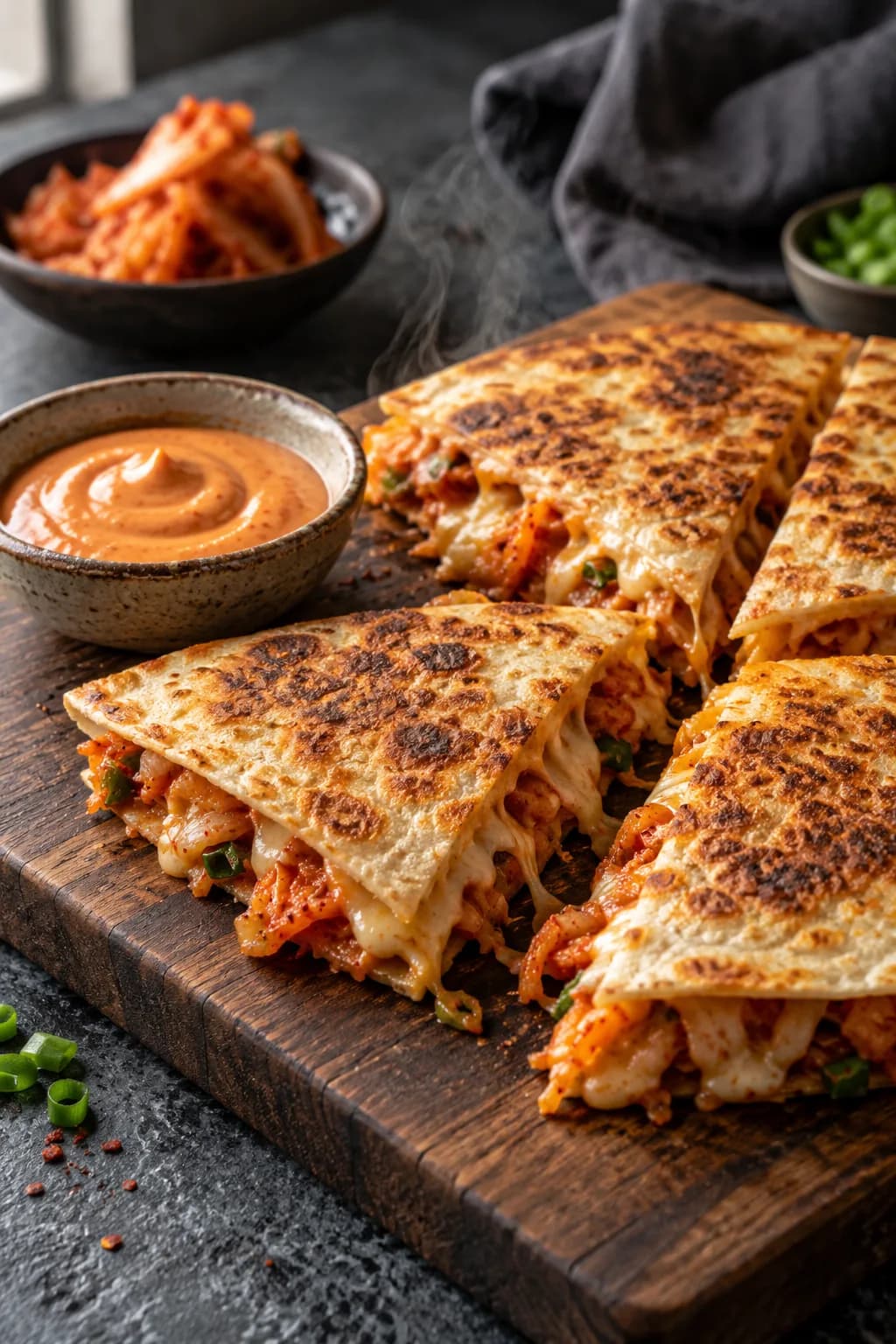
The quesadilla is one of the most structurally perfect fast foods ever invented: fat + starch + heat, pressed flat until crisp, folded around something molten. It is also one of the most forgiving formats in cooking. Almost anything tastes better pressed between tortillas and melted cheese.
Kimchi — fermented napa cabbage with gochugaru (Korean chili flake), garlic, ginger, and fish sauce — is one of the great fermented condiments. Fully ripened, it's sour, spicy, and funky in the best way. It brings exactly what a quesadilla wants: acidity (cuts the fat), heat (gives it edge), and umami depth (makes it feel complete). The Oaxacan cheese melts into long, satisfying strings. The tortilla goes golden and blistered in the dry pan.
This takes under 10 minutes. The hardest part is finding good kimchi and not eating it before you cook with it.
Ingredients
Quesadilla
- 4 flour tortillas (8–10 inch)
- 6 oz (170 g) Oaxacan cheese (quesillo), shredded or pulled into strands — or low-moisture mozzarella
- 1 cup (about 150 g) well-fermented kimchi, roughly chopped and squeezed of excess liquid
- 1 tsp sesame oil
- Neutral oil for the pan
Gochujang crema
- ¼ cup (60 g) sour cream or Mexican crema
- 1–2 tsp gochujang (adjust to heat tolerance)
- 1 tsp lime juice
- 1 tsp sesame oil
Sesame-lime slaw
- 1 cup (80 g) thinly sliced napa cabbage or green cabbage
- 1 tbsp rice wine vinegar
- 1 tsp sesame oil
- ½ tsp sugar
- Pinch of salt
- 1 scallion, thinly sliced
- Toasted sesame seeds
Instructions
1. Make the crema. Whisk together sour cream, gochujang, lime juice, and sesame oil. Taste — it should be creamy, spicy, and slightly tangy. Set aside.
2. Make the slaw. Toss cabbage with rice wine vinegar, sesame oil, sugar, and salt. Add scallion and sesame seeds. Let it sit while you cook the quesadillas — it improves in 5 minutes.
3. Prep the kimchi. Roughly chop the kimchi into ½-inch pieces. Put it in a clean kitchen towel or paper towels and squeeze out as much liquid as possible. Wet kimchi steams instead of crisping. Toss the squeezed kimchi with the sesame oil.
4. Build the quesadillas. Lay two tortillas flat. Divide the cheese between them, spreading it edge to edge. Scatter the kimchi over the cheese on each. Top each with a second tortilla.
5. Cook. Heat a dry (no oil) large skillet or griddle over medium-high heat until hot. Lightly brush or spray one side of a quesadilla with neutral oil. Place oil-side down in the pan. Cook until the bottom is golden and crisp, 3–4 minutes. Flip carefully and cook the second side 2–3 minutes more until the cheese is fully melted. Repeat with the second quesadilla.
6. Slice and serve. Cut each quesadilla into wedges. Serve with gochujang crema for dipping and sesame-lime slaw on the side.
Why it works
Fermented foods from different traditions often pair well because they share the same underlying chemistry: lactic acid, glutamates, and complex organic acids built up through fermentation. Kimchi brings lactic acidity (same compound as in Mexican crema) and capsaicin heat. Oaxacan cheese brings fat and the mozzarella-like pull that comes from its pasta filata production method — stretched, like mozzarella, not pressed. When pressed in a hot pan, the moisture drives out and the cheese melts into a continuous matrix that traps the kimchi without releasing its liquid. The dry pan technique (rather than buttered) produces a crispier, more blistered exterior — closer to the tortilla technique used in Mexican taquerias.
Tips
- Squeeze the kimchi. Wet kimchi makes a soggy quesadilla. This step takes 30 seconds and matters.
- Use well-fermented kimchi. Young, bright-red kimchi is milder. Older, sour kimchi (the kind that smells funky when you open the jar) is better here — the acidity works harder.
- Dry pan, high heat. No butter, no oil in the pan. Oil-brushed tortilla exterior only. This is how you get blister.
- Don't overfill. The filling should be a thin, even layer. Thick filling doesn't melt uniformly.
FAQ
What cheese can I substitute for Oaxacan? Low-moisture mozzarella is the closest: same stretch, similar mild flavor. Monterey Jack also works. Avoid pre-shredded bagged cheese — the anti-caking powder inhibits melting.
Can I use tofu instead of cheese for a vegan version? Crumbled firm tofu doesn't melt, so the texture changes significantly. For a vegan version, use a cashew-based mozzarella alternative rated for melting, or skip the cheese and press the kimchi and vegetables alone (it becomes a panini-style wrap rather than a true quesadilla).
How do I keep them warm while cooking in batches? Place cooked quesadillas on a rack set over a baking sheet in a 250°F / 120°C oven. Do not stack them or they'll steam and go soft.
Is there a gluten-free version? Use certified GF corn tortillas. Note that the texture is different — corn tortillas are thinner and more fragile, so handle gently when flipping.
30 recipes and 6 master sauces in the book.
Get Tokyo Meets Tuscany on AmazonAs an Amazon Associate we earn from qualifying purchases. This is an affiliate link — it costs you nothing extra.
Paperback · Kindle
More free recipes