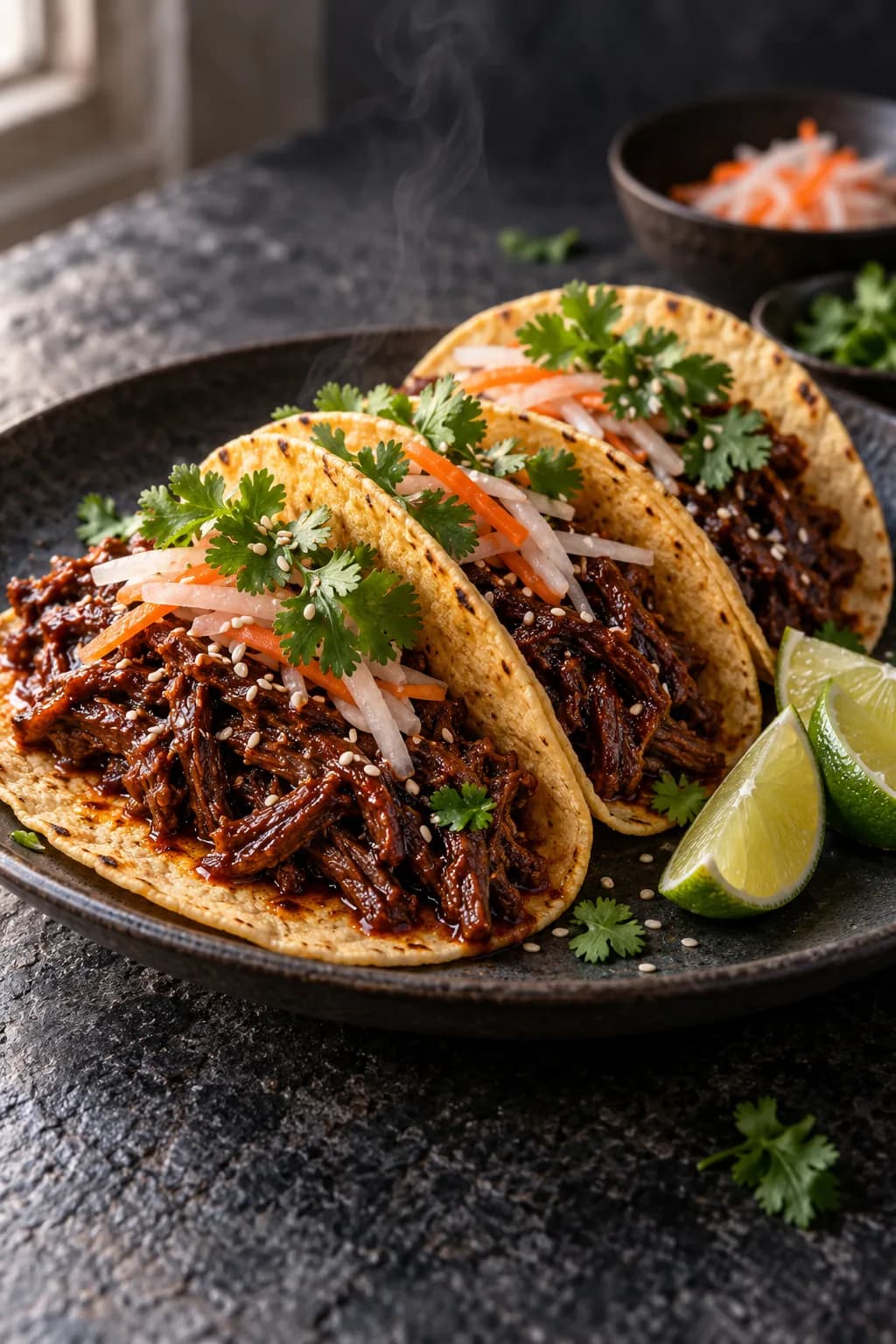
The taco is, structurally, a vessel for braised meat. It's been that since the Mexican miners of the 18th century who coined the term — something small, portable, wrapped around something substantial. The corn tortilla was not designed for galbi. But it fits.
Gochujang (고추장) is a fermented Korean chili paste made from glutinous rice, fermented soybeans, and chili powder. It is thick, sweet-spicy, and deeply umami — the Korean equivalent of a dark roux in terms of flavor foundation. When used as a braising liquid base, it does to beef what any long braise does: it tenderizes, it concentrates, it builds a sauce. The difference is the flavor profile: instead of a French daube or a Mexican birria, you get something that lands somewhere no one expected.
Served in warm corn tortillas with quick-pickled daikon and fresh cilantro, this is not a Korean dish wearing a taco costume. It is a new thing. The pickled daikon does what pickled onions do in a birria taco — cuts the fat and brightens each bite. The cilantro is cilantro. The beef is the beef.
Ingredients
The braise
- 3–4 lbs (1.4–1.8 kg) bone-in beef short ribs
- Kosher salt and black pepper
- 2 tbsp neutral oil
- 1 medium onion, roughly chopped
- 6 garlic cloves, smashed
- 1-inch knob of ginger, sliced
Braising liquid
- 3 tbsp gochujang
- 3 tbsp soy sauce
- 2 tbsp rice wine (mirin or sake) or dry sherry
- 1 tbsp brown sugar
- 1 tbsp sesame oil
- 2 cups (480 ml) beef stock or water
Quick-pickled daikon
- 1 cup (about 150 g) daikon radish, cut into matchsticks or thin half-moons
- ½ cup (120 ml) rice wine vinegar
- 1 tbsp sugar
- 1 tsp salt
- Optional: a pinch of gochugaru for color and mild heat
To serve
- 8–10 small corn tortillas, warmed
- Fresh cilantro leaves
- Sliced scallions
- Lime wedges
- Toasted sesame seeds
- Extra gochujang thinned with a little sesame oil, for drizzling
Instructions
1. Pickle the daikon. Combine vinegar, sugar, and salt in a small bowl and stir to dissolve. Add the daikon and toss. Let sit at room temperature for at least 30 minutes, or refrigerate up to 1 week. This can be done days ahead.
2. Sear the ribs. Pat the short ribs completely dry and season all sides generously with salt and pepper. Heat oil in a Dutch oven over high heat until smoking. Sear the ribs on all sides until deeply browned, 2–3 minutes per side. Work in batches — don't crowd the pot. Remove the ribs and set aside.
3. Build the braise. Reduce heat to medium. Add the onion, garlic, and ginger to the pot. Cook, stirring, for 2–3 minutes until softened. Whisk together the gochujang, soy sauce, rice wine, brown sugar, sesame oil, and stock in a bowl. Pour into the pot, scraping up the browned bits.
4. Braise. Return the ribs to the pot, bone-side up. The liquid should come about halfway up the meat. Bring to a simmer, then cover and cook on the lowest possible heat for 2.5–3 hours, until the meat is completely tender and pulling away from the bone. You can also braise in a 300°F / 150°C oven with the lid on.
5. Shred and reduce the sauce. Remove the ribs from the pot. When cool enough to handle, shred the meat, discarding the bones and any large pieces of fat. Skim the fat off the braising liquid. Bring the liquid to a boil and reduce by half, 5–8 minutes, until glossy and sauce-like. Return the shredded meat to the pot and toss to coat.
6. Warm the tortillas. Heat a dry comal or skillet over high heat. Warm each tortilla 30 seconds per side until pliable and lightly charred in spots. Keep warm in a folded kitchen towel.
7. Assemble. Spoon shredded beef into each tortilla. Top with pickled daikon, fresh cilantro, scallion, a squeeze of lime, and sesame seeds. Drizzle with thinned gochujang if you want more heat.
Why it works
Short rib braising extracts gelatin from collagen in the connective tissue over low, slow heat — the same process in galbi-jjim (Korean braised short ribs) and Mexican birria alike. Gochujang acts as both a chili component and a fermented depth layer — the fermented soybean base (doenjang character) mimics the mole-like complexity of a long-cooked Mexican chile sauce. The taco format works because the corn tortilla is sturdy enough to hold braised, saucy meat, neutral enough not to compete with the flavors, and pliable enough to fold around a generous filling. Quick-pickled daikon plays the same role as pickled onion or salsa verde in a traditional taco: bright acid to cut the fat.
Tips
- Dry the ribs before searing. Any moisture means steam instead of browning.
- Brown hard, in batches. A deep sear on the outside is part of the final flavor — don't skip or rush it.
- Reduce the sauce. The braising liquid left in the pot is too thin to sauce the meat properly. The 5-minute reduction makes it glossy and coating.
- Make ahead. This tastes better the next day. Braise, shred, and refrigerate overnight. The fat solidifies on top and lifts off easily. Reheat gently and reduce the sauce again if needed.
FAQ
Can I use boneless short ribs? Yes, though bone-in is preferred — the bone contributes gelatin and flavor to the braising liquid. Boneless will need about 30–45 minutes less cooking time.
How do I know when the meat is done? It should pull apart easily with two forks with almost no resistance. If there's any toughness, put the lid back on and go another 30 minutes. Short ribs are very forgiving — it's hard to overcook them.
Can I make this in a slow cooker or pressure cooker? Slow cooker: Sear on the stovetop, then braise on LOW for 7–8 hours. Pressure cooker / Instant Pot: After searing, cook at HIGH pressure for 45 minutes with natural release. The meat will be tender but the flavor slightly less developed than a long braise.
What's the best gochujang to buy? Look for brands like Haechandle, CJ Beksul, or Sempio — all widely available in Asian grocery stores. Avoid "gochujang sauce" products (thinned with vinegar or sugar) and look for the thick paste form in a tub or tube.
30 recipes and 6 master sauces in the book.
Get Tokyo Meets Tuscany on AmazonAs an Amazon Associate we earn from qualifying purchases. This is an affiliate link — it costs you nothing extra.
Paperback · Kindle
More free recipes