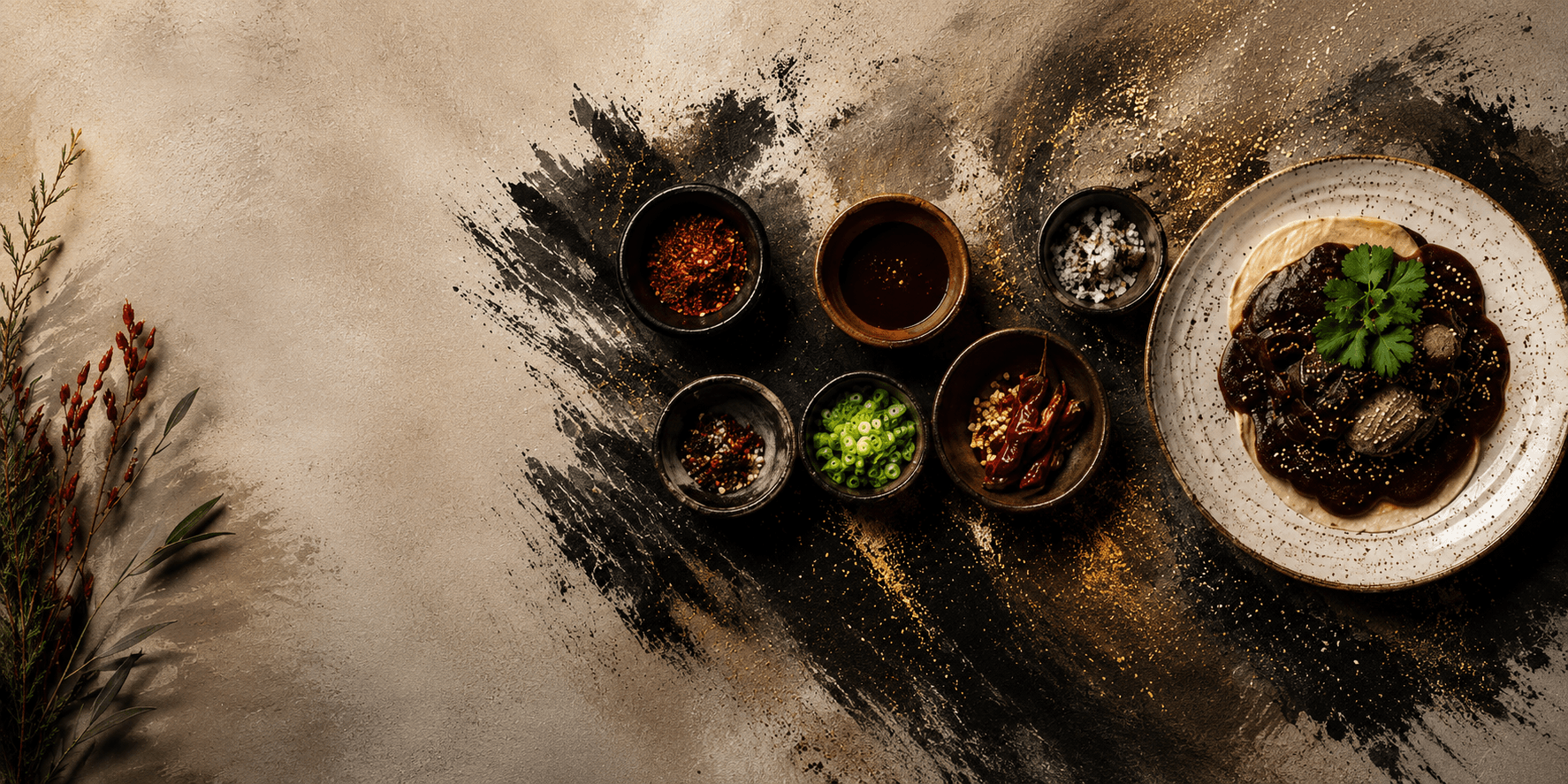
Birria is a Mexican braise — beef (traditionally goat) slow-cooked in a dry chili paste until the meat falls apart and the braising liquid turns deep red and intensely savory. In Jalisco, where it comes from, you eat it in tacos and dip the crisp-fried taco into the consommé. In the quesabirria wave that hit every city in the last decade, you dip everything into the broth. The broth is the point.
Ramen is a Japanese noodle soup — springy alkaline noodles in a long-cooked broth, built from fat, salt, and umami depth.
These two dishes are doing the same thing from different starting points. Birria builds depth from dried chilies and toasted spices. Ramen builds depth from roasted bones and soy. Both arrive at fat-rich, umami-saturated, complex broth — and both serve noodles in that broth. Combining them isn't a gimmick. It's noticing that the logic was always shared.
Here you braise beef short ribs in the birria way — dried ancho, guajillo, and chipotle chilies, charred aromatics, Mexican spices — until the meat is deeply flavored and falling off the bone. You cook ramen noodles separately. You serve the noodles in the birria consommé, pile the shredded beef on top, and add the garnishes that make birria what it is: diced white onion, cilantro, lime, and a small bowl of extra consommé for dipping.
Ingredients
Birria braise
- 1.5 kg (3.3 lb) bone-in beef short ribs or chuck, cut into large chunks
- 4 dried ancho chilies, stemmed and seeded
- 4 dried guajillo chilies, stemmed and seeded
- 2 dried chipotle chilies in adobo (or 1 dried morita chili)
- 1 medium white onion, halved (charred)
- 6 garlic cloves, unpeeled (charred)
- 2 medium Roma tomatoes (charred)
- 2 tsp cumin seeds, toasted
- 1 tsp dried Mexican oregano
- 4 whole cloves
- 1 cinnamon stick
- 2 bay leaves
- 1 tbsp apple cider vinegar
- 1.5 litres (6 cups) beef stock or water
- Salt and black pepper
- 2 tbsp neutral oil
Noodles and toppings
- 4 portions fresh or dry ramen noodles
- 200g (7 oz) white onion, finely diced
- Large bunch of cilantro, roughly chopped
- 2 limes, cut into wedges
- 1 tsp dried Mexican oregano, for garnish
- Optional: sliced jalapeño, radishes
Instructions
1. Toast and rehydrate the dried chilies.
Heat a dry skillet over medium-high. Toast the ancho and guajillo chilies one at a time — 20 to 30 seconds per side — pressing them flat until they darken and become fragrant. Don't burn them. Transfer immediately to a bowl, cover with boiling water, and soak for 20 minutes until soft. Drain, reserving the soaking water.
2. Char the aromatics.
In the same dry skillet or over a gas flame, char the halved onion, garlic, and tomatoes until blackened in spots — 5 to 8 minutes. The char adds a smoky bitterness that's functional in birria; don't skip it.
3. Make the chili paste.
In a blender, combine the soaked chilies, chipotle in adobo, charred onion (discard the papery outer layer), peeled charred garlic, charred tomatoes, cumin, oregano, cloves, cinnamon, vinegar, and 240ml (1 cup) of beef stock. Blend until completely smooth. Pass through a fine mesh sieve if you want a cleaner sauce, pressing the solids through. Discard what won't pass.
4. Brown the beef.
Season short ribs generously with salt and pepper. Heat oil in a Dutch oven over high heat until smoking. Brown the beef in batches — 3 to 4 minutes per side — until deeply seared. Remove and set aside. Don't crowd the pot.
5. Braise.
Pour the chili paste into the Dutch oven (careful, it will spit). Fry it, stirring constantly, for 3 to 4 minutes until it darkens and the raw chili smell is gone. Add the remaining stock, bay leaves, and browned beef. The liquid should nearly cover the meat. Bring to a boil, skim any foam, then reduce to a very low simmer. Cover and braise for 2.5 to 3 hours, until the meat is completely tender and falling off the bone.
6. Finish the consommé.
Remove the beef and shred it, discarding bones and any tough sinew. Skim the fat from the braising liquid — or don't, if you want a richer broth; the fat is a feature in traditional birria. Taste the consommé and adjust salt. It should be deeply savory, complex, and slightly smoky. If it's too thick, thin with water. If it's too thin, simmer uncovered for 10 minutes.
7. Cook the noodles.
Cook ramen noodles according to package instructions in a separate pot of boiling water. Drain.
8. Assemble.
Ladle hot consommé into deep bowls. Add a portion of ramen noodles. Pile shredded beef on top. Finish with diced onion, cilantro, a squeeze of lime, and a pinch of dried oregano. Serve with a small bowl of extra consommé on the side for dipping. Some people dip the loaded spoon into the extra broth before eating; that's the right move.
Why it works
Birria and ramen are both long-braise-then-noodle dishes. They're also both fundamentally umami broth dishes — one built on dried chili glutamates and beef inosinate, the other on soy and dashi-style extraction. The umami logic is identical even if the ingredient path is different.
The broth compatibility: Birria consommé is rich, fatty, and complex — exactly the profile a ramen broth needs to work. You don't need to add soy or miso or tare; birria's chili paste already builds the savory depth. The alkalinity and chew of ramen noodles handles the fat-rich broth better than corn tortillas in many ways — they absorb and hold the liquid while adding texture.
What changes: The aromatics shift. Birria uses cumin, clove, cinnamon, and dried chili — a Mexican spice profile. Ramen noodles bring their alkaline character. The result is a bowl that's richer and more complex than either tradition alone: the chili heat, the beefy depth, the alkaline noodle chew, and the clean acid of lime at the end.
The dipping: Keeping some consommé separate for dipping is how birria is served with quesabirria. Applied here, you load a forkful of beef and noodles, submerge it in the extra bowl, and eat. The consommé cools slightly in the dipping bowl and intensifies on the way back. It's a texture and temperature mechanism that makes the dish more interactive.
Tips
On chili choice: Ancho + guajillo is the standard birria base. Ancho provides fruity sweetness and body; guajillo provides bright red color and mild heat. Chipotle adds smokiness. If you can't find guajillo, mulato is a good substitute. If you can't find ancho, pasilla works in a pinch.
On the char: Don't skip charring the aromatics. It's not decoration — it adds a smoky bitterness that's load-bearing in birria's flavor profile.
On the braise time: 2.5 hours minimum for short ribs. Chuck may need 3+ hours. The meat should pull apart with no resistance. If it's still fighting you, it needs more time, not more force.
On overnight braise: Like most braises, this is better the next day. Make the birria the day before, refrigerate overnight, skim the solidified fat from the top (or stir it back in), reheat, and cook fresh noodles to order.
On noodle choice: Fresh ramen noodles are ideal. Dry ramen works. If you can find sun noodles or fresh alkaline noodles from an Asian grocery, use those. What you don't want is instant ramen noodles — they're too thin and delicate for this broth.
FAQ
Is this traditional? No. Birria is a Jaliscan dish with centuries of history. Ramen is Japanese. Combining them is functional cooking across traditions, not a claim about authenticity. The logic is sound; the lineage isn't traditional.
Can I use chicken? Yes — birria de pollo is a legitimate variation. Reduce braise time to 45 minutes to 1 hour. The consommé will be lighter and less fatty, which works well with a slightly thinner ramen noodle.
Can I make this in an Instant Pot? Yes. High pressure for 45 minutes instead of the 2.5-hour braise. Natural release for 15 minutes. The result is excellent — same depth, less time. The stovetop version has a slight edge in flavor from the longer Maillard-to-braise sequence, but not enough to matter.
Why ramen and not soba or udon? Ramen's alkalinity — from kansui in fresh noodles, from baked baking soda in DIY versions — gives them a chew and a slight bounce that holds up to heavy, fatty broth. Soba is delicate and gets overwhelmed. Udon works but is softer; if you love udon, use it. Ramen is the right call for this broth weight.
The logic behind this combination — why Mexican and Japanese braising traditions overlap — is in the flavor pairing essay. For the gochujang version that pushes further into Korean-Mexican territory, try the Gochujang Short Rib Taco. Thirty original recipes plus six master sauces are in Tokyo Meets Tuscany on Amazon.
30 recipes and 6 master sauces in the book.
Get Tokyo Meets Tuscany on AmazonAs an Amazon Associate we earn from qualifying purchases. This is an affiliate link — it costs you nothing extra.
Paperback · Kindle
More free recipes