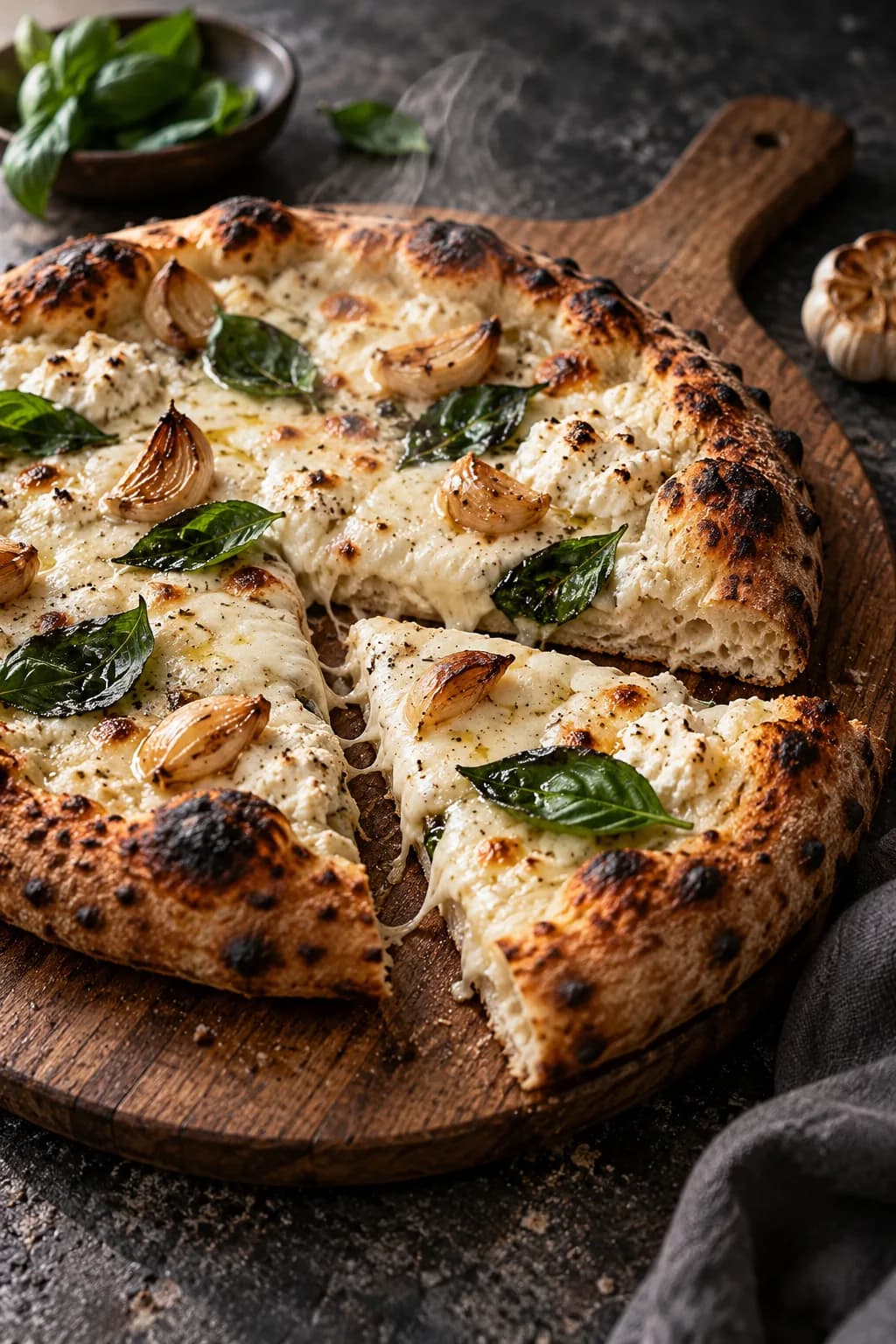
White pizza (pizza bianca) is the version without tomato sauce — a ricotta-and-mozzarella base on crust, usually finished with garlic and something fresh. It's the quieter sibling of the standard pizza. Quieter doesn't mean less interesting; it means the canvas is blank and you can hear what you put on it.
Miso is fermented soybean paste. It's salty, deeply savory, and mildly sweet in a way that no other ingredient quite duplicates. White miso (shiro miso) is the mildest variety — fermented shortest, highest rice ratio, lowest salt — which makes it the easiest to work with. Stir a tablespoon into ricotta and something unusual happens: the cheese becomes rounder, more interesting, harder to identify by flavor alone. It doesn't taste Japanese. It tastes more like itself.
That's the whole technique. One tablespoon of miso per cup of ricotta. Everything else — roasted garlic, good mozzarella, fresh basil — is the same white pizza you already love.
Ingredients
Dough
- 1 ball pizza dough (store-bought works; let it come to room temperature 30 min before stretching)
Miso-ricotta base
- 1 cup (240 g) whole-milk ricotta
- 1½ tbsp white miso (shiro miso)
- 1 garlic clove, grated
- 1 tbsp olive oil
- Freshly cracked black pepper
Toppings
- 5 oz (140 g) fresh mozzarella, torn into pieces
- 4–5 roasted garlic cloves (roast a head wrapped in foil at 400°F / 200°C for 45 min, squeeze out the cloves — make extra, they keep a week)
- 1 tbsp olive oil, for drizzling
- Flaky sea salt
- Fresh basil leaves, to finish
- Optional: chili flakes, lemon zest, or a few drops of truffle oil
Instructions
1. Get your oven as hot as it goes. Place a baking steel or stone on the top rack. Preheat at maximum heat (500–550°F / 260–290°C) for at least 45 minutes. A cold stone produces a pale, soft crust. This step is non-negotiable.
2. Make the miso-ricotta. Whisk the ricotta, white miso, grated garlic, olive oil, and several grinds of black pepper together in a bowl until smooth. Taste — it should be savory, slightly sweet, and rich. Adjust miso or pepper as needed.
3. Stretch the dough. On a lightly floured surface (or on parchment paper), stretch the dough to roughly 12 inches in diameter. Don't use a rolling pin — it deflates the air. Push from the center outward with your fingers, then let gravity do the rest by holding an edge and rotating.
4. Build the pizza. Spread the miso-ricotta evenly over the dough, leaving a 1-inch border. Scatter the torn mozzarella over the top. Nestle the roasted garlic cloves into the cheese. Drizzle with olive oil and finish with a pinch of flaky salt.
5. Bake. Slide the pizza onto the preheated steel or stone. Bake 10–12 minutes until the crust is charred at the edges and the cheese is molten and starting to blister. Rotate halfway through if your oven runs uneven.
6. Finish and serve. Remove from the oven. Immediately scatter fresh basil leaves. Slice and eat hot — white pizza does not improve with time.
Why it works
White miso and ricotta share a flavor chemistry: both are fermented or cultured dairy/legume products with lactic acidity, mild sweetness, and umami-forward savory notes. When you combine them, the miso amplifies what's already in the ricotta rather than adding a foreign flavor. The glutamates in miso (the compound responsible for umami) stack on top of the glutamates in aged mozzarella, creating a depth that reads as "intensely cheesy" rather than "Japanese." This is what's meant by the flavor pairing concept in Tokyo Meets Tuscany: fermented ingredients from different traditions often share the same underlying chemistry.
Tips
- White miso only. Red or mixed miso (awase) is too salty and assertive — it will overwhelm the ricotta.
- Don't skip the preheat. A 45-minute preheat on a steel is mandatory for a pizzeria-style crust at home.
- Add basil after baking. Fresh basil turns black in a hot oven.
- Roast the garlic ahead. Whole roasted garlic cloves are better than raw sliced — sweeter, creamier, no sharpness.
FAQ
Does this taste like miso soup? No. White miso at this proportion reads as "extra savory" rather than distinctly Japanese. Most people won't identify it unless you tell them.
Can I use store-bought pizza dough? Yes. Let it come to room temperature for at least 30 minutes before stretching — cold dough tears and springs back.
What if I don't have a baking steel or stone? Use an inverted heavy baking sheet preheated for the full 45 minutes. It's a workaround, not a substitute — expect a slightly softer crust.
Can I add toppings beyond what's listed? Yes, but keep it sparse. White pizza is about the cheese layer — overloading it turns it soggy. One or two additions (paper-thin prosciutto after baking, sautéed mushrooms, thinly sliced pear) work well.
30 recipes and 6 master sauces in the book.
Get Tokyo Meets Tuscany on AmazonAs an Amazon Associate we earn from qualifying purchases. This is an affiliate link — it costs you nothing extra.
Paperback · Kindle
More free recipes