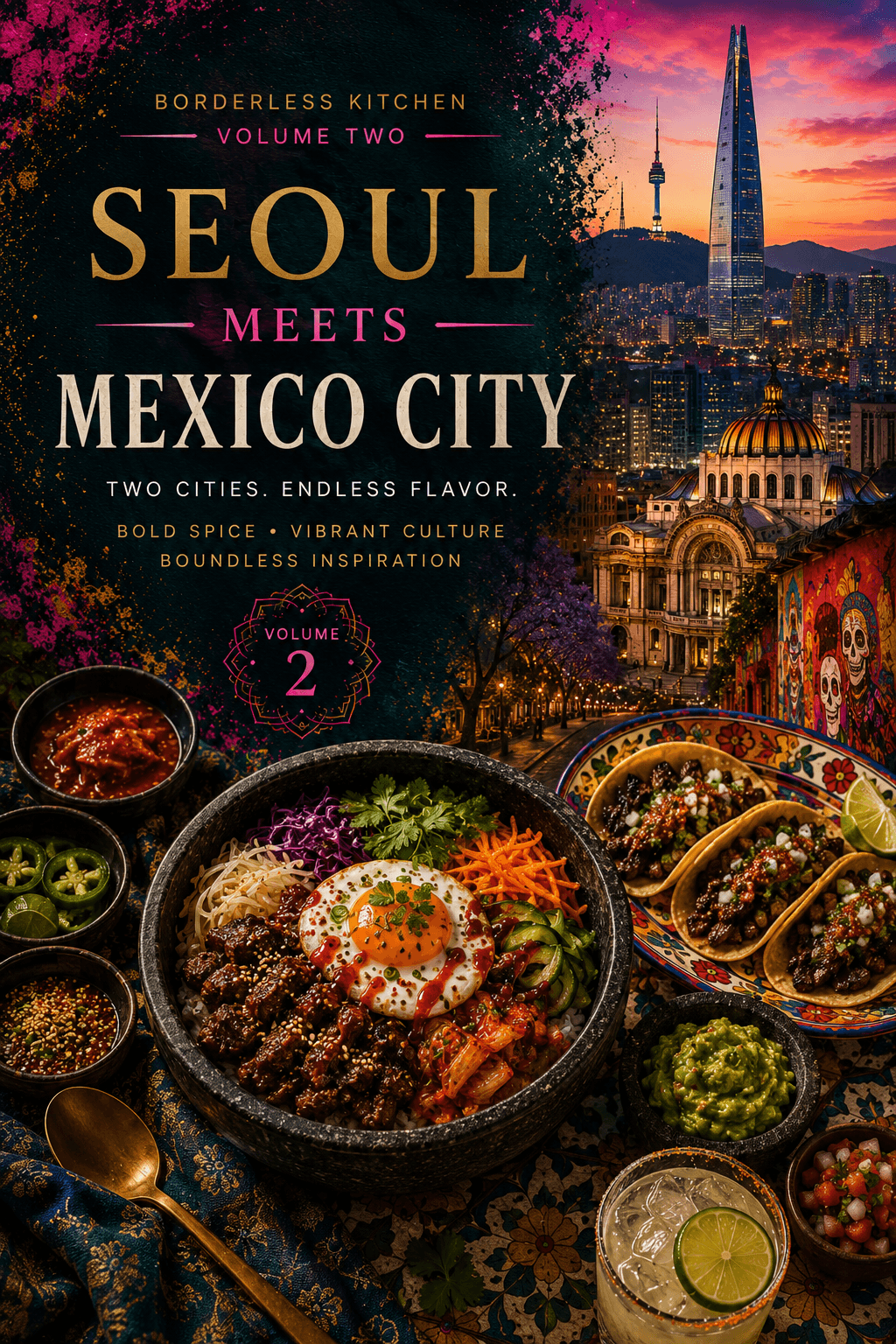
Two years of testing gochujang against mole, kimchi against salsa, doenjang against adobo — and Seoul Meets Mexico City is finally out.
This is Volume II of the Borderless Kitchen series, and it works the same way Volume I did. Tokyo Meets Tuscany found the structural overlap between Japanese and Italian cooking — both obsessed with restraint, both built around one good ingredient handled correctly. Seoul Meets Mexico City does the same thing for Korea and Mexico, except the overlap here isn't restraint. It's fermentation and fire.
Why Korean and Mexican Food Actually Belong Together
Korean cooking and Mexican cooking arrived at the same conclusion from opposite sides of the planet: heat needs depth underneath it, or it's just noise. Korea builds that depth with gochujang, doenjang, and years of patient fermentation. Mexico builds it with dried chilies, masa, and slow-built mole pastes. Line the two pantries up side by side and they're solving the same problem with different vocabulary.
That's the premise of the book — not "fusion" in the sense of throwing two cuisines in a blender, but convergence. Finding where a Korean technique and a Mexican technique are already doing the same job, then building a recipe that uses both without diluting either.
What's Inside
Thirty recipes and six master sauces across small plates, soups, rice and grains, fire-cooked proteins, vegetables, and dessert:
- Small Plates & Street Food — Kimchi Elote Bites, Gochujang Carne Asada Tacos, Bulgogi Quesadillas
- Soups & Broths — Pozole with Doenjang, Birria Ramyeon, Gochugaru Albóndigas Soup
- Rice & Grains — Bibimbap Burrito Bowl, Mexican Rice with Gochujang Glaze
- Fire & Protein — Korean BBQ Short Rib Barbacoa, Doenjang-Lime Shrimp
- Vegetables & Sides — Gochujang Street Corn, Korean Black Bean Frijoles
- Desserts — Churros with Black Sesame Chocolate, Gochujang Chocolate Brownies
- Master Sauces — Gochujang Adobo, Sesame Mole, Kimchi Salsa Roja, and three more
Every recipe follows the same Flavor Pairing Matrix logic from Volume I: find the structural equivalent between the two pantries, then swap at the ingredient level instead of stacking flavors on top of each other.
Get It Now
Seoul Meets Mexico City is live on Amazon — Kindle now, paperback shipping soon.
Buy Seoul Meets Mexico City on Amazon →
If you haven't read Volume I yet, Tokyo Meets Tuscany is where the whole series started — the same convergence logic applied to Japanese and Italian cooking.
Borderless Kitchen is a participant in the Amazon Services LLC Associates Program. As an Amazon Associate we earn from qualifying purchases. Product links on this page are affiliate links — they cost you nothing extra, and we only recommend equipment and ingredients we would tell a friend to buy.
Free recipes from this world
Related reading
The full recipes live in the book.
Get Tokyo Meets Tuscany on AmazonAs an Amazon Associate we earn from qualifying purchases. This is an affiliate link — it costs you nothing extra.
Paperback $19.99 · Kindle $9.99