Korean-Mexican cooking works best when each ingredient has a job. Korea's fermented pastes and pickles bring depth; Mexico's dried chiles, citrus, masa, and open-flame cooking bring smoke and brightness. Put them together carelessly and every bite becomes a contest. Pair them with a little structure and each side makes the other taste more complete.
Use these five ideas as starting points. Taste as you go: pastes and fermented vegetables vary in salt, heat, and acidity, so they should guide seasoning rather than be added on autopilot.
1. Gochujang + dried Mexican chiles
Gochujang brings fermented sweetness and a slow, rounded heat. Guajillo contributes a mild, fruity chile flavor; chipotle adds smoke. Use one dried-chile profile at a time so the paste remains legible. A spoonful of gochujang can deepen a chile marinade or braising base, while lime or vinegar keeps its sweetness from taking over.
Start with less salt than the recipe calls for. Gochujang is already seasoned, and a reduced sauce will concentrate it further. For the background on how the paste develops its character, see how gochujang changed across generations.
2. Kimchi + charred salsa
Char tomatoes, onion, and a fresh chile until blistered, then cool them before adding finely chopped, well-drained kimchi. The cooked vegetables provide sweetness and smoke; kimchi contributes acidity, crunch, and a fermented finish. Adding it after the vegetables cool preserves more of that fresh tang.
Treat kimchi as both an ingredient and a seasoning. Taste before adding lime or salt: the kimchi may already provide enough of both. The result belongs on tacos, eggs, or beans, not as a replacement for every salsa in the meal.
3. Doenjang + black beans
Doenjang is a fermented soybean paste with a savory, earthy profile. Stir a small amount into a pot of black beans near the end of cooking, then balance it with a little vinegar or lime. It adds depth in the way a long-cooked seasoning does; it should not make the beans taste like soup or miso.
Begin with half a teaspoon per cup of cooked beans, taste, and add gradually. Hold back the salt until the end. Our doenjang guide explains the paste's range and how it differs from other soybean seasonings.
4. Gochugaru + Mexican street corn
Gochugaru, Korean red-pepper flakes, is fruity and gently warm rather than sharply hot. Sprinkle it over corn with lime and a creamy or salty topping; its broad chile aroma complements char without masking the sweetness of the corn. Use it alongside a familiar Mexican chile seasoning rather than replacing every component at once.
For a more complete starting point, our Korean-Mexican corn recipe traces how corn travels between the two food traditions.
5. Toasted sesame + chile sauce
Toasted sesame brings aroma and a subtle bitterness that can steady a sweet-spicy sauce. Whisk a little toasted sesame oil into a chile sauce at the end, away from high heat, or use toasted seeds as a finishing texture. The goal is a nutty finish, not a heavy sesame coating.
Choose one rich element to lead. If the sauce already contains a substantial amount of sesame or another nut, add the chile in small increments and keep the finish bright with citrus.
A simple rule for building your own pairing
Choose one fermented ingredient, one source of chile, and one bright finish. Keep the fermented ingredient measured, let the chile contribute its own flavor rather than only heat, and finish with citrus or vinegar if the result feels heavy. Add salt last. That three-part check makes experimentation easier to repeat and helps the ingredients stay recognizable.
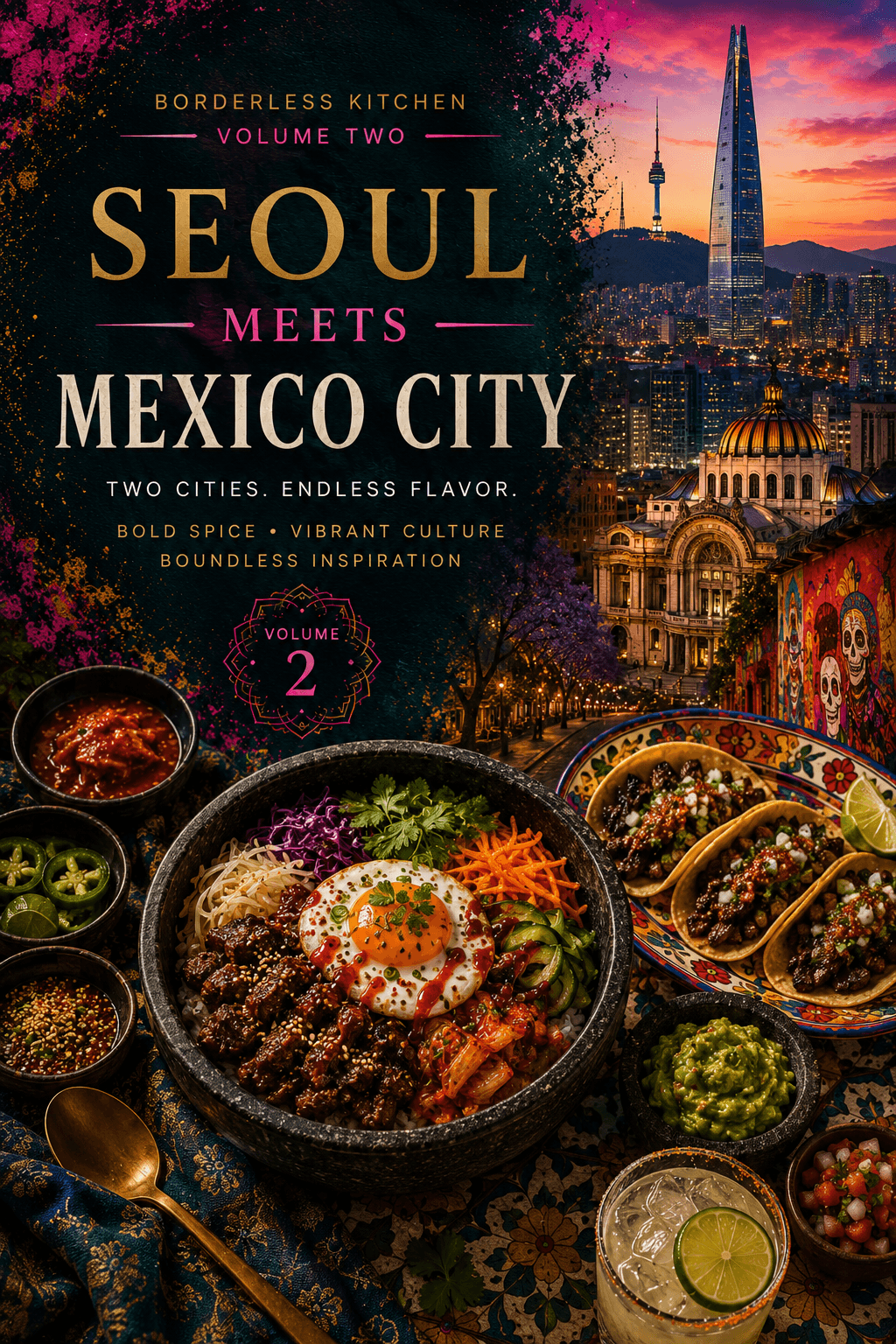
The full Seoul–Mexico City approach takes that same idea across sauces, small plates, soups, and mains. Seoul Meets Mexico City, Volume II of Borderless Kitchen, is available on Amazon.
Borderless Kitchen is a participant in the Amazon Services LLC Associates Program. As an Amazon Associate we earn from qualifying purchases. Product links on this page are affiliate links — they cost you nothing extra, and we only recommend equipment and ingredients we would tell a friend to buy.
Free recipes from this world
Related reading
The full recipes live in the book.
Get Seoul Meets Mexico City on AmazonAs an Amazon Associate we earn from qualifying purchases. This is an affiliate link — it costs you nothing extra.
Paperback $19.99 · Kindle $9.99